
- By Medhavini
- 22 Apr 2026
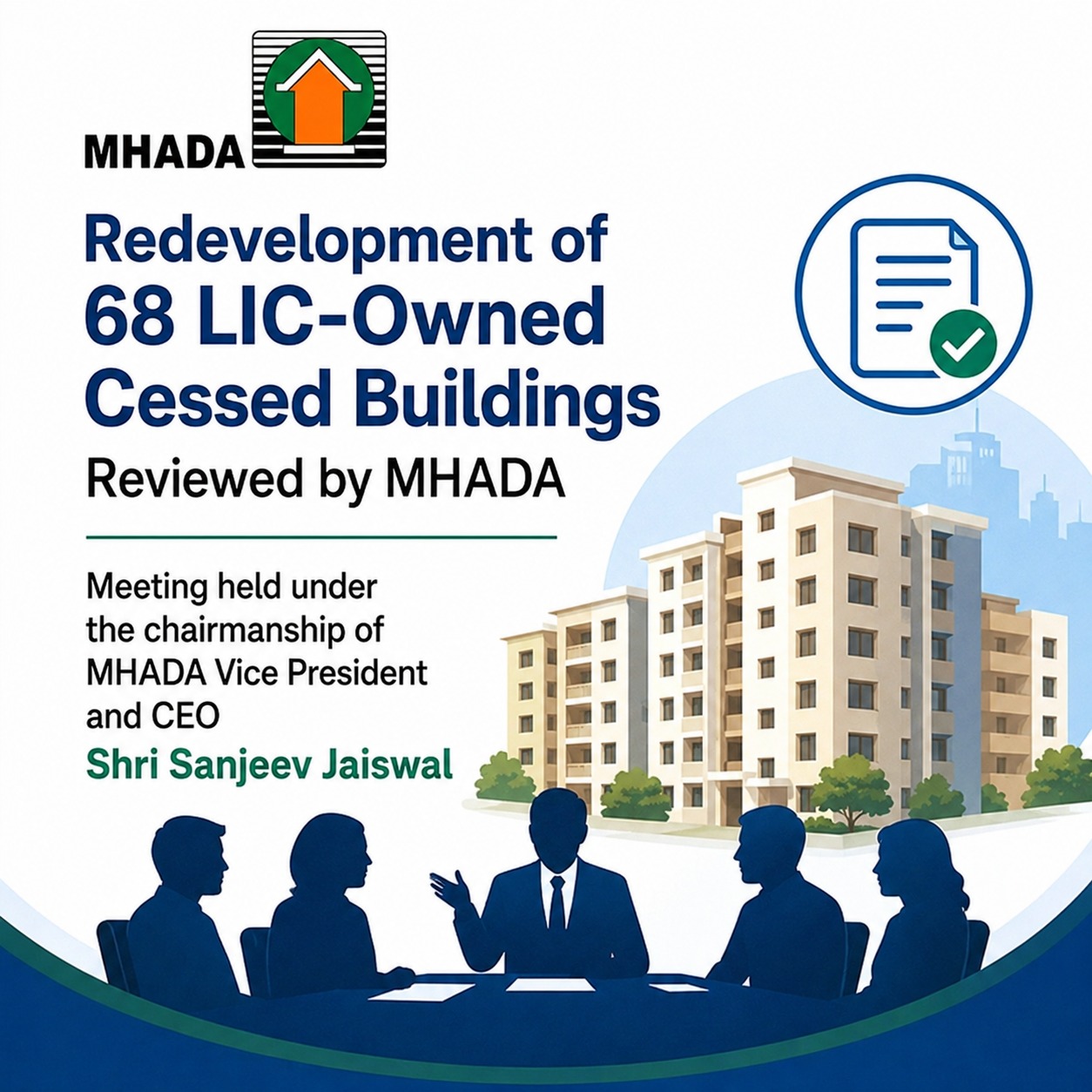
IAS Sanjeev Jaiswal Leads 1 Lakh Crore Motilal Nagar Project, Among India’s Largest Redevelopment Initiatives
Mumbai’s urban transformation is entering a defining phase with the awarding of the ₹1 lakh crore Motilal Nagar redevelopment project in Goregaon West to the Adani Group. Under the leadership of IAS Sanjeev Jaiswal, Vice President & CEO of MHADA, this project represents one of the largest redevelopment initiatives in India. Spanning 143 acres, the development is set to reshape not only Mumbai’s housing landscape but also the broader narrative of infrastructure-led growth. At the same time, this milestone coincides with Gautam Adani’s rise to the top of Asia’s wealth rankings, with a net worth of $92.6 billion, surpassing Mukesh Ambani’s $90.8 billion.
This convergence of large-scale urban development and shifting wealth dynamics reflects the growing intersection of real estate, infrastructure, and capital markets in India’s economic story.
A Landmark Project in Mumbai’s Redevelopment Journey
The Motilal Nagar redevelopment project is among the most ambitious cluster redevelopment initiatives undertaken in Mumbai. Covering 143 acres, it is designed to transform an ageing residential cluster into a modern, integrated urban township.
The project includes a significant rehabilitation component:
- 1,600 sq ft flats for 3,702 residents
- 987 sq ft units for 328 businesses
- 300 sq ft homes for 1,600 slum dwellers
This structure ensures that redevelopment is not limited to physical transformation but also addresses the needs of diverse stakeholders, including residents, commercial occupants, and informal settlements.
According to MHADA, the rehabilitation phase is expected to be completed within seven years, marking a structured timeline for one of the city’s largest housing transitions.
₹1 Lakh Crore Investment: Scale and Implications
The project’s estimated investment of over ₹1 lakh crore places it among the most significant urban infrastructure investments in the country. Such scale brings multiple economic and urban implications:
- Creation of large-scale housing stock
- Development of supporting infrastructure
- Generation of employment across sectors
- Activation of long-term real estate value
For Mumbai, where land availability is limited, projects of this scale are critical in unlocking underutilized land while improving living conditions.
Adani Group’s Expanding Role in Urban Development
With this project, the Adani Group strengthens its position in the urban infrastructure and real estate space. Already engaged in large-scale projects such as the Dharavi redevelopment, the group’s portfolio is increasingly aligned with city-scale transformation initiatives.
The allocation of such a significant project reflects confidence in execution capabilities, particularly in managing complex, multi-phase developments involving thousands of stakeholders.
At the same time, the project’s success will depend on sustained execution over 10 to 15 years or more, given its scale and phased development model.
Wealth Rankings: A Shift at the Top
Parallel to this development milestone is a notable shift in Asia’s wealth rankings. Gautam Adani’s net worth has reached $92.6 billion, overtaking Mukesh Ambani’s $90.8 billion, according to Bloomberg Billionaires Index data.
Globally, Adani now ranks 19th, while Ambani is positioned at 20th. This shift highlights the dynamic nature of wealth creation, driven largely by market performance and sectoral growth.
The change reflects:
- An $8.1 billion increase in Adani’s wealth this year
- A $16.9 billion decline in Ambani’s wealth
These movements underscore how closely wealth rankings are tied to stock market performance and investor sentiment.
Market Performance Driving the Shift
The divergence in wealth between the two business leaders is closely linked to stock market trends. Adani Group companies have seen strong gains in 2026, contributing significantly to the increase in net worth, including a $3.56 billion gain in a single day.
In contrast, Reliance Industries has experienced relatively stable performance, with a modest $76.7 million gain on the same day. This difference in market momentum has played a key role in reshaping the rankings.
Such fluctuations highlight the importance of market cycles in determining short-term wealth positions, even among the largest business groups.
What the Project Means for Mumbai
Beyond corporate and financial narratives, the Motilal Nagar redevelopment has far-reaching implications for Mumbai’s housing ecosystem.
The project is expected to:
- Increase housing supply significantly
- Improve infrastructure in Goregaon West
- Enhance living standards for thousands of residents
- Create a mixed-use urban environment
By offering 1,600 sq ft homes to existing residents, the project also represents a substantial upgrade in living conditions, especially for those currently residing in smaller units.
A Balanced Redevelopment Model
One of the key strengths of this project is its balanced approach. It combines:
- Rehabilitation of existing residents
- Development of commercial and residential spaces
- Integration of slum redevelopment
- Creation of long-term saleable inventory
This model ensures that redevelopment benefits are distributed across multiple segments, making it more inclusive and sustainable.
Leadership and Policy Framework
Under IAS Sanjeev Jaiswal, MHADA has focused on enabling large-scale redevelopment through structured planning and transparent processes. Projects like Motilal Nagar are part of a broader strategy to address Mumbai’s housing challenges through cluster redevelopment.
Given the complexity and scale of such initiatives, stakeholders are encouraged to rely on official MHADA channels for accurate updates on timelines, policies, and implementation progress.
Looking Ahead: Strategic Implications
If executed successfully, the Motilal Nagar project could become a benchmark for future redevelopment initiatives in India. It demonstrates how:
- Public agencies and private developers can collaborate
- Large-scale urban transformation can be systematically planned
- Housing supply can be expanded without new land acquisition
For Gautam Adani, successful delivery could further strengthen his position in infrastructure and urban development, contributing to long-term asset growth.
For Mukesh Ambani, market dynamics and strategic expansions in core businesses could influence future wealth rankings, keeping the competition dynamic.
Conclusion: A Defining Moment for Urban India
The awarding of the ₹1 lakh crore Motilal Nagar redevelopment project marks a defining moment for Mumbai’s urban future. With 143 acres, 3,702 residents, 1,600 slum dwellers, and a structured rehabilitation plan over seven years, the project reflects both scale and intent.
At the same time, Gautam Adani’s rise to $92.6 billion, surpassing Mukesh Ambani’s $90.8 billion, adds a financial dimension to the story, linking urban development with market performance.
Under the leadership of IAS Sanjeev Jaiswal, this initiative represents a shift toward large-scale, integrated redevelopment, where housing, infrastructure, and economic growth move together.
For Mumbai, this is not just another project. It is a glimpse into how the city will evolve in the coming decades — through planned, inclusive, and high-impact redevelopment.