
- By Hitesh
- 12 Feb 2026
Ritu Tawde To Become Mumbai Mayor: A Powerful Symbol In A Powerless Office?
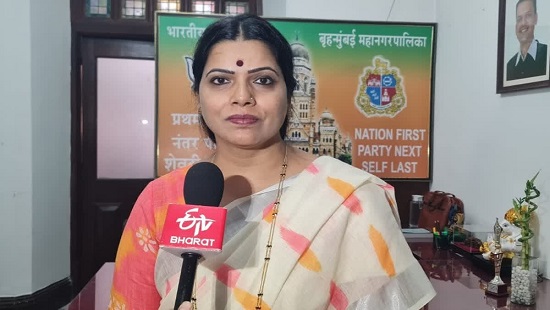
Mumbai: As BJP corporator Ritu Tawde prepares to take oath as Mumbai’s new Mayor at the Brihanmumbai Municipal Corporation (BMC) headquarters, the city is once again reminded of an enduring contradiction — the Mayor commands immense public stature but holds limited executive authority.
With no opposition candidate in the fray, Tawde’s election is expected to be a smooth affair. Yet beyond the ceremonial swearing-in lies a deeper question: How much real power does Mumbai’s Mayor actually wield?
The Prestige Of The ‘First Citizen’
The Mayor of Mumbai is often described as the “First Citizen” of India’s financial capital. The office carries historic symbolism — traditional robes during council sessions, the ceremonial silver mace, official residence in a heritage bungalow, and a red-beacon vehicle.
In public life, the Mayor is the face of the city at civic events, national ceremonies, and international delegations. The position carries social authority, political visibility, and public respect.
But governance is another story.
Why The Mayor Cannot Execute Policy
The limitations of the office are rooted in the Mumbai Municipal Corporation (MMC) Act of 1888 — legislation drafted during British rule. The law was structured to ensure that executive powers remained with crown-appointed officers rather than elected representatives.
More than a century later, that framework remains largely intact.
Under Section 4 of the Act, the Municipal Commissioner — typically an IAS officer appointed by the Maharashtra government — holds the executive “power of the pen.” This includes authority over finances, project approvals, and implementation of civic policies.
In effect, while the Mayor presides over meetings and debates, the Commissioner controls the machinery that runs India’s richest civic body.
The Rs 10 Crore Reality Check
The imbalance becomes most visible in financial matters. Even if the Mayor champions a major infrastructure project, it cannot proceed without the Commissioner’s approval.
From road contracts to drainage upgrades, every major expenditure requires the executive wing’s clearance. The Mayor cannot independently sanction projects, sign contracts, or release municipal funds.
This creates a structural gap where political vision must depend on bureaucratic consent.
Colonial Legacy Or Modern Design?
The BMC Act was originally designed to separate deliberation from execution. British administrators believed financial control should remain insulated from local political influence.
Though India gained independence decades ago, the architecture of this system continues unchanged. Critics argue that the model weakens democratic accountability, while defenders say it ensures administrative stability in a city with a budget larger than several Indian states.
The ‘Double Engine’ Factor
Ritu Tawde’s tenure could unfold differently due to political alignment.
With the BJP in power at both the Maharashtra state government and within the BMC’s political structure, observers believe coordination between the Mayor’s office and the Municipal Commissioner may be smoother.
Since the Commissioner reports to the state government, shared political alignment may reduce friction that historically arose when rival parties controlled the two centres of authority.
In such a scenario, governance may operate through cooperation rather than confrontation — effectively narrowing a 138-year-old power divide without amending the law itself.
Leadership Beyond Legal Authority
Even without executive control, the Mayor’s role is not entirely symbolic. The office can shape public discourse, influence policy priorities through council debates, and act as a bridge between citizens and the administrative machinery.
A Mayor with strong political backing can mobilise councillors, build consensus, and apply moral and political pressure to accelerate decision-making.
For Ritu Tawde, the challenge will be to convert ceremonial stature into practical influence — navigating a system where authority is shared, but power is unevenly distributed.
As Mumbai enters a new civic chapter, the question remains: Can political synergy redefine an office long constrained by colonial design, or will the Mayor remain a respected face without executive force?