
- By Nirmal Ajwani
- 01 Dec 2025
Raj Sabhagruh Secures 2025 Dezeen Award, Setting a New Global Benchmark for Civic Architecture
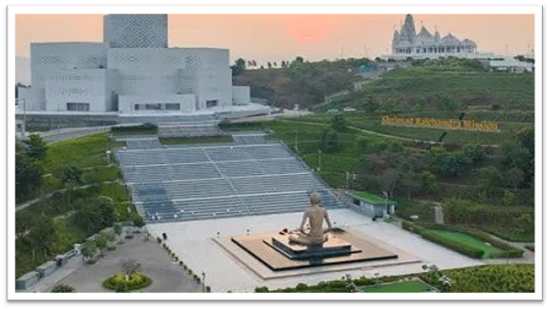
The Raj Sabhagruh’s recognition at the 2025 Dezeen Awards as the Best Civic Project is more than an architectural milestone; it is a statement on how modern India is redefining civic spaces. Designed by the internationally acclaimed Serie Architects, the building represents a thoughtful intersection of spirituality, cultural identity, and contemporary design. In a world where civic infrastructure often struggles to balance aesthetics with purpose, Raj Sabhagruh stands out for achieving both with remarkable clarity.
The building had already earned global appreciation before this latest accolade, including the AR Future Project – Cultural Regeneration Award in 2022 by Architectural Review Magazine. The continued recognition reflects not only the quality of the design but the enduring relevance of its purpose. At a time when civic buildings worldwide are evolving to accommodate multifunctional public needs, Raj Sabhagruh demonstrates how architecture can serve as a cultural anchor while remaining adaptable to future demands.
An Architectural Landmark Anchored in Craftsmanship and Scale
The scale and materiality of Raj Sabhagruh immediately differentiate it from conventional civic structures. Clad in more than 800,000 hand-laid discarded white marble bricks, the building rises 40 metres, roughly equivalent to a 12-storey structure. This combination of height and meticulous hand-laid craftsmanship produces an exterior that reads as both monumental and intimately human. The reuse of discarded marble also adds a layer of environmental consciousness, positioning the building within a broader global conversation on sustainable construction practices.
Spread across 1.65 lakh square feet, the building houses spaces that support diverse forms of community interaction. Its massive auditorium, equipped with three integrated LED screens and advanced audio-video systems, reflects a commitment to world-class public communication infrastructure. The meditation hall, multipurpose halls, classrooms, visitor facilities, and dedicated library for rare Jain manuscripts create an ecosystem that blends learning, spiritual exploration, and civic engagement. Surrounding it is a vast 1.50 lakh square foot plaza that acts as an open social space, reinforcing the idea that civic buildings must extend their impact beyond walls and into the public realm.
A Cultural Institution Rooted in Spiritual Heritage
The Raj Sabhagruh is operated by the Shrimad Rajchandra Mission Dharampur (SRMD), an organisation founded by Gurudev Rakeshji. His vision draws deeply from the teachings of Shrimad Rajchandra, a revered 19th-century Jain philosopher whose writings influenced countless followers, including Mahatma Gandhi. This spiritual lineage is not an ornamental feature but a driving force behind the building’s conceptual and functional design.
SRMD describes the building as a space where the wisdom and serenity of Pujya Gurudevshri flow through every part of the structure. It intends to reflect the legacy of Bhagwan Mahavir and Param Krupalu Dev, creating an environment where architecture becomes an instrument of inner elevation. This interpretation moves the project beyond the domain of design and places it firmly within the realm of cultural and spiritual stewardship.
Architecturally, this vision is translated through spatial fluidity, contemplative volumes, and a materials palette that prioritises purity and simplicity. The intention is not only to serve the present but to create a timeless space that remains spiritually and socially relevant for generations.
International Recognition Reinforcing Local Identity
The 2025 Dezeen Award Jury described Raj Sabhagruh as a clear winner, emphasising its monumental presence and structural clarity while praising its ability to retain a sense of human scale. The citation highlights an essential quality of civic architecture: the ability to be both iconic and accessible. Buildings of this magnitude can often feel imposing, but Raj Sabhagruh’s design uses proportion and texture to keep visitors grounded and comfortable.
The jury acknowledged that the architecture reflects its locale, suggesting that its identity is unmistakably rooted in its cultural and geographical context. This balance of modernity and local character is increasingly valued in global architectural discourse, especially as cities attempt to develop distinct visual and cultural identities.
Serie Architects, in its own statement, noted that the building accommodates a wide range of uses and is designed to evolve with the spiritual mission it serves. This recognition of adaptability reinforces a critical architectural insight: civic structures must be dynamic, not static. Their relevance depends on their ability to support changing community needs without losing their foundational character.
A Case Study in How Civic Buildings Shape Community Life
The Raj Sabhagruh is not merely a structural asset; it is an investment in community-building. The scale of its facilities, the integration of spiritual and educational spaces, and the surrounding plaza collectively create an environment where individuals can learn, reflect, interact, and participate. These are the traits that differentiate a civic building from an institutional building. Civic architecture aspires to build community identity; it becomes a cultural amplifier.
In the Indian context, where urbanisation is rapid and public spaces often struggle to balance inclusivity with purpose, Raj Sabhagruh demonstrates what is possible when vision, design, and cultural values align. It offers a model for future civic infrastructure, where aesthetic ambition supports practical utility and spiritual intention reinforces social collaboration.
A New Benchmark for India’s Architectural Future
Winning the 2025 Dezeen Award places Raj Sabhagruh within a global class of civic architecture, but its deeper achievement lies in what it contributes to India’s architectural narrative. It shows that civic buildings can be technologically advanced without losing cultural authenticity. It proves that scale can coexist with sensitivity. And it affirms that architecture can be both visually striking and emotionally grounded.
For architects, policymakers, and cultural institutions, Raj Sabhagruh signals a path forward, one where civic projects are not only functional assets but symbols of shared identity and long-term vision. As the building continues to serve thousands through spiritual programs, educational initiatives, and community activities, it will stand as a testament to how architecture can shape both place and purpose.
In its design, execution, and impact, Raj Sabhagruh has set a standard that future civic projects in India will inevitably measure themselves against.