
- By Medhavini
- 01 Dec 2025
Mumbai’s 51-Foot Vitthal Maharaj Idol Unveiling Becomes One of the City’s Most Unifying Spiritual Moments
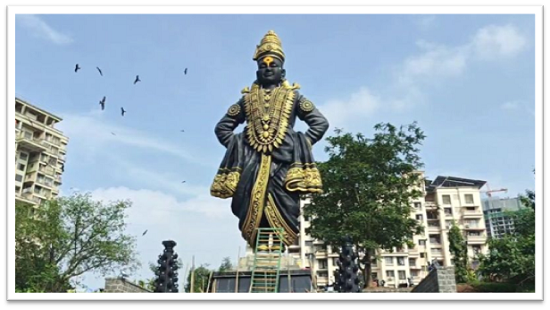
Mumbai witnessed a rare and deeply unifying moment as thousands gathered in Bhayandar East to witness the unveiling of a 51-foot idol of Shri Vitthal Maharaj at Navghar Lake. The atmosphere transcended the boundaries of a local celebration; it felt like an extraordinary convergence of culture, devotion, and community identity. For a city that thrives on diversity and constant movement, this event demonstrated how collective faith can create powerful social cohesion, transforming an ordinary public space into a spiritual landmark for an entire region.
The ceremony, presided over by Transport Minister and Dharashiv District Guardian Minister Prataprao Indirabai Baburao Sarnaik, attracted unprecedented crowds. His presence signalled political acknowledgement of the cultural and emotional significance the Vitthal tradition holds for Maharashtra. At a time when Indian cities are expanding rapidly and traditional practices struggle for visibility in urban spaces, such recognitions matter. They reassert the relevance of cultural memory and give communities a sense of continuity as modernity reshapes their surroundings.
A Cultural Display Rooted in Maharashtra’s Devotional Heritage
The grand procession, known as the Dindi, formed the heart of the event. Thousands of Warkaris walked from Goddev Vitthal Temple to Navghar Lake, holding on to a tradition that has defined the spiritual landscape of Maharashtra for centuries. Their familiar soundscape of taal and mridunga created a rhythmic thread connecting the past with the present. In many ways, the Dindi procession is a moving cultural institution, an annual reaffirmation of collective faith, discipline, and devotion. When citizens lined the roads to shower flowers on the palanquin, it captured a sense of intergenerational cultural ownership often missing from modern festivals driven primarily by spectacle.
The 51-foot idol itself is not merely a structure; it represents an intentional attempt to create a long-term spiritual and cultural landmark. In a city where public art and religious installations often struggle for space, building a figure of this magnitude suggests a long-term vision. Large symbolic installations become convergence points for community identity. If thoughtfully maintained, such landmarks evolve into heritage assets that anchor local culture and draw visitors over time, positively influencing both cultural tourism and the local economy.
Transforming Navghar Lake into a Spiritual Destination
The transformation of Navghar Lake during the ceremony reflected a rare urban shift. Public lakes in Indian cities often face the dual pressures of rapid urban expansion and environmental neglect. Yet, during the unveiling, the lake became a sanctified space due to the confluence of collective devotion and traditional rituals. The lighting arrangements, fireworks, and continuous chants of “Jai Hari Vitthal” created the ambience of a spiritual epicenter, temporarily turning the lake into a replica of Pandharpur, referred to by participants as “Pratipandhari.”
Events like these demonstrate the potential of public spaces to serve multiple roles. A natural body of water can shift from a recreational site to a cultural destination, depending on how communities engage with it. When urban planning aligns with cultural practices, it strengthens the emotional connection citizens feel toward their surroundings. This is especially important in cities where population density tends to reduce public spaces to mere transit corridors rather than cultural touchpoints.
Community Participation as a Reflection of Social Strength
One of the most striking aspects was the level of community involvement. From senior citizens participating in the chants to children witnessing the cultural magnitude for the first time, the demographic diversity reinforced the idea that shared rituals build social capital. In urban policy discussions, community engagement is often viewed through frameworks of civic responsibility or service delivery. However, cultural participation, especially in rituals rooted in history, plays an equally powerful role in shaping cohesive civic identities.
The Warkari movement, known for its egalitarian values and discipline, adds another layer of social depth. Their presence elevated the event beyond celebration; it became a live expression of Maharashtra’s spiritual sociology. The discipline of walking together, chanting, and playing traditional instruments creates a collective rhythm that binds individuals into a larger cultural narrative.
A Moment of Collective Memory for Mira-Bhayandar
As the ceremony concluded, Mira-Bhayandar witnessed a rare emotional unity. The city, which usually reflects Mumbai’s fast-paced lifestyle, seemed to pause collectively. Residents described the experience as witnessing a spiritual milestone seldom seen in urban localities. The large turnout also indicates how urban populations continue to seek shared cultural anchors despite the increasing fluidity of city life.
The visual scale of the 51-foot idol will undoubtedly influence the cultural identity of Bhayandar. Over time, it can evolve into a pilgrimage point during major festivals, attracting visitors from other parts of the Mumbai Metropolitan Region. Urban areas that successfully integrate cultural landmarks with community participation often develop strong local pride and micro-economies around such sites.
Reinforcing Cultural Continuity in a Rapidly Modernizing Region
The unveiling event sent a subtle but important message: as cities grow, cultural continuity cannot be an afterthought. It needs active reinforcement through thoughtful public spaces, community-driven initiatives, and government recognition. The Mira-Bhayandar administration’s support for such an event signals an understanding of this interplay between culture and urban development.
For the devotees, the unveiling was a moment of spiritual fulfillment. For the city, it was a reminder of the cultural depth that lies beneath Mumbai’s modern layers. And for Maharashtra, it reaffirmed the enduring power of the Vitthal tradition, a tradition that continues to unite people across regions, castes, and generations.
In the end, the 51-foot idol of Shri Vitthal Maharaj stands not only as a monumental structure but as a symbol of collective devotion, cultural resilience, and community pride. Its unveiling marks a moment that Mira-Bhayandar will carry forward for years, shaping its identity and enriching its cultural landscape.