
- By Bhawana
- 05 Feb 2026
IND vs PAK T20 World Cup Row: Politics, Power and the Possibility of a U-Turn
Few sporting fixtures carry as much geopolitical weight as an India–Pakistan cricket match. The latest controversy surrounding the ICC Men’s T20 World Cup 2026 has once again underlined how deeply cricket in the subcontinent remains entangled with politics. Pakistan’s decision to signal a boycott of the high-profile Group A clash against India has sent ripples across the global cricketing ecosystem.
The stance, according to sources, has not emerged from cricketing considerations but from a direct government directive—one that aligns with Pakistan’s position on Bangladesh’s recent political developments and its reported exclusion from the tournament framework. Yet, even as the rhetoric hardens publicly, there are indications that the situation may remain fluid.
The February 12 Inflection Point
At the heart of this uncertainty lies Bangladesh’s general elections scheduled for February 12. Multiple insiders tracking Pakistan cricket believe that the political equation could shift once a democratically elected government takes office in Dhaka. That transition, they suggest, may provide Islamabad with the political cover required to soften its position without appearing to retreat.
Mohsin Naqvi, the Pakistan Cricket Board chairman and the country’s interior minister, sits at the intersection of sport and state power. Critics argue that his current posture reflects political signalling rather than sporting strategy. As one source put it, Naqvi is acting “more as a politician than a cricket administrator,” with an eye on domestic optics rather than the long-term interests of Pakistan cricket.
Cricketing Costs of a Continued Standoff
A sustained boycott would not be without consequences. An India–Pakistan clash is among the ICC’s biggest commercial drivers, attracting global viewership and sponsorship interest. Opting out could isolate Pakistan within the international cricketing community, especially if the decision is perceived as unilateral and politically motivated.
There is also the matter of timing. Even if Pakistan holds its line through the elections, there would still be a narrow window—just days before the scheduled India match—for a reversal. Insiders caution that failing to course-correct could invite institutional pushback from the ICC and strain Pakistan’s already delicate standing in global cricket governance.
Team Prepares as Uncertainty Lingers
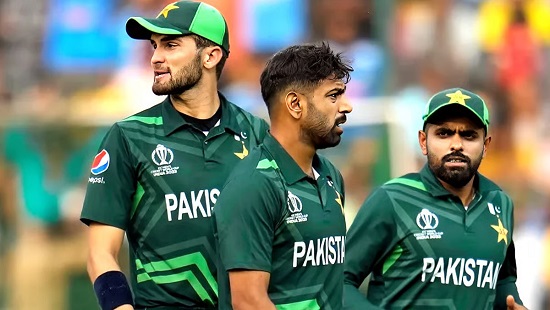
Interestingly, on the ground, preparations continue as if business remains normal. The Pakistan national team has arrived in Colombo ahead of the tournament’s February 7 start, with official PCB visuals showing players in full World Cup kit. The images present a contrast to the uncertainty playing out off the field—suggesting that players and support staff remain focused, even as administrative signals remain mixed.
This duality highlights a familiar pattern in subcontinental cricket: athletes prepare for competition while decisions that shape their participation are taken far from the dressing room.
More Than Just One Match
The IND vs PAK debate is ultimately less about a single group-stage fixture and more about how sport is leveraged in regional diplomacy. For the ICC, the episode is another reminder of the fragile balance between respecting sovereign political positions and safeguarding the integrity of global tournaments.
Whether Mohsin Naqvi ultimately recalibrates Pakistan’s stance after February 12 will depend on political developments beyond cricket’s boundary ropes. What is clear, however, is that every delay increases uncertainty—not just for fans, but for the credibility of international cricket itself.