
- By Diya Sogani
- 02 Feb 2026
Budget 2026 Puts Pune at the Centre of India’s High-Speed Rail Ambitions
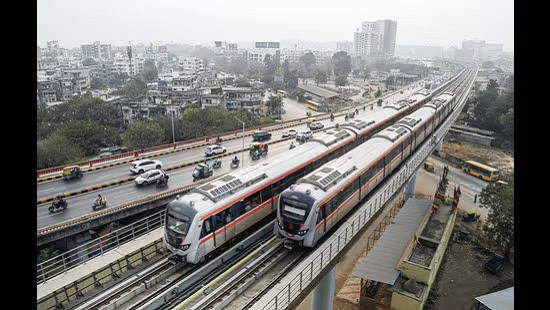
Union Budget 2026–27 has quietly redrawn India’s transport map, and Pune finds itself at a strategic crossroads. Among the seven national “growth connector” corridors announced by finance minister Nirmala Sitharaman, the Mumbai–Pune and Pune–Hyderabad high-speed rail routes stand out not just for their scale, but for what they signal: a transition from city-centric infrastructure to region-driven economic planning.
While Pune featured sparingly in the finance minister’s 95-minute speech, the implications of these two corridors are anything but marginal. Together, they position Pune as a critical node linking western India’s financial capital with southern India’s technology and manufacturing hubs.
From Commuter City to Connectivity Hub
Pune’s growth over the past two decades has outpaced its transport systems. Daily travel between Pune and Mumbai has become a test of endurance rather than efficiency, dominated by road congestion and unpredictable travel times. The proposed high-speed rail corridor offers a structural solution, not a temporary fix.
By dramatically reducing travel time and improving reliability, the Mumbai–Pune line has the potential to redefine commuting itself. Professionals could live in one city and work in another without sacrificing productivity or quality of life. Over time, this kind of connectivity changes real estate demand, office location strategies and labour mobility patterns.
The Pune–Hyderabad corridor adds a second layer of impact. Hyderabad has emerged as a major IT, life sciences and startup hub. Faster rail connectivity between the two cities creates a larger, integrated talent and business ecosystem across states, reducing dependence on short-haul flights and long road journeys.
Why High-Speed Rail Is a Policy Statement
High-speed rail is often discussed as a prestige project. In this budget, it has been framed as economic infrastructure. The government has grouped these routes under “growth connector” corridors, signalling their role in accelerating regional integration rather than merely moving passengers faster.
For Pune, this aligns with existing plans. The upcoming semi high-speed Pune–Nashik corridor, expected to cut travel time to two hours, already points to a hub-and-spoke model with Pune at the centre. Add Mumbai and Hyderabad to this network, and the city begins to function as a bridge between markets, not just a destination.
This matters because cities grow faster when connectivity reduces friction — between jobs and homes, suppliers and consumers, education and opportunity.
Economic and Environmental Payoffs
There is also a strong sustainability argument embedded in these projects. High-speed rail offers a cleaner alternative to road transport and short-distance air travel, both of which contribute significantly to congestion and emissions. As cities expand, shifting travel demand to rail becomes less about choice and more about necessity.
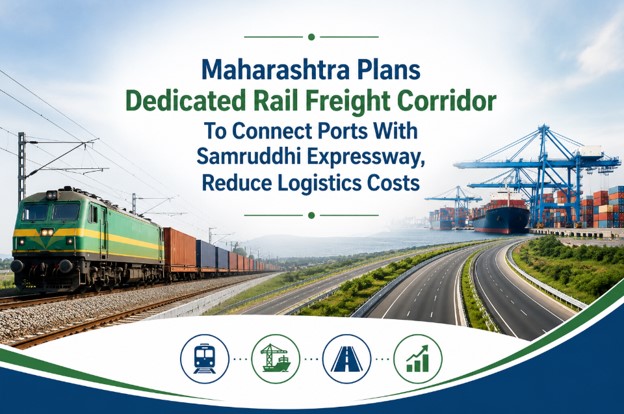
The budget’s proposal to raise public capital expenditure to ₹12.2 lakh crore in 2026–27 underlines this intent. Transport-led growth is being treated as a multiplier — enabling productivity, reducing logistics costs and supporting urban expansion without proportionally increasing environmental stress.
Public Expectations: Delivery Will Matter
The announcement has been widely welcomed, particularly among professionals and small business owners who regularly travel between cities. Faster rail options promise more predictable schedules, reduced fatigue and better work-life balance.
However, public optimism is tempered by experience. Large infrastructure announcements often lose momentum between vision and execution. Clear timelines, transparent planning and coordination between central and state agencies will determine whether these corridors deliver real change or remain long-term aspirations.
A Test Case for India’s Next Urban Phase
The Mumbai–Pune and Pune–Hyderabad high-speed rail projects are not just transport upgrades. They are test cases for how India manages its next phase of urbanisation — one where growth spills beyond city boundaries and success depends on how well regions are connected.
For Pune, the message from Budget 2026 is clear. The city is no longer being planned as a satellite or secondary market. It is being positioned as a connector — of talent, capital and opportunity. Whether this promise translates into reality will depend on execution, but the direction has been decisively set.