
- By Hitesh
- 02 Feb 2026
MHADA Lottery 2026 Could Unlock 5,000 Affordable Homes in Mumbai—Why Goregaon Is the Real Game Changer
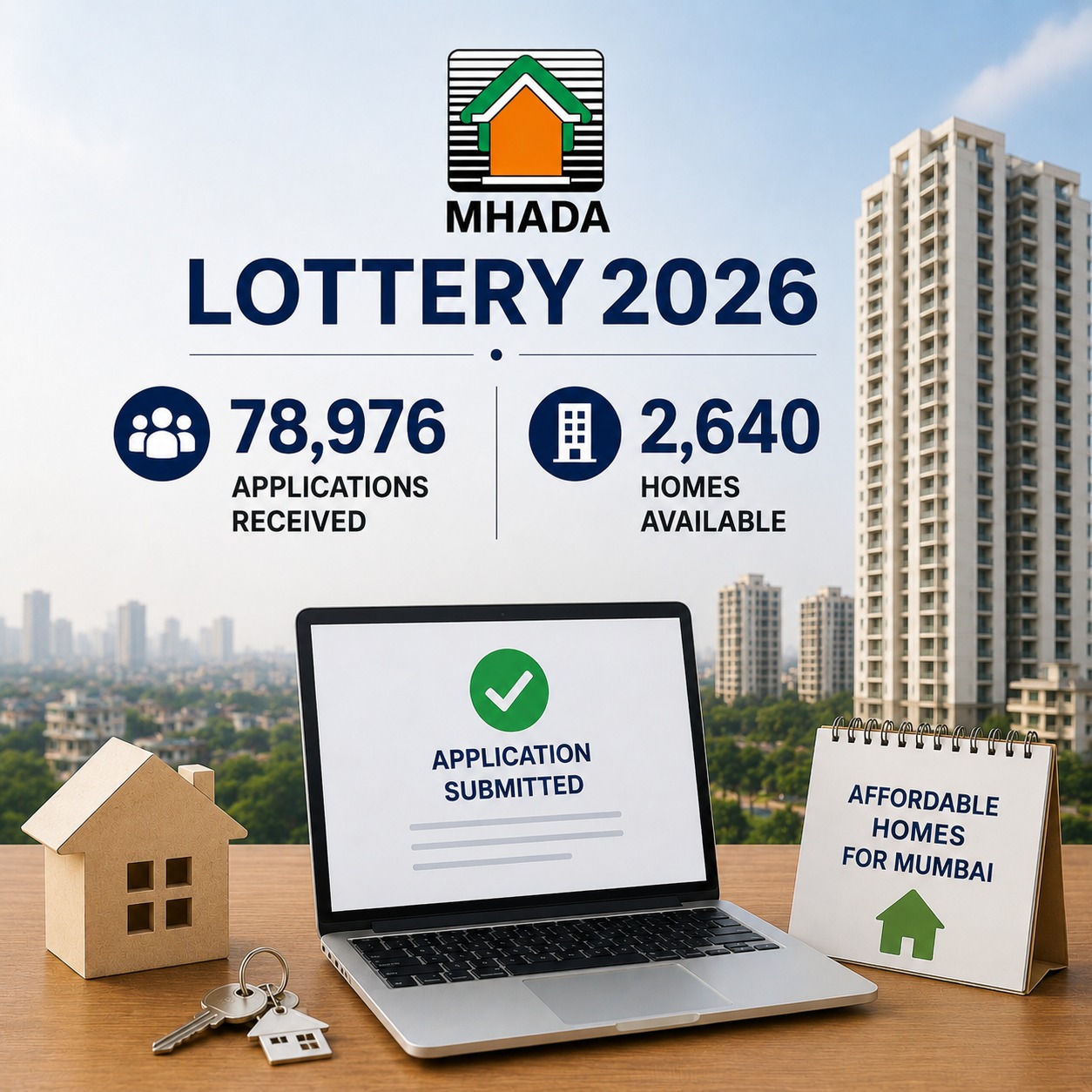
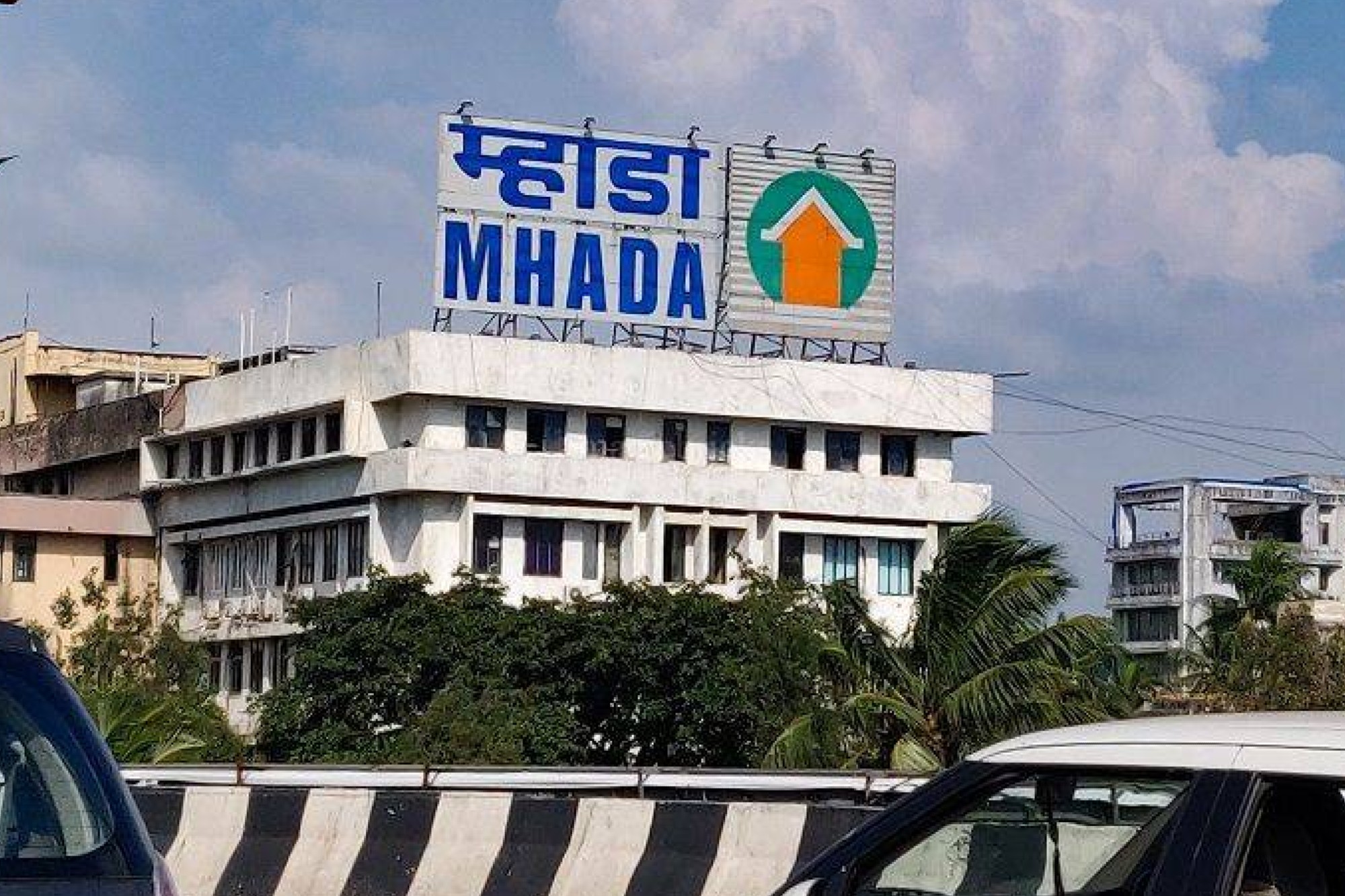
Mumbai’s housing conversation is once again picking up momentum, and this time, it comes with scale. Under the leadership of IAS Sanjeev Jaiswal, the Maharashtra Housing and Area Development Authority (MHADA) is preparing to launch one of its most significant housing opportunities in recent years. Over the next two to three months, MHADA is expected to place nearly 5,000 affordable homes on the market through its 2026 lottery, offering a fresh window of opportunity for thousands of aspiring homeowners across income categories.
This proposed lottery is not just another announcement in Mumbai’s crowded real estate calendar. It reflects a deliberate attempt to recalibrate affordability, supply, and long-term planning in a city where private housing prices have consistently moved out of reach for large sections of the population.
What We Know So Far About the MHADA Lottery 2026
According to reports, the upcoming MHADA lottery is expected to include around 5,000 residential units spread across Mumbai. These homes will cater to a broad spectrum of buyers, including Economically Weaker Sections (EWS), Lower Income Groups (LIG), Middle Income Groups (MIG), and High Income Groups (HIG). This mixed-income approach has been a consistent feature of MHADA’s housing philosophy, aimed at maintaining social diversity while addressing affordability.
More than half of these units are likely to be located in Goregaon, making it the single largest contributor to the lottery. Within Goregaon, the Patra Chawl redevelopment project in Goregaon West is expected to account for approximately 2,400 to 2,500 flats. Of these, nearly 2,300 units are anticipated to be reserved for low- and middle-income groups, with the remaining flats allocated to high-income buyers.
In numerical terms, this makes Patra Chawl one of the most consequential public housing redevelopments currently underway in Mumbai.
Under-Construction Homes and the Possession Timeline
One critical detail that applicants should note is that a significant share of the homes in this lottery will come from under-construction projects. Several developments are still at early stages, with construction limited to foundation work or a few completed floors. As a result, possession timelines for many of these homes are expected to extend beyond 2028.
While this may seem like a drawback at first glance, it also reflects a more transparent and realistic approach by MHADA. Instead of offering only ready or near-ready units, the authority is opening access to projects earlier in the development cycle, allowing buyers to secure homes at controlled prices in locations that would otherwise be unaffordable in the private market.
For long-term end-users rather than speculative investors, this trade-off between waiting time and price stability is often a rational one.
Why Goregaon Matters in Mumbai’s Housing Math
The concentration of homes in Goregaon is not accidental. Over the last decade, Goregaon has emerged as a strategic residential zone, balancing connectivity, employment access, and social infrastructure. With road and rail connectivity to both western suburbs and key business districts, the area offers a practical alternative to South Mumbai or Bandra for middle-income households.
Private developments in Goregaon have seen steady price escalation, pushing average buyers out of contention. MHADA’s presence in this micro-market introduces a crucial affordability buffer, particularly for first-time homebuyers and salaried professionals.
By allocating a large share of lottery homes to Goregaon, MHADA is effectively anchoring affordability in one of Mumbai’s most in-demand suburban corridors.
Income Segmentation and Policy Intent
The expected distribution across EWS, LIG, MIG, and HIG categories highlights MHADA’s continued adherence to inclusive housing principles. Unlike private launches that often prioritize higher-margin segments, MHADA’s lotteries are structured to ensure meaningful participation from lower- and middle-income households.
This approach also aligns with broader state housing objectives, where public agencies are expected to intervene when market mechanisms fail to deliver affordability at scale.
While detailed pricing and eligibility criteria will be officially announced closer to the lottery launch, applicants are advised to rely only on verified updates from MHADA’s official website and communications to avoid misinformation or speculation.
What This Means for Homebuyers
For prospective applicants, the MHADA Lottery 2026 represents a rare combination of volume, location, and price control. Even with delayed possession timelines, the opportunity to enter Mumbai’s housing market at regulated rates—especially in areas like Goregaon—remains significant.
Historically, MHADA lotteries have seen application volumes running into lakhs for far fewer units. With 5,000 homes expected this time, the odds may improve marginally, but competition will remain intense.
Preparation, document readiness, and close monitoring of official announcements will be key for serious applicants.
A Broader Signal From MHADA
Beyond the numbers, this upcoming lottery signals MHADA’s intent to remain a central player in Mumbai’s housing ecosystem. At a time when affordability concerns dominate urban discourse, large-scale public housing supply sends a message of institutional commitment rather than short-term optics.
Under IAS Sanjeev Jaiswal’s administrative stewardship, MHADA has increasingly focused on transparency, redevelopment-led supply, and policy-aligned execution. The 2026 lottery fits squarely into this trajectory.
Closing Thoughts
If executed as planned, the MHADA Lottery 2026 could become one of the most impactful housing interventions in Mumbai in recent years. With around 5,000 homes, a strong suburban focus, and a clear emphasis on affordability across income groups, it offers both hope and realism in a market often defined by extremes.
For buyers willing to think long-term and engage with public housing processes, the next few months could mark the beginning of a meaningful path to homeownership—backed not by speculation, but by policy and planning.