
- By Bhawana
- 05 Dec 2025
Maharashtra’s New Local Train Push: A “Special Gift†That Could Transform Navi Mumbai’s Daily Commute
Maharashtra’s decision to expand suburban rail connectivity on the Uran corridor is more than a transport upgrade, it is a window into how micro-interventions in public infrastructure can reshape economic opportunity, labour mobility, and urban productivity. When Chief Minister Devendra Fadnavis announced the approval of ten new suburban train services between Nerul, Belapur, and Uran, calling it a “special gift for Mumbaikars”, the message went beyond symbolism. It underscored a deeper principle: cities grow when commuting shrinks.
Urban India’s biggest constraint is not just the scarcity of jobs but the friction of reaching them. According to Census-based estimates and metropolitan transport studies, an average Mumbai suburban commuter spends between 90 and 120 minutes per journey. Even a marginal improvement, such as a 10 to 15 percent reduction in travel or waiting time, compounds into thousands of productive hours unlocked across the labour force annually. This latest approval aims to move the needle in that direction, especially for Navi Mumbai’s fast-growing residential and industrial clusters.
New Services Reflect Rising Mobility Demand
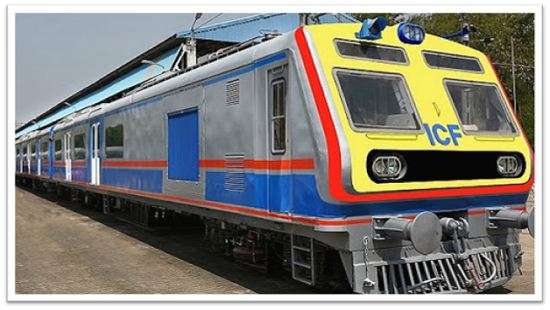
The Ministry of Railways’ clearance includes ten new services on the port line operationalised through the Railway Board’s order dated 3 December 2025. Of the total, four services will operate on the Nerul–Uran–Nerul route, while six trains will run between Belapur and Uran. These additions come after the state government’s proposal submitted in September 2025, reflecting the administration's focus on aligning public transport supply with the region’s demographic and commercial expansion.
The Uran corridor has seen a population rise of nearly 20 to 25 percent over the past decade, driven by affordable housing, logistics infrastructure, and the upcoming Navi Mumbai International Airport. Yet transport infrastructure lagged this growth. Many residents depended on road connectivity, which not only increased commuting costs but also limited job access to pockets close to highway links. In such geographies, suburban rail connectivity often functions as a productivity engine rather than merely a mobility option.
Station Stops Added for Emerging Residential Clusters
The approval of stoppages at Targhar and Gavhan stations is another notable intervention. These stations serve emerging residential belts, where housing occupancy has surged with the addition of new townships and industrial units. For years, residents demanded scheduled services, arguing that a lack of train halts added nearly 30 to 40 minutes daily to last-mile travel. Integrating these localities into the broader network reduces the hidden tax of time, often the most regressive cost borne by low- and middle-income commuters.
Beyond new services and station halts, the Ministry has also sanctioned the speeding up of existing port line trains. Faster services mean shorter turnarounds, better utilisation of rolling stock, and more predictable commuter patterns. For a network that handles over 75 lakh suburban passengers daily across the Mumbai Metropolitan Region, operational efficiencies are not cosmetic, they are essential to sustaining urban competitiveness.
A Strategic Boost for Navi Mumbai’s Growth Curve
What makes this decision particularly significant is its timing. Navi Mumbai is in the midst of a structural transition, evolving from a satellite township into a full-fledged economic hub. The commissioning of the international airport, expansion of the Mumbai Trans Harbour Link, and rapid industrialisation around Uran and JNPT are reshaping labour markets. As commercial clusters deepen, the gravitational pull of jobs increases, and the demand for reliable, high-frequency public transport accelerates. The new suburban services intersect perfectly with this demand curve.
The Railway Board marked the approvals as “most urgent”, directing Central Railway to implement the changes at the earliest and ensure wide publicity. Quick execution will be crucial because infrastructure delays often dilute economic dividends. A study by the Asian Development Bank notes that commuter rail improvements typically yield a 6 to 10 percent rise in labour force participation in newly connected corridors. If even a fraction of this productivity is realised in the Nerul–Belapur–Uran stretch, the decision will pay for itself in increased economic activity.
Daily Commuters Stand to Gain First
For daily passengers, the impact will be immediate and deeply human. Reduced waiting time, predictable schedules, and direct connectivity are small wins that accumulate into meaningful improvements in quality of life. A smoother commute often translates to more stable employment, easier access to education, and greater willingness to participate in the city’s economic swirl. Public transport, in that sense, becomes a silent multiplier of aspirations.
This decision also emphasises the importance of cooperative federalism in infrastructure development. The Chief Minister publicly thanked the Prime Minister and the Union Railways Minister for approving the request, highlighting how political alignment across levels of government can accelerate project delivery. India’s urbanisation challenge is too vast for fragmented execution. It requires orchestration, clear signalling, shared priorities, and administrative coordination that allows good ideas to travel faster than paperwork.
Mobility as a Long-Term Economic Investment
As cities expand, transit systems must become both wider and deeper. Wider to accommodate geographical growth, and deeper to address the complexity of new employment nodes. The Uran corridor expansion represents one such step, though many more will be required as urbanisation continues. Mumbai’s suburban rail network is often described as the city’s lifeline, but it is also a mirror of its economic heartbeat. Adding ten new services is a reminder that small increases in mobility can produce outsized gains in productivity.
Ultimately, the approval is not just a transport announcement, it is an investment in people. By reducing friction for thousands of commuters, the state is effectively expanding the radius of opportunity. When mobility improves, labour markets widen, businesses diversify their talent pools, and citizens regain precious hours in their day. These are the compounding benefits that define modern, competitive cities.
For Navi Mumbai and its adjoining growth corridors, the new suburban services offer a timely catalyst. They align with the region’s economic momentum, respond to citizen demand, and signal a governance approach rooted in responsiveness and long-term thinking. If executed efficiently, this “special gift” could become a long-term asset, a piece of infrastructure that not only moves people but also moves the region closer to its economic potential.