
- By Diya Sogani
- 04 Dec 2025
MMRDA’s Full-Scale Tunnelling for Mumbai’s Deepest Road Corridor Marks a Major Leap in Urban Mobility
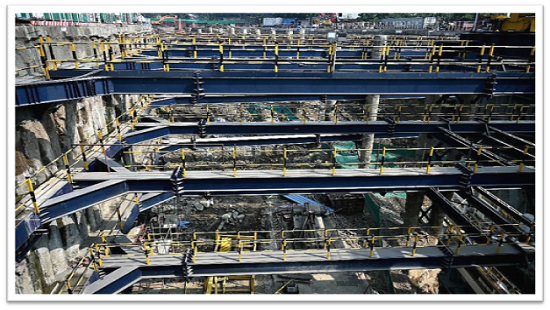
Mumbai advanced a defining milestone in its infrastructure journey as the Mumbai Metropolitan Region Development Authority (MMRDA) commenced full-scale tunnelling for the city’s deepest and most complex urban road tunnel. The nearly 10-kilometre corridor will connect Orange Gate on the Eastern Freeway to Marine Drive, carving a high-speed underground link through some of the most congested and structurally sensitive parts of South Mumbai. The ceremonial launch, flagged off by Chief Minister Devendra Fadnavis and attended by Deputy Chief Minister Eknath Shinde and senior officials, marks the transition of the project from preparatory work to active excavation.
The initiative is poised to reshape East–West connectivity by offering a faster, cleaner and more efficient mobility alternative to surface roads. For a city constrained by land scarcity, heritage precincts and dense urban clusters, underground infrastructure represents a strategic shift, one that prioritises long-term resilience, minimal disruption and sustainable engineering.
A 10-Kilometre Corridor Anchored by 7 Kilometres of Underground Tunnelling
The new link spans 9.96 kilometres, of which 7 kilometres involve deep underground tunnelling. This scale makes it one of India’s most ambitious subterranean road projects to date. The tunnel’s alignment cuts below multi-storeyed residential complexes, commercial hubs, heritage structures, and key rail and metro networks.
The depth ranges from 12 metres to more than 50 metres, placing sections of the tunnel deeper than any existing road corridor in the country. Navigating through such varied geological layers demands precision engineering and a robust risk-mitigation framework. It also demonstrates Mumbai’s growing reliance on underground mobility to bypass surface constraints and maintain urban continuity.
State-of-the-Art TBM Designed for Mumbai’s Toughest Terrain
A refurbished and locally re-manufactured Slurry Shield Tunnel Boring Machine (TBM) has been deployed to navigate the city’s challenging subsoil conditions. Proven earlier on the Mumbai Coastal Road Project, the TBM features a 12.19-metre cutterhead, extends 82 metres in length and weighs approximately 2,400 tonnes. This combination of size and precision equips it to manage high water ingress zones, coastal strata and dense built environments.
MMRDA engineers emphasise that the TBM must pass below both Central and Western Railway corridors, heritage precincts and the Mumbai Metro Line 3 Aqua Line at depths exceeding 50 metres. Such a configuration is rare in India’s infrastructure landscape, reinforcing the technical sophistication of the project.
A Tunnel Built Around Safety, Speed and Global Best Practices
The project’s design incorporates two traffic lanes and one emergency lane in each tube, with a proposed speed limit of 80 km/hr. Cross passages every 300 metres will facilitate emergency access and evacuation, reflecting adherence to international safety norms.
The tunnel will be equipped with intelligent transport systems, advanced ventilation networks, automated fire-safety frameworks and high-performance lighting. Together, these systems ensure operational efficiency while enhancing user safety across the entire corridor. In high-density urban environments, such features become critical to long-term reliability.
Project Status and Expected Benefits for Commuters
According to MMRDA, the project, costing ₹8,056 crore and designed for completion in 54 months, has achieved 14 percent physical progress. The launch of full-scale tunnelling is therefore a pivotal milestone, moving the project into its most resource-intensive and technically demanding stage.
Once operational, the tunnel is expected to reduce East–West travel time by 15 to 20 minutes. By diverting vehicles underground, it will also lower surface congestion, reduce fuel consumption and help curb air and noise pollution in some of Mumbai’s busiest neighbourhoods. For areas like Marine Drive, CST, Mazgaon and Byculla, the shift in traffic patterns could lead to meaningful improvements in urban liveability.
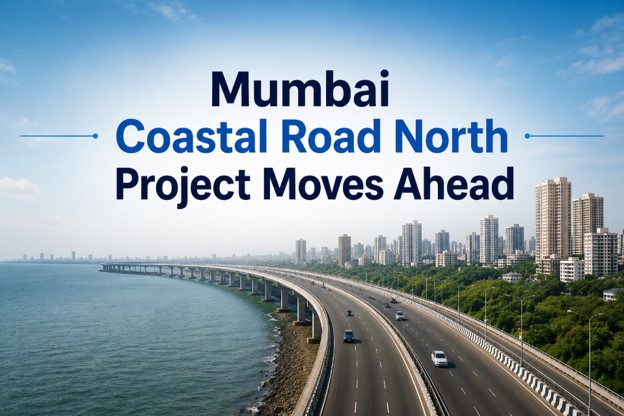
The tunnel will integrate seamlessly with the Coastal Road and the Mumbai Trans Harbour Link (MTHL), creating a more cohesive mobility backbone for the wider metropolitan region. As these links come together, Mumbai’s transport network will evolve into a multi-corridor system capable of supporting future growth.
Leadership Applauds the Project’s Strategic Importance
Chief Minister Devendra Fadnavis described the tunnelling launch as a transformative moment for Mumbai. He highlighted the long-term commuter benefits and the engineering ambition behind the project, noting that Maharashtra continues to lead India’s infrastructure innovation.
Deputy Chief Minister and MMRDA Chairman Eknath Shinde called the excavation milestone a proud moment, particularly because of the project’s navigation through dense residential zones and heritage areas. He emphasised that the tunnel would ease congestion and significantly improve daily mobility across the southern precincts.
MMRDA Commissioner Dr Sanjay Mukherjee characterised the launch as a landmark in the evolution of Mumbai’s transport networks. He noted that the project showcases India’s ability to deliver one of the country’s most complex underground engineering feats while adhering to global standards.
Beginning of a New Era in Tunnel-Based Mobility
As tunnelling progresses, the project signals a broader shift in how Mumbai approaches infrastructure. With surface-level expansion becoming increasingly challenging, the city is adopting deeper, more technologically advanced solutions to overcome structural constraints.
The Orange Gate–Marine Drive tunnel is not just an engineering endeavour, it is a vision statement. It reflects a commitment to reshaping urban mobility through innovation, sustainability and long-term planning. As the TBM pushes forward beneath the city’s foundations, Mumbai is entering a new era where underground corridors play a central role in its transport future.
With full-scale tunnelling now underway, the tunnel stands poised to become one of the most consequential mobility upgrades of the decade, redefining connectivity and reinforcing Mumbai’s position as a leader in infrastructure transformation.