
- By Shyam Singh
- 05 Dec 2025
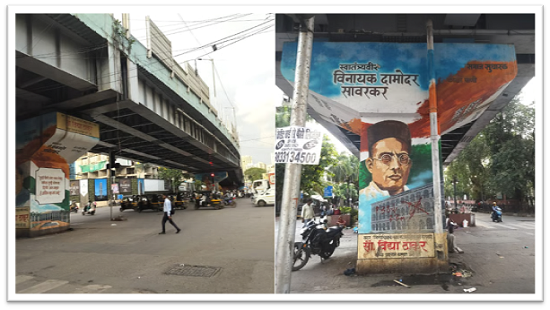
IIT-Bombay’s Crucial Intervention Could Rewrite the Future of Goregaon’s Veer Savarkar Flyover
Mumbai’s infrastructure debate has taken a significant turn with the latest recommendations from IIT-Bombay on the Veer Savarkar flyover in Goregaon. What was initially a straightforward demolition proposal has now shifted into a more nuanced engineering and policy conversation. As cities grow, infrastructure decisions become less about concrete and steel and more about balancing public convenience, scientific assessment, and long-term urban planning. The new direction emerging from IIT-Bombay’s inspection resonates with this complexity.
The expert team from IIT-Bombay conducted a detailed site inspection on Thursday and recommended a series of design adjustments to the seven-year-old flyover. The Brihanmumbai Municipal Corporation will now revise the drawings and submit an updated engineering package back to IIT-Bombay for a deeper assessment. The central question to be evaluated is whether monopile technology can replace the need for demolition, a possibility that reflects the evolving sophistication in urban engineering.
IIT-Bombay Calls for Design Refinements Before Final Review
According to senior civic officials, the IIT-Bombay team undertook a technical verification of the flyover’s alignment, available vertical and horizontal clearance, turning-radius sufficiency, and the overall feasibility of optimising the bridge span. These parameters determine whether a structural intervention is viable without causing large-scale disruption to the existing flyover.
The team recommended specific design refinements and requested revised drawings along with supporting engineering documents. Civic engineers will now integrate the suggested changes, update the technical plans, and resubmit them. A review meeting is scheduled in two weeks, indicating that the process is being handled with urgency and scientific rigor. For a city where mobility efficiency is central to productivity, such diligence is not procedural formality but economic necessity.
Monopile Technology Under Technical Evaluation
IIT-Bombay’s final report will assess whether monopile technology can be adopted as a viable alternative to demolition. Monopiles involve driving a large-diameter reinforced concrete pile deep into the foundation strata, creating a compact yet strong base that requires less surface disruption than traditional multi-pile systems.
Globally, monopiles have been used in offshore wind installations and constrained urban corridors because of their space efficiency and reduced construction footprint. For Mumbai, where land scarcity intersects daily with traffic bottlenecks, the prospect of integrating monopiles into bridge re-engineering represents an intriguing shift. If feasible, it could preserve the flyover, lower environmental impact, and reduce the scale of traffic diversions. It could also set a precedent for future upgrades across the city’s saturated road network.
A Flyover That Became a Flashpoint in Mumbai’s Infrastructure Politics
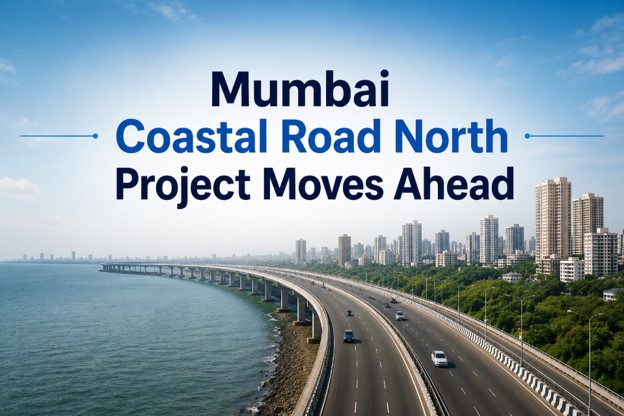
The Veer Savarkar flyover, built for Rs 27 crore and opened just seven years ago, was designed to streamline east-west movement by connecting the Western Express Highway to Rustomjee Ozone. It offered an alternative to the congested S. V. Road and quickly became essential to daily commuters. When the BMC proposed its demolition in August to accommodate the upcoming Mumbai Coastal Road Project (North) from Versova to Dahisar, residents and political leaders strongly opposed the plan.
The opposition came from multiple fronts. Local residents warned of severe congestion if the flyover were removed without an equally efficient replacement. Political representatives, including BJP MLA Vidya Thakur, urged the administration to reconsider and explore alternatives. The Free Press Journal highlighted potential commuter hardship, amplifying public sentiment. In a city where even temporary diversions can add 20 to 30 minutes to peak-hour travel, the immediate backlash was unsurprising.
Engineering Decisions Are Becoming Economic Decisions
Urban infrastructure choices increasingly shape the economic pulse of cities. Mumbai, with over 32 lakh vehicles and dense transit corridors, cannot afford disruptions without ripple effects across labour productivity. A study by the Centre for Urban Mobility suggests that every additional 10 minutes of commute time can result in measurable declines in worker output and employer efficiency. Demolishing a key connector like the Veer Savarkar flyover would have carried not just traffic consequences but economic ones.
This is why IIT-Bombay’s intervention is crucial. By subjecting the demolition proposal to scientific scrutiny and exploring alternatives such as monopile retrofitting, the city is signalling a shift from blunt replacement toward precision engineering. The process mirrors infrastructure philosophies in global megacities where demolition is the last resort, not the first instinct.
The Road Ahead Depends on Technical Alignment and Policy Clarity
The BMC’s revised drawings will test whether the engineering geometry of the flyover can accommodate monopile structures without compromising safety, clearance, or long-term load capacity. If feasible, the city could retain a functioning flyover while still enabling the Coastal Road’s northern extension. If not, demolition may become unavoidable, but it will be a decision taken after exhausting all scientific avenues.
For Mumbai’s urban planners, the episode reinforces a broader lesson. In a rapidly densifying metropolis, infrastructure choices must be both economically rational and socially sensitive. Citizens expect solutions that reduce disruption, conserve public investment, and incorporate global engineering practices. Institutions like IIT-Bombay bring the credibility and depth required to make such decisions defensible and future-ready.
A Turning Point for Mumbai’s Infrastructure Governance
The re-evaluation of the Veer Savarkar flyover is more than a structural reassessment, it is a test of Mumbai’s governance maturity. It demonstrates the value of expert consultation, public feedback, and data-driven decision-making. Whether the final outcome favours monopiles or demolition, the process sets a benchmark for how major infrastructure choices should be approached in a city of Mumbai’s scale.
In the coming weeks, the updated engineering drawings will guide IIT-Bombay’s final judgment. For now, the city waits, hoping for a solution that preserves mobility, protects public investment, and aligns with Mumbai’s long-term development blueprint. If executed thoughtfully, this review could mark a turning point in how the city adapts aging infrastructure to modern demands while keeping commuter interests at the centre of decision-making.