
- By Diya Sogani
- 16 Dec 2025
Mumbai Plans Historic Central Park at Mahalaxmi Racecourse, Set to Become City’s Largest Green Space
Mumbai:
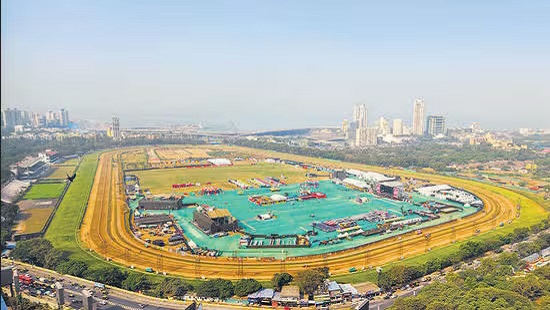
Mumbai is set to witness a landmark transformation with plans underway to convert the iconic Mahalaxmi Racecourse into what is being described as the largest central park ever developed in an Indian city. The ambitious redevelopment aims to create a vast, eco-friendly public space that combines greenery, recreation, sports, and cultural infrastructure, while preserving the heritage racing track.
The proposed Central Park will span nearly 295 acres, drawing land both from the existing racecourse and reclaimed areas along the city’s Coastal Road. The project is being positioned as a major urban intervention that will significantly enhance Mumbai’s open spaces, which are among the lowest per capita in the country.
Blending Green Spaces With Urban Infrastructure
According to state officials, around 125 acres will come from the Mahalaxmi Racecourse, while an additional 170 acres will be sourced from nearby coastal reclamation. The park will be seamlessly integrated with surrounding roads and public transport networks through underpasses and underground connections, ensuring easy access for residents and visitors.
Deputy Chief Minister Eknath Shinde said the redevelopment would not involve construction on the racecourse’s historic track or stables, addressing concerns raised by some groups. He emphasised that the project is designed as an environmentally responsible initiative that will serve as a major “oxygen zone” for the city.
World-Class Sports Facilities Below Ground
A key feature of the redevelopment is a large underground sports complex built to international standards. Spread across approximately one million square feet, the facility is expected to offer a wide range of indoor sports and training amenities.
Plans include courts and facilities for basketball, volleyball, handball, badminton, squash, kho-kho, gymnastics, cricket practice nets, skating rinks, and a velodrome. City officials say the underground design ensures that the above-ground area remains largely green and open, while still providing world-class sporting infrastructure.
Below the sports complex, a multi-level parking facility with space for around 5,000 vehicles is also proposed, aimed at reducing congestion in the surrounding areas during major events.
Convention Centre and Cultural Spaces
The Central Park is also planned to house a large convention centre developed on a nine-acre plot. The facility will feature three expansive halls, supported by a sizeable pre-function area, making it suitable for conferences, exhibitions, and large public gatherings.
In addition, cultural and recreational spaces will form an integral part of the park. These include an amphitheatre with seating for around 900 people, an open-air stage, and event lawns designed to host performances, festivals, and community activities.
Diverse Gardens and Urban Forest
Green landscaping is at the core of the project. A vast topiary garden spread across 70 acres is proposed, alongside multiple themed gardens such as perennial, seasonal, monsoon, aquatic, succulent, and organic farming gardens. A maze and interactive garden spaces are also part of the plan.
A botanical garden covering 31 acres will showcase medicinal plants, rare trees, palm groves, and water features, including a large lily pond. The plan also includes a 12-acre urban forest, designed to enhance biodiversity and provide a natural retreat within the dense urban environment.
Strong Connectivity Through Metro and Roads
Connectivity is a major focus of the project. The upcoming Metro Line 3 station near the Nehru Centre will be linked to the park through an underground passage, allowing thousands of commuters to access the space easily. The same network of underpasses will connect Annie Besant Road, Haji Ali, and the Coastal Road promenade, integrating the Central Park with other key public spaces in South Mumbai.
Municipal Commissioner Bhushan Gagrani said the connectivity plan would ensure smooth pedestrian movement and encourage widespread public use of the park.
A Game-Changer for Mumbai
Urban planners see the Central Park project as a potential game-changer for Mumbai, addressing the long-standing shortage of large public green spaces. If implemented as planned, it could redefine how open spaces, sports infrastructure, and cultural venues coexist in one of India’s most densely populated cities.
The proposal is currently being examined by civic authorities, and further details on timelines and execution are expected in the coming months.