
- By Hitesh
- 16 Dec 2025
Delhi Continues to Choke as Air Quality Remains in ‘Very Poor’ Category
New Delhi:
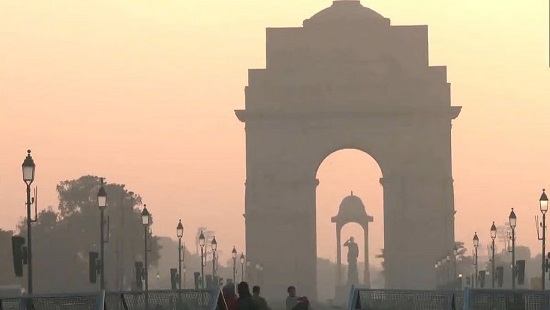
Delhi continued to grapple with hazardous air pollution on Tuesday, with the city’s overall Air Quality Index (AQI) recorded at 378 in the morning, placing it in the ‘very poor’ category. Although pollution levels showed a slight improvement compared to the previous day, air quality across the national capital remained a serious health concern.
Data released by the Central Pollution Control Board (CPCB) indicated that the AQI had fallen marginally from Monday evening, when it had reached a ‘severe’ level of 427. Despite this drop, toxic smog continued to blanket large parts of the city, affecting visibility and causing discomfort to residents.
Smog Reduces Visibility Across the City
Several prominent areas reported alarmingly high pollution levels. Locations around India Gate recorded AQI readings close to 380, while Sarai Kale Khan registered levels nearing 360, both firmly in the ‘very poor’ category. The thick smog reduced visibility across major roads and landmarks, raising safety concerns for commuters and pedestrians.
Residents reported eye irritation, breathing difficulties, and fatigue as pollution lingered throughout the day. Visitors to the city also struggled to adjust to the poor air quality, highlighting the severity of the situation.
According to the CPCB’s air quality classification, AQI levels between 301 and 400 fall under the ‘very poor’ category, while readings above 400 are considered ‘severe’. Health experts advise that prolonged exposure to such pollution levels can aggravate respiratory and cardiovascular conditions, particularly among children, the elderly, and those with pre-existing illnesses.
Schools Shift Young Students to Online Mode
In response to the deteriorating air quality, the Delhi government directed schools to move classes for students up to Class 5 to online mode. The decision was taken as a precautionary measure to limit children’s exposure to harmful pollutants.
Authorities said the shift from hybrid learning to fully online classes for younger students would remain in place until pollution levels improve. Schools have been asked to ensure continuity of learning while prioritising student health.
Pollution Levels Across Other Cities
While Delhi continued to face extreme pollution, air quality in other major Indian cities remained relatively better. Cities such as Ahmedabad, Bengaluru, Chennai, Hyderabad, and Mumbai reported AQI levels largely within the ‘moderate’ to ‘satisfactory’ range. Meanwhile, Jaipur, Lucknow, Patna, and Pune recorded ‘moderate’ air quality, according to official data.
The stark contrast highlighted the unique challenges faced by the national capital during the winter months, when weather conditions often trap pollutants close to the ground.
Focus on Vehicular Emissions
As pollution levels remain high, the Commission for Air Quality Management (CAQM) has intensified efforts to address one of the key contributors to poor air quality—vehicular emissions. The expert committee set up by the CAQM held its first meeting on Monday to examine pollution sources related to transport across Delhi and the National Capital Region (NCR).
Chaired by Ashok Jhunjhunwala and co-chaired by Prof Randeep Guleria, the committee discussed segment-wise contributions of vehicle emissions, exposure risks, and the readiness of electric vehicle infrastructure. Officials said the panel would develop concrete and actionable recommendations in the coming meetings.
GRAP Restrictions in Place
The worsening air quality has already triggered strict measures under the Graded Response Action Plan (GRAP). With AQI levels breaching critical thresholds in recent days, authorities imposed Stage IV restrictions, commonly known as ‘Severe Plus’ measures, aimed at curbing pollution sources.
These measures include limits on construction activity, restrictions on vehicle movement, and enhanced enforcement to reduce emissions across sectors.
Ongoing Health Concerns
Public health experts continue to urge residents to take precautions, including avoiding outdoor activities, wearing protective masks, and using air purifiers indoors where possible. Authorities have also appealed to citizens to cooperate by reducing vehicle usage and following pollution control advisories.
As Delhi heads deeper into the winter season, officials warn that sustained efforts and coordinated action will be required to bring pollution levels down and protect public health.