
- By Medhavini
- 26 Nov 2025
Maharashtra’s 4.5 Crore Boost to 1,800 Bhajan Mandals Signals a New Push for Cultural Revival
Maharashtra’s latest decision to sanction ₹4.5 crore for 1,800 bhajan mandals is more than a budgetary allocation; it is an investment in the state’s cultural continuity at a time when traditional art forms are competing with fast-changing entertainment landscapes. The government’s announcement, which grants each mandal ₹25,000 for musical instruments and operational strengthening, represents an effort to reinvigorate community-led devotional music groups that have historically shaped Maharashtra’s social fabric.
The sanction, issued by the Cultural Affairs Department, comes with clear utilisation guidelines and compliance mechanisms. More importantly, it illustrates the state’s recognition that cultural capital is as significant as economic capital in sustaining social cohesion, especially in regions where community arts serve as both creative expression and social glue.
Strengthening Traditional Art Forms Through Targeted Funding
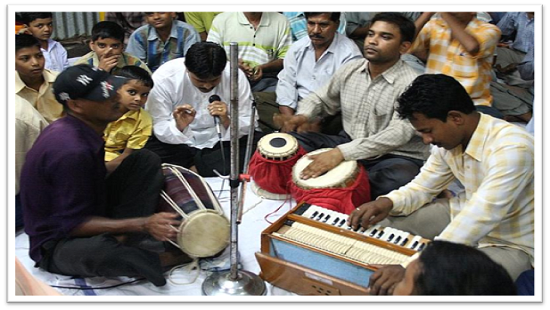
The sanctioned amount of ₹4.5 crore, when distributed across 1,800 bhajan mandals, is designed to enhance their capacity to perform, innovate and sustain themselves. Each mandal receiving ₹25,000 marks a targeted intervention rather than a symbolic allocation. At a functional level, the funds may be used to purchase essential musical instruments such as harmonium, mridang, pakhawaj, veena and others. These instruments often require maintenance or replacement, and for many smaller mandals, upfront costs can become barriers to performance quality.
The government’s directive ensures that this infusion of funds is both timely and utilitarian. With thousands of cultural programmes held annually across rural and semi-urban Maharashtra, these mandals play a critical role in promoting devotional music and community participation. The grant allows them not only to maintain tradition but also to continue performing at festivals, village gatherings and cultural events without financial strain.
Administrative Transparency and Compliance Mechanisms
To ensure accountability in the utilisation of public funds, the Director of Cultural Affairs has been instructed to oversee the immediate disbursal of grants. The requirement for a utilisation certificate and a compliance report within one month adds structured oversight to a sector that historically operated with informal financial systems.
This increased administrative rigour reflects a broader trend in public spending: cultural grants are expected to demonstrate measurable outcomes, proper utilisation and documented impact. Such expectations align with contemporary governance demands where transparency is central to public trust.
The instructions become even more relevant considering that the Model Code of Conduct is currently in force due to ongoing municipal council and nagar panchayat elections. The department has been explicitly directed to ensure the disbursal process remains compliant with MCC regulations. This prevents any perception of political influence, safeguarding both the integrity of the programme and the neutral functioning of cultural institutions.
Qualification Norms to Ensure Performance-Based Support
In contrast to blanket cultural subsidies offered in earlier decades, the current grant is tied to performance benchmarks. A bhajan mandal must meet two conditions: it must have at least 20 members, and it should have performed a minimum of 50 programmes. These criteria ensure that the grant does not go to dormant or inactive groups but supports organisations that demonstrate sustained engagement with audiences.
Such performance-based qualification aligns with a broader shift in public funding norms. Rather than treating cultural bodies as subsidy recipients, governments increasingly treat them as stakeholders with defined output expectations. This transition pushes cultural groups to maintain activity levels, improve quality and remain relevant in a competitive cultural landscape.
Once a mandal qualifies, it becomes eligible to receive the ₹25,000 grant on two separate occasions. This creates a structured incentive cycle, enabling active cultural groups to access recurring support, strengthen their operational base and expand their reach within communities.
Cultural Revival as an Economic and Social Investment
While the financial quantum per mandal may appear modest, the cumulative impact is far-reaching. Maharashtra has thousands of bhajan mandals that contribute to local economies through performances, festivals and community events. A 2019 cultural mapping study indicated that rural and semi-urban art groups generate indirect economic activity by supporting instrument makers, event organisers, sound technicians and local vendors. Grants that strengthen cultural groups therefore extend beyond music; they influence micro-economies that rely on cultural vibrancy.
Moreover, bhajan mandals represent an important social institution. They bring communities together across caste, class and geographic divides. Their performances often function as informal social gatherings that reinforce collective identity and shared experience. In periods marked by increasing digital isolation and fragmentation, community-led arts provide an anchor of social interaction.
Reinforcing Maharashtra’s Cultural Identity
Maharashtra’s cultural landscape has always thrived on its diverse devotional traditions—from abhangs and kirtans to tribal folk performances. Bhajan mandals occupy a central space in this ecosystem, acting as custodians of oral traditions and spiritual heritage. By equipping them with better resources, the government strengthens a cultural continuum that bridges generations.
The grant reflects a broader philosophy: cultural preservation is not the responsibility of communities alone but a shared commitment between citizens and the state. As globalisation continues to transform cultural consumption patterns, proactive public investment becomes necessary to sustain traditional art forms that lack commercial scale yet possess immense social value.
A Strategic Step Toward Cultural Modernisation
While the grant focuses on traditional instruments and devotional performance styles, it indirectly encourages modernisation within the cultural sector. Better-equipped mandals can improve sound quality, experiment with fusion formats, reach wider audiences and participate in larger cultural festivals. Over time, such investments can catalyse innovation within traditional art forms, making them attractive to younger generations.
The initiative also reflects a governance trend where cultural policy is treated with the same strategic importance as education, sports or rural development. By involving compliance reporting, utilisation tracking and eligibility norms, the government creates a model that other states might replicate.
Conclusion: A Small Grant with Structural Impact
Maharashtra’s ₹4.5 crore sanction to 1,800 bhajan mandals is not merely a financial announcement. It is an acknowledgment of the economic, social and cultural value generated by community-led devotional music groups. Through structured funding, compliance requirements and performance-based qualification norms, the state has positioned cultural preservation as a measurable and accountable public investment.
In a fast-changing cultural landscape, this initiative signals a clear message: traditional art forms are not relics of the past but living, evolving expressions that deserve strategic support. By empowering bhajan mandals, Maharashtra strengthens both its cultural identity and the social ecosystems that sustain community life.