
- By Medhavini
- 20 Feb 2026
Mahalaxmi Racecourse Redevelopment: Why Mumbai’s Architects Are Asking Hard Questions
Cities are defined as much by what they build as by what they preserve.
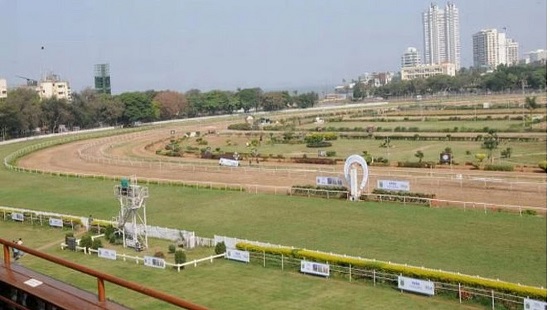
In Mumbai, that debate has sharpened around the future of the iconic Mahalaxmi Racecourse. Nearly 102 members of the Mumbai Architects Collective (MAC) have formally demanded transparency on the proposed redevelopment of the racecourse land.
Their concern is not about development versus no development. It is about clarity versus opacity.
The Core Demand: Full Disclosure
The MAC has asked for complete disclosure of:
- Development rights
- Lease terms
- Floor Space Index (FSI) grants
- Financial arrangements linked to the land
- The role of the Royal Western India Turf Club (RWITC)
- The civic position of the Brihanmumbai Municipal Corporation (BMC)
Their appeal has been addressed to Chief Minister Devendra Fadnavis and BMC Commissioner Bhushan Gagrani.
In urban policy, transparency is not a procedural formality. It determines public trust.
The Vision: A Central Park-Style Transformation
Deputy Chief Minister Eknath Shinde had announced in December 2025 that the racecourse would be developed along the lines of New York’s Central Park.
The plan reportedly includes:
- Gardens and landscaped public areas
- Convention halls
- Entertainment facilities
- An underground sports complex
- Parking space for 5,000 vehicles
Of the total project area, 125 acres are to come from the racecourse, while an additional 170 acres would be drawn from land reclaimed for the Coastal Road.
On paper, this sounds ambitious. But scale without scrutiny raises questions.
The FSI Question: What Lies Beneath
The MAC’s sharpest criticism relates to underground construction and its FSI implications.
In Mumbai, FSI determines how much can be built on a piece of land. The architects argue that proposed underground pedestrian corridors and parking structures could inflate effective FSI, increasing buildable potential in surrounding areas — especially within 500 metres of metro stations.
This is not a minor technical issue. In Mumbai’s real estate ecosystem, FSI is economic power.
If underground structures indirectly expand development rights nearby, then the racecourse redevelopment becomes more than a park project. It becomes an urban value multiplier.
And such multipliers demand public debate.
Environmental and Infrastructure Concerns
Beyond FSI, the MAC has raised environmental red flags.
They argue that:
- Large-scale underground parking and sports facilities are capital-intensive.
- Excavation could permanently disrupt natural drainage systems.
- Green spaces risk becoming structurally compromised.
In a city prone to flooding, natural drainage is not decorative infrastructure. It is survival infrastructure.
The architects’ position is clear: infrastructure that weakens ecological resilience cannot be justified in the name of beautification.
A Contradiction in Public Spending?
The MAC also pointed to what it sees as inconsistency in public finance decisions.
The BMC had earlier cited a lack of ₹400 crore for maintaining the Coastal Road before transferring it to a private corporation. Yet substantial public investment is being considered for underground parking and sports facilities at the racecourse.
This contrast fuels their demand for clarity.
Public money, they argue, must be aligned with public priorities.
Lease Terms and Land Control
In July 2024, the BMC and RWITC signed an agreement transferring control of the racecourse grounds.
Out of 211 acres:
- 120 acres are now under BMC possession
- 91 acres have been leased back to RWITC
- The lease period runs from June 1, 2024, to May 31, 2053
For urban planners, long-term leases shape generational outcomes. Once structured, they are difficult to reverse.
The MAC’s request is simple: put every clause in the public domain.
A Policy Proposal: No Underground Parking Beneath Green Spaces
The architects have gone further, proposing a citywide policy that bans underground parking beneath green spaces.
They suggest such facilities should be permitted only under existing buildings or roads — not under parks.
This reflects a philosophical stance: open spaces should remain ecologically functional, not structurally hollowed.
The Larger Urban Question
This debate is not just about one racecourse.
It is about how Mumbai treats its last remaining large open spaces.
As land becomes scarce, every acre becomes economically attractive. But cities are not balance sheets. They are living systems.
The MAC has clarified that it is not opposed to improving public access or redeveloping the racecourse. What it resists is a plan whose “full implications have been hidden from the public.”
In urban governance, secrecy amplifies suspicion.
Transparency builds legitimacy.
What Happens Next?
The redevelopment of Mahalaxmi Racecourse sits at the intersection of:
Real estate economics
Environmental sustainability
Public finance
Urban mobility
Civic trust
If Mumbai gets this right, it could create a globally admired public space.
If it gets it wrong, it risks losing one of its last breathing grounds.
Cities rarely get second chances with open land.
That is why the demand for disclosure is not obstruction. It is responsibility.