
- By Nirmal Ajwani
- 20 Feb 2026
Mumbai Pride at 16: Why Equality Demands Have Moved Beyond Decriminalisation
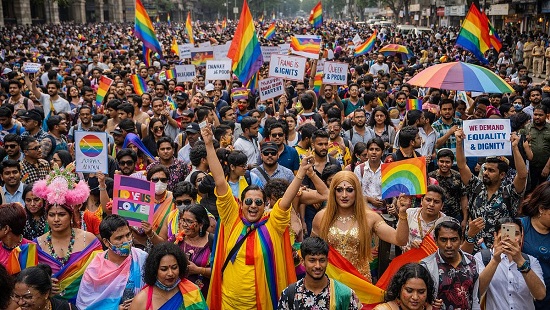
At August Kranti Maidan, thousands gathered to mark the 16th official Pride march in Mumbai. The theme — “Sweet 16: Anniversary of Resistance and Hope” — signals celebration. But the mood is not just festive. It is focused.
Because for many in the LGBTQIA+ community, decriminalisation was a beginning — not the destination.
From Legal Reform to Lived Reality
India’s reading down of Section 377 in 2018 decriminalised consensual same-sex relationships between adults. That was historic. It removed the shadow of criminality.
But laws can change faster than society.
The message emerging from this year’s Pride march is clear: freedom from punishment is not the same as freedom to live with dignity.
Activists argue that while legal reform addressed criminalisation, it did not automatically guarantee:
- Protection from discrimination
- Equal access to housing and healthcare
- Recognition of same-sex unions
- Equal taxation benefits
- Fair policies around blood donation
In other words, equality under the law must translate into equality in daily life.
Why Anti-Discrimination Law Is the New Frontier
One of the central demands of the march is a comprehensive anti-discrimination law. Not symbolic inclusion — enforceable protection.
Discrimination often doesn’t announce itself loudly. It happens quietly:
- A landlord refusing a rental application
- A hospital treating a partner as a “stranger”
- An employer hesitating on promotions
- Financial systems that don’t recognise domestic partnerships
Without explicit legal safeguards, these everyday exclusions continue.
The community’s argument is simple: constitutional rights must be operational, not theoretical.
Reservation for Transgender Citizens: Equity, Not Favour
Another key demand is horizontal reservation for transgender persons in education and public employment.
For many trans activists, this is not about special treatment. It is about correcting structural exclusion that spans generations.
Educational dropouts, family rejection, limited employment access — these are not isolated stories. They are systemic patterns.
If policy aims to level the playing field, it must first acknowledge how uneven the ground has been.
Reservation, in this context, is framed as restoration — not charity.
Marriage, Taxation and the Economics of Equality
Marriage equality remains a central issue. Beyond symbolism, legal recognition affects practical realities:
- Inheritance rights
- Medical decision-making
- Joint property ownership
- Tax rebates
- Financial planning
Without legal recognition, same-sex couples often navigate a patchwork of legal vulnerabilities.
Equality is not just emotional recognition. It is financial and administrative clarity.
When the state recognises a union, it recognises a household’s economic legitimacy.
The Blood Donation Debate
Another significant demand is the removal of identity-based blood donation bans.
Activists argue that public health policy should be guided by behaviour-based science, not identity-based assumptions.
If screening processes are robust and risk is assessed scientifically, then exclusion based solely on sexual orientation becomes harder to justify.
This issue reflects a larger principle: policy must evolve with evidence.
Pride as Policy Pressure
Public marches are often misunderstood as symbolic gatherings. But historically, they serve three functions:
- Visibility — making marginalised communities visible in mainstream spaces
- Solidarity — strengthening internal community bonds
- Accountability — reminding institutions that reform remains incomplete
Sixteen years of Pride in Mumbai suggest continuity. But continuity also implies unfinished work.
The march signals that the conversation has matured. The demand is no longer just acceptance. It is full citizenship.
Beyond Tolerance
A recurring theme among activists is the shift from “tolerance” to “belonging.”
Tolerance implies endurance. Belonging implies equality.
In a constitutional democracy, rights are not granted by majority approval. They are guaranteed by law.
This year’s Pride march underscores a broader truth: legal milestones are necessary, but insufficient. Social and institutional systems must evolve alongside them.
The Road Ahead
Mumbai has long been seen as one of India’s more inclusive cities. But inclusivity must move from cultural acceptance to structural reform.
The community’s charter of demands — covering housing, healthcare, education, taxation and marriage — reflects a comprehensive approach to equality.
It signals that the movement is entering a policy-focused phase.
Because after decriminalisation, the real work begins: ensuring dignity is embedded into systems, not just speeches.
Sixteen years of Pride is not just an anniversary.
It is a reminder that democracies are strengthened not when differences disappear — but when they are protected.