
- By Mahesh
- 20 Feb 2026
Maharashtra’s AI Bet on Early Childhood: Why ‘Shiksha Saathi’ Is Bigger Than a Tech Launch
At the India AI Impact Summit 2026, the headline announcement wasn’t about algorithms replacing jobs. It was about algorithms empowering them.
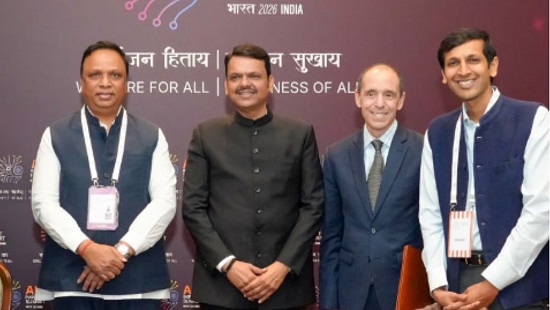
Devendra Fadnavis launched ‘Shiksha Saathi’, an AI-enabled assistant designed to support Anganwadi workers across Maharashtra. Developed by Rocket Learning in collaboration with OpenAI, the initiative positions Maharashtra as the first state in India to deploy an AI-powered assistant for Anganwadi workers at scale.
But beyond the technology, this is a story about productivity, scale and trust.
Why Anganwadi Workers Matter More Than We Admit
India’s early childhood ecosystem rests heavily on Anganwadi workers. They are not just caregivers. They are nutrition monitors, pre-school educators, community mobilisers and data recorders — often all at once.
Yet, their work is complex and constantly evolving. Curriculum standards change. Developmental benchmarks shift. Reporting requirements increase.
The question is simple: how do we support the people who support our children?
‘Shiksha Saathi’ attempts to answer that.
What Is ‘Shiksha Saathi’?
Shiksha Saathi is a multilingual AI assistant integrated directly with WhatsApp. That design choice matters.
Instead of creating a new app that requires training and downloads, the tool works within a platform frontline workers already use daily. Accessibility, not sophistication, is the real innovation here.
The assistant provides real-time guidance on:
- Tracking developmental milestones
- Implementing early learning strategies
- Aligning with the National Curriculum Framework
- Adopting practices rooted in Aadharshila standards
- Creating engaging, age-appropriate learning environments
In simple terms, it turns policy documents into practical daily actions.
AI as a Productivity Multiplier
There’s a common fear that AI replaces people. But in early childhood education, the opposite is true.
AI cannot replace human warmth. It cannot substitute community trust. But it can reduce cognitive load.
Imagine an Anganwadi worker preparing for the day. Instead of flipping through manuals or waiting for training sessions, she can simply ask:
“What activity helps improve motor skills for a 4-year-old?”
And receive structured, curriculum-aligned guidance instantly.
This is not automation. This is augmentation.
When frontline workers become more confident, children benefit directly.
Why This Move Is Strategically Important
Maharashtra’s partnership with OpenAI and Rocket Learning signals something deeper: governance is moving from policy-heavy to support-heavy.
Instead of only issuing circulars, the state is embedding guidance into daily workflows.
Three strategic shifts stand out:
From Training Events to Continuous Support
Traditional capacity-building happens in workshops. AI enables on-demand assistance, every day.
From Static Manuals to Adaptive Guidance
Printed modules don’t adapt. AI-based systems can respond dynamically to real questions from workers.
From Monitoring to Empowerment
Rather than focusing only on compliance, this initiative focuses on enabling better outcomes.
Scale Without Complexity
Lakhs of Anganwadi workers across Maharashtra are expected to benefit from this tool.
What makes this scalable is its simplicity:
- No advanced hardware required
- WhatsApp-based interface
- Multilingual accessibility
- Real-time response capability
When technology meets people where they are, adoption becomes easier.
And in public systems, adoption is everything.
The Bigger Goal: Foundational Learning
India’s education debate often focuses on higher education or competitive exams. But research consistently shows that foundational years — ages 3 to 6 — shape cognitive, emotional and social outcomes for life.
By strengthening early childhood support systems, Maharashtra is indirectly investing in:
- Better school readiness
- Improved literacy and numeracy
- Reduced learning gaps
- Stronger long-term workforce outcomes
In other words, this is not just an education reform. It is an economic reform.
A Governance Model to Watch
When states begin to integrate AI into frontline public service delivery, the conversation shifts from “Can we use AI?” to “Where else can we use it meaningfully?”
The launch of Shiksha Saathi reflects a governance mindset that sees technology not as a headline but as infrastructure.
If implemented effectively, it may serve as a model for other states looking to strengthen early childhood education systems without adding bureaucratic complexity.
Because sometimes, transformation doesn’t begin with a big policy speech.
It begins with better tools in the hands of those doing the real work.