
- By Shyam Singh
- 20 Feb 2026
When 30 Minutes Feels Like 3 Hours: What the Airport Glitch Reveals About Digital Dependence
Airports are designed for precision. Every minute is calculated. Every boarding pass is part of a larger choreography.
So when a 30-minute software glitch hits two of India’s busiest airports, the disruption feels much larger than the clock suggests.
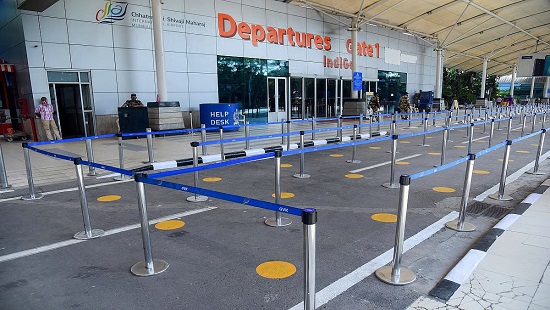
On Thursday morning, a technical outage in the Navitaire global reservation system briefly disrupted check-in services at Indira Gandhi International Airport and Chhatrapati Shivaji Maharaj International Airport.
Operations normalised quickly. No major cancellations were reported. But the episode offers an important lesson about how modern aviation works — and where it remains vulnerable.
The Source: A Global System, A Local Impact
The disruption originated from Navitaire, a global reservation platform owned by Amadeus IT Group.
Navitaire provides passenger reservation systems, ancillary services management, and revenue tools to airlines worldwide.
When such a system experiences downtime, the ripple effect is immediate. Airlines including IndiGo, Air India Express and Akasa Air were impacted.
The issue lasted approximately 30 minutes. In digital infrastructure terms, that is brief. In airport time, it is significant.
Why Check-In Is So Sensitive
Check-in systems are not isolated tools. They connect to:
- Passenger name records
- Baggage tagging systems
- Security validation
- Boarding gate sequencing
- Revenue accounting
When the reservation backbone falters, frontline systems slow down.
Ground staff at both airports had to switch to manual passenger processing. That meant:
- Longer queues
- Slower document verification
- Temporary congestion at counters
Even when flights depart on schedule, passenger perception is shaped by waiting time.
A Global Problem in a Local Terminal
Reports suggest the outage affected carriers beyond India, across parts of Asia-Pacific and Europe.
This is the reality of interconnected systems: airlines across continents often depend on shared technology platforms.
Globalisation has reduced cost and increased efficiency. But it has also concentrated risk.
When infrastructure centralises, outages amplify.
Timing Matters
In Delhi, the disruption coincided with increased passenger volume due to the India AI Impact Summit 2026, which had drawn global delegates and heightened VIP movement.
High traffic periods expose system weaknesses more visibly.
A quiet terminal can absorb a 30-minute glitch. A crowded one magnifies it.
The Hidden Strength: Operational Recovery
What stands out is not just the glitch — but the recovery.
Airline sources confirmed that operations resumed quickly. No major delays or cancellations were reported.
This suggests that while digital systems are central, fallback mechanisms still exist.
Manual processing may be slower, but it keeps aircraft moving.
In complex systems, resilience is measured not by absence of failure, but by speed of recovery.
The Larger Lesson: Digital Infrastructure Is Public Infrastructure
Air travel today is deeply digitised. From booking to boarding, the passenger journey is algorithm-driven.
But unlike runways or terminals, digital infrastructure is less visible to the public.
When it fails, frustration spikes. Yet few passengers realise that multiple airlines may depend on the same backend platform.
This episode reinforces three realities:
- Technology concentration increases systemic risk
- Contingency planning is as important as innovation
- Communication during disruption shapes public trust
Efficiency vs. Redundancy
Airlines operate on thin margins. Centralised global systems reduce cost and improve data integration.
However, resilience sometimes requires redundancy — backup layers that may appear inefficient but protect against cascading failures.
The aviation sector constantly balances:
- Cost efficiency
- Operational reliability
- Customer experience
The Navitaire glitch reminds us that this balance is ongoing.
A Glimpse Into the Future
As airports become smarter — integrating biometric boarding, AI-based scheduling and predictive analytics — dependence on seamless software will only grow.
The key question is not whether glitches will occur. They will.
The real question is:
How quickly can systems isolate, correct and communicate disruption?
Thirty minutes may seem short. But in a networked world, even brief pauses reveal how interconnected our systems have become.
And perhaps that is the real takeaway:
In aviation, technology is not just support. It is spine.
When the spine stutters, even briefly, the whole body feels it.