
- By Mahesh
- 05 May 2026
This Day, That Year: From Bombay To Mumbai – A Defining Shift In Identity
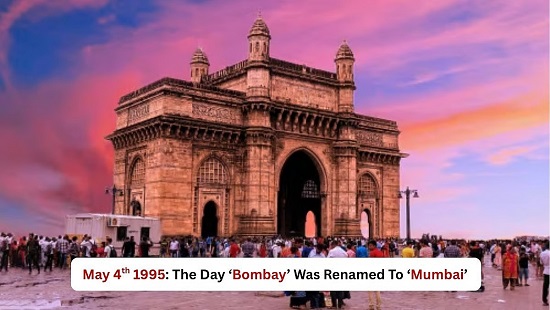
Mumbai: On May 4, 1995, Mumbai witnessed a historic transformation as its colonial-era name “Bombay” was officially changed to “Mumbai.” The move, driven by political and cultural forces, marked a significant moment in the city’s journey toward reclaiming its indigenous identity.
The Political Push Behind The Change
The renaming was carried out under the Shiv Sena–BJP alliance government in Maharashtra, with the movement strongly championed by Bal Thackeray.
For the Shiv Sena, the name “Bombay” symbolised a colonial past imposed during British rule. The push to adopt “Mumbai” was part of a broader effort to reflect local culture, language, and heritage.
With support from the Bharatiya Janata Party (BJP), the state government formalised the decision in 1995, directing institutions, media, and businesses to adopt the new name.
Roots In Indigenous Culture
The name “Mumbai” is derived from Mumbadevi, the city’s patron deity, historically worshipped by the original inhabitants of the region.
In contrast, “Bombay” traces its origins to the Portuguese term “Bombaim,” believed to come from “Bom Bahia,” meaning “Good Bay.” This layered history reflects the city’s long-standing interactions with colonial powers.
More Than Just A Name Change
While the transition was administrative, its significance went far beyond nomenclature.
For many, it represented:
- A rejection of colonial legacy
- An assertion of regional and cultural identity
- A political milestone in Maharashtra’s history
Interestingly, for large sections of the population—especially Marathi and Gujarati-speaking communities—the name “Mumbai” was already in everyday use long before it became official.
A Symbol That Still Resonates
Decades later, the renaming continues to hold symbolic value. Political groups, including factions of the Shiv Sena (UBT), often describe the moment as a milestone of Marathi pride and cultural assertion.
The anniversary is seen not just as a historical event, but as a reminder of how identity, language, and politics intersect in shaping cities.
Conclusion
The transition from Bombay to Mumbai was not merely about changing a name—it was about redefining a narrative.
More than three decades later, the decision remains a defining chapter in the city’s evolution, symbolising a shift from colonial influence to a more locally rooted identity that continues to shape how the city sees itself today.