
- By Rupendra
- 20 May 2026
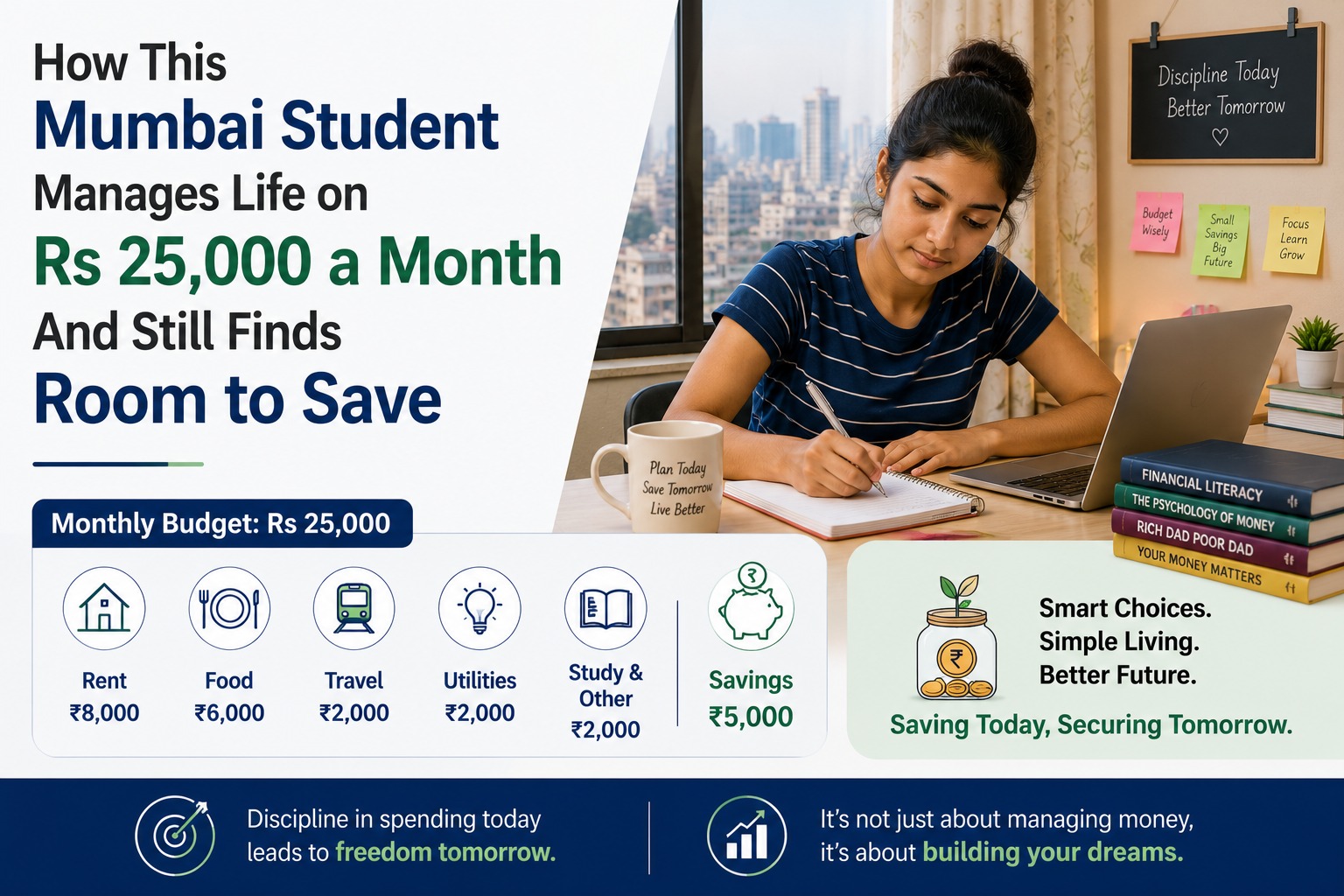
How This Mumbai Student Manages Life on Rs 25,000 a Month And Still Finds Room to Save
Living in Mumbai is often associated with high rents, fast-paced lifestyles, and rising daily expenses. Yet, for thousands of students and young professionals, the city also represents opportunity, independence, and ambition. A recent Instagram video by Ayushi has resonated widely online after she shared how she manages her monthly expenses in Mumbai on a budget of Rs 25,000.
Her detailed breakdown of rent, food, transport, and lifestyle expenses offered a practical glimpse into how careful budgeting and smart financial decisions can make life in Mumbai manageable for students.
Managing Accommodation in Mumbai’s Competitive Rental Market
Ayushi lives in Andheri East in a girls’ PG accommodation, a housing arrangement commonly preferred by students and early-career professionals seeking affordable shared living spaces in Mumbai.
“We pay around Rs 14,000 on rent and electricity in a shared setup,” she said in the video.
Although she did not specify her exact individual contribution, the statement reflects how shared accommodations continue to play an important role in helping young residents manage expenses in metro cities.
Accommodation remains one of the largest components of monthly urban spending, especially in locations that offer strong connectivity and easy access to educational institutions and workplaces. As a result, shared PGs and co-living spaces have become practical solutions for many students navigating life in Mumbai.
Public Transport Remains Mumbai’s Biggest Financial Advantage
One of the most notable aspects of Ayushi’s monthly budget is her commuting expense.
She spends around Rs 2,000 travelling through Mumbai’s local train and metro network, which she described as a major money-saver.
For students and professionals alike, Mumbai’s extensive public transport system continues to provide an affordable and reliable mode of daily travel. The combination of local trains and metro services allows residents to reduce dependence on expensive private transport while maintaining efficient connectivity across the city.
In a city where commute distances can often be long, affordable transportation becomes a critical factor in maintaining financial balance.
Home-Cooked Meals Help Reduce Monthly Expenses
Ayushi also highlighted how food choices significantly influence monthly spending. According to her, food expenses amount to nearly Rs 6,000 every month.
She explained that cooking meals at home not only helps save money but is healthier as well.
This reflects a growing trend among students and young working professionals who increasingly prefer home-cooked meals to maintain affordability and healthier routines. Preparing meals at home often helps reduce frequent spending on dining out and food delivery while also offering better control over monthly budgets.
Her budgeting strategy demonstrates how small lifestyle decisions can collectively make urban living more sustainable.
Balancing Financial Discipline With Personal Interests
Despite managing a fixed monthly budget, Ayushi also allocates money for hobbies and fitness activities.
“For the other stuff like running and pursuing my hobbies, I pay around Rs 5,000. So, yes, you can still save if you want,” she said in the video.
This aspect of her spending pattern resonated strongly with viewers because it highlighted an important reality of urban life: budgeting is not only about reducing expenses but also about maintaining balance.
Students and young professionals today increasingly prioritise fitness, experiences, and personal interests alongside essential expenses. Ayushi’s breakdown suggests that disciplined spending can still leave room for hobbies and self-development, even in an expensive city like Mumbai.
A Reality That Many Young Residents Relate To
The video sparked conversations online, with many viewers sharing similar experiences of managing life in Mumbai through shared accommodations, public transport, and structured monthly planning.
Several users pointed out that living in Mumbai becomes more manageable when the focus is on maintaining a sustainable lifestyle rather than aggressively maximising savings during the early stages of education or career-building.
For many students, Mumbai represents a city of transition - a place where financial discipline, adaptability, and independence become essential life skills. Ayushi’s monthly budget breakdown reflects that broader reality.
Her experience also highlights how financial planning among young urban residents is evolving. Rather than focusing on luxury, many students today prioritise functionality, flexibility, and long-term sustainability.
A Realistic Snapshot of Student Life in Mumbai
Ayushi’s video offered more than just numbers. It provided a realistic and relatable snapshot of what student life in Mumbai looks like today.
From shared accommodations and affordable commuting to home-cooked meals and controlled discretionary spending, her approach demonstrates how thoughtful budgeting can help young residents navigate one of India’s busiest metropolitan cities.
For students preparing to move to Mumbai or young professionals beginning independent lives, such experiences offer valuable insight into how structured spending and practical lifestyle choices can make city living both manageable and rewarding.