
- By Shyam Singh
- 04 Dec 2025
MHADA’s Game-Changing Move Set to Shake Up Maharashtra’s Housing Market in 2025
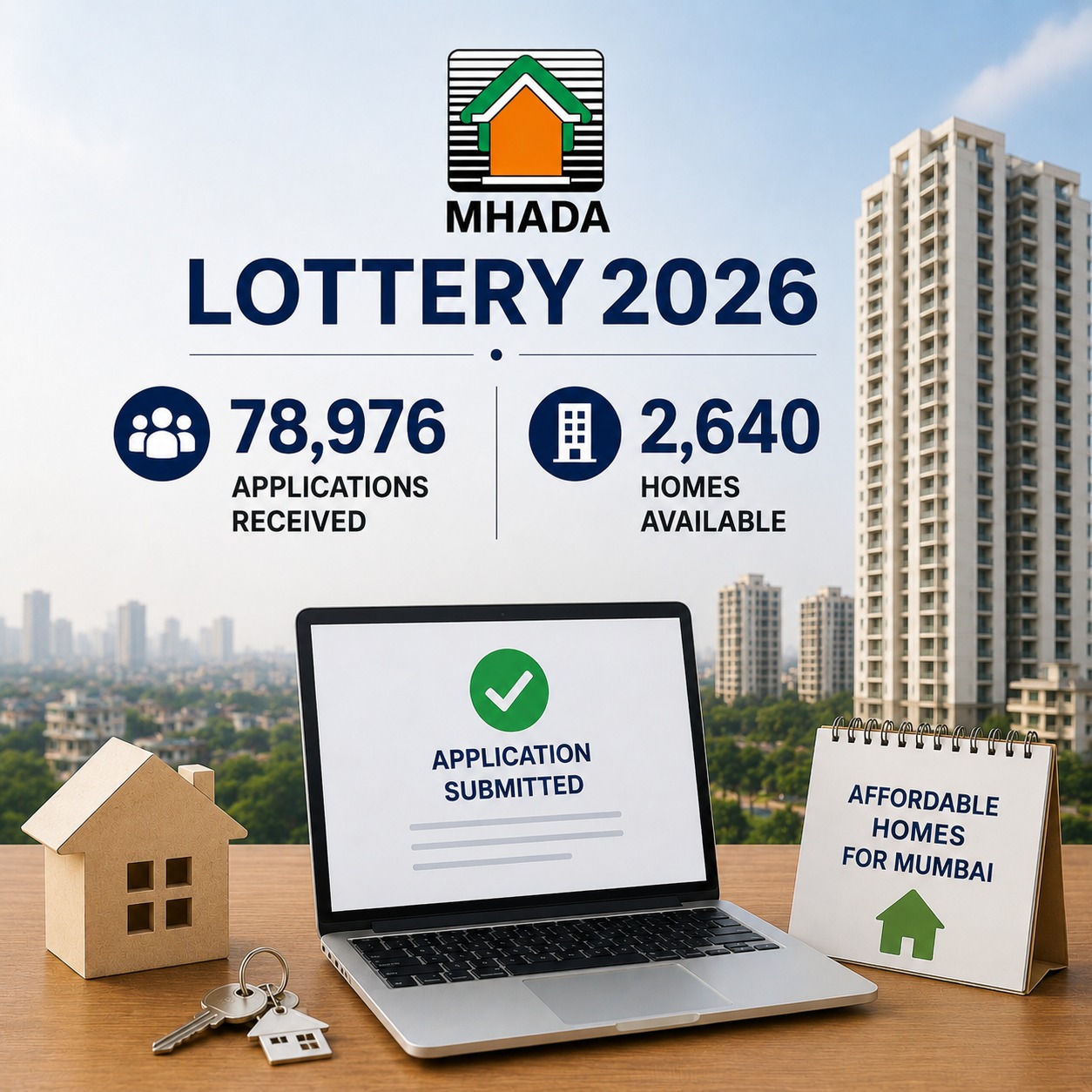
The Maharashtra Housing and Area Development Authority (MHADA), under the stewardship of IAS Sanjeev Jaiswal, has undertaken one of its most strategic reforms in recent years, appointing professional private agencies to accelerate the sale of thousands of ready but unsold homes across the Konkan region. This shift signals a decisive push toward resolving long-standing challenges in affordable housing delivery and ensuring that more beneficiaries successfully transition from allotment to ownership.
A significant share of these unsold units lies in fast-growing locations such as Virar–Boisar, Kalyan–Khopoli, Shiravali, Thane Ghotegaon, and Bhandari. Despite high structural demand for affordable housing in Mumbai Metropolitan Region, an area with an estimated shortage of over 1.1 million homes, many allottees were unable to complete their purchase due to difficulties in securing home loans. For low-income groups, even small documentation gaps or income-eligibility issues often result in delayed loan approvals or outright rejections. MHADA’s earlier schemes have seen surrender rates reach 15–30% in certain categories, highlighting how administrative hurdles can undermine access to affordable homes.
A Strategic Partnership to Unlock Stuck Demand
MHADA’s collaboration with private agencies is aimed at easing exactly these frictions. The agencies will work directly with banks to fast-track loan processing, secure lower interest rate certifications, and help allottees compile and submit required documentation. Home loan disbursal delays, sometimes stretching over months, have been a critical barrier for beneficiaries. By professionalizing this process, MHADA expects faster conversions, improved confidence among buyers, and a substantial decline in surrender cases.
This is not merely a sales intervention; it is a structural modernization of how public housing interacts with financial institutions. Global examples from Singapore, Seoul, and other high-density urban regions show that public-private coordination in housing finance dramatically improves occupancy rates and widens access for first-generation homeowners. MHADA’s move aligns with these international best practices while staying firmly rooted in the socioeconomic realities of Maharashtra.
A Timely Reform for a Rapidly Expanding Urban Region
The reform also comes at a crucial moment for Maharashtra’s housing landscape. Migration toward peripheral zones of Mumbai and Thane continues to rise, propelled by infrastructure expansion including new corridors, metro lines, and transport upgrades. These shifts are creating fresh demand for affordable homes, demand that can be meaningfully addressed only if financing becomes simpler and more predictable.
By adopting a buyer-centric model, MHADA is helping ensure that ready homes do not remain locked inventory. Instead, they can begin functioning as active housing assets that support economic upliftment, community development, and urban planning objectives.
Strengthening India’s Larger Affordable Housing Mission
The initiative further aligns with India’s national housing mandate. Under PMAY-Urban, more than 1.18 crore homes have been sanctioned across the country, with states urged to strengthen credit-linked components that depend heavily on timely banking support. Maharashtra, being one of India’s most urbanized and economically dynamic states, must ensure that beneficiaries are empowered to secure financing without bureaucratic delays.
By reducing loan-related attrition, MHADA is advancing the mission of expanding formal homeownership, a socio-economic milestone linked to improved wellbeing, intergenerational stability, and long-term financial security for families.
Empowering Buyers Through Clarity and Support
Private agencies will also play a key role in educating applicants about eligibility norms, subsidy structures, repayment models, and the documentation required by various banks. Financial literacy remains a major barrier for first-time homebuyers, particularly in EWS and LIG categories. Better guidance leads to more informed choices and reduces the anxiety that often accompanies home loan applications.
Importantly, MHADA continues to urge citizens to rely exclusively on official MHADA channels for accurate updates, verification, and scheme information, especially in a digital era where misinformation can easily mislead buyers.
A Constructive, Growth-Oriented Approach to Public Housing
While public-private partnerships in social housing can sometimes spark debate, the current initiative reflects MHADA’s pragmatic awareness of on-ground economic challenges. Allowing thousands of ready units to remain unoccupied is neither socially nor financially optimal. By adopting modern tools, professional expertise, and collaborative mechanisms, the authority is unlocking dormant value and enabling more families to attain stable homeownership.
This shift also demonstrates how leadership, supported by administrative oversight from officers such as IAS Sanjeev Jaiswal, can drive meaningful reform by addressing the root cause rather than the symptoms.
A Turning Point for Maharashtra’s Housing Ecosystem
As the market moves into 2025, the impact of this decision will begin to surface across the urban-housing ecosystem. Faster loan approvals, fewer surrender cases, and better-supported buyers could significantly transform how affordable housing is experienced by citizens. The ripple effects extend beyond real estate: stronger communities, improved social security, and more equitable urban development.
For thousands of families waiting for an accessible, guided pathway to homeownership, MHADA’s new strategy represents far more than a policy update, it may be the breakthrough they have been hoping for.