
- By Diya Sogani
- 27 Mar 2026
IAS Sanjeev Jaiswal Drives Virar Housing Boom: MHADA Sells 3,750 Homes in 152 Days as Demand Surges
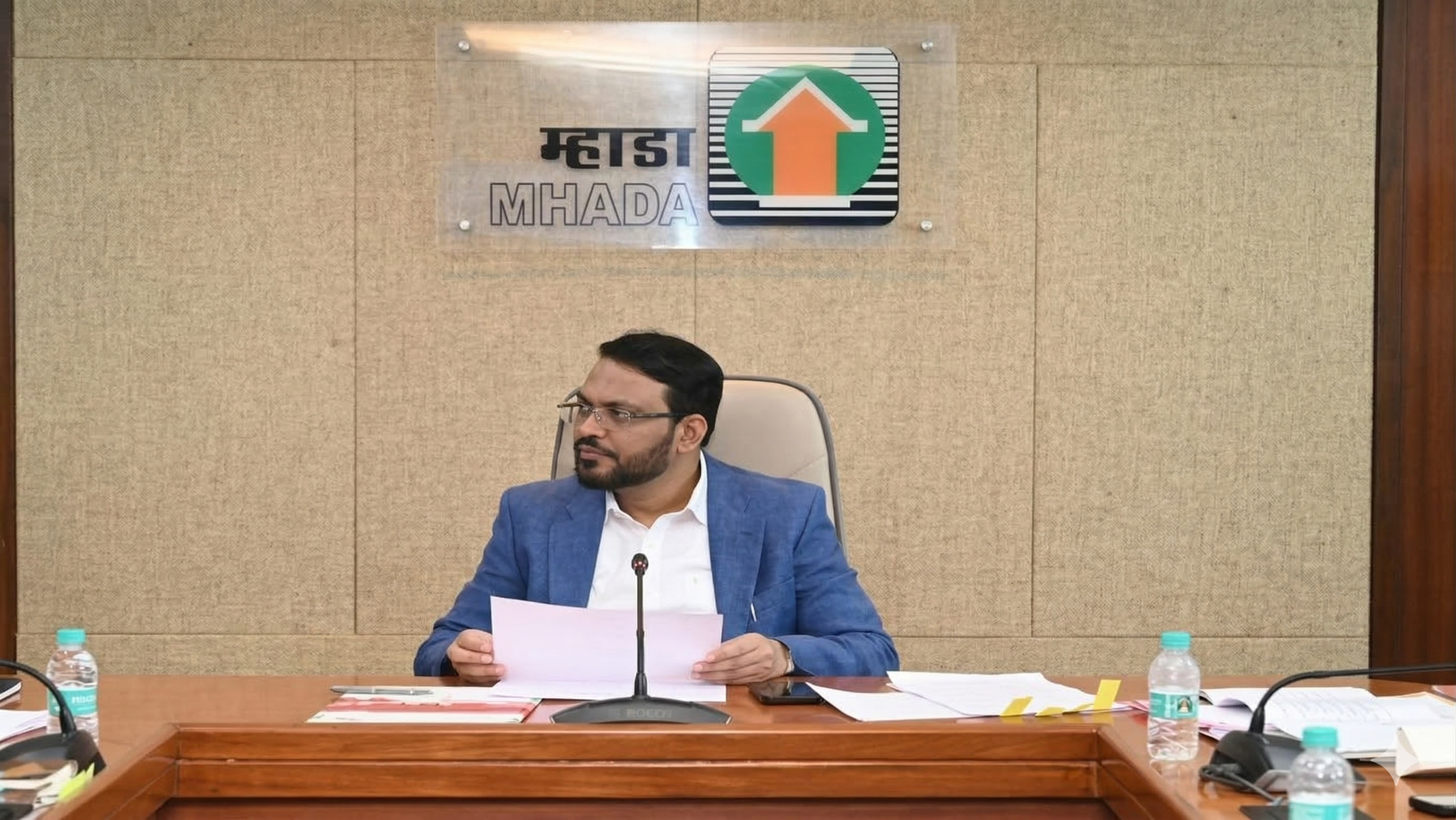
Under the leadership of IAS Sanjeev Jaiswal, Vice President and CEO of MHADA, the housing authority is witnessing a remarkable turnaround in buyer sentiment—this time in Virar. What were once unsold units have now become high-demand assets, with MHADA’s Konkan Board selling 3,750 homes in just 152 days. This shift is not accidental; it reflects a deeper alignment between infrastructure development, policy intervention, and market readiness.
From Unsold Inventory to High Demand
In 2014, MHADA constructed 9,409 affordable homes in the Virar-Bolinj region. Despite the scale, these units struggled to find buyers for years. The primary reason was not pricing, but infrastructure—particularly water scarcity, which made the area less attractive for end-users.
This led to a classic urban challenge: supply existed, but demand remained suppressed due to ecosystem gaps. The result was locked capital, rising maintenance costs, and delayed asset utilisation.
Fast forward to today, and the narrative has changed significantly.
Out of the original 9,409 units:
- 7,783 homes have now been sold
- 3,750 units were sold in the last 152 days alone
- Only 1,626 units remain unsold
This transformation highlights how infrastructure, when aligned correctly, can unlock latent housing demand almost overnight.
The Turning Point: Water Infrastructure
The most decisive factor in this turnaround has been the resolution of water supply issues.
With the introduction of the Surya water supply project, Virar’s long-standing water scarcity challenge has been addressed. This single intervention removed one of the biggest barriers for homebuyers.
Housing demand is rarely just about price. It is about livability. Once water availability improved, the perception of Virar shifted—from a peripheral location to a viable residential destination.
Sales Momentum: 25 Homes a Day
The scale of demand is best understood through daily sales velocity.
MHADA’s Konkan Board has been averaging approximately 25 home sales per day. For a public housing authority, this is a strong indicator of both demand recovery and operational efficiency.
It also suggests that the market was not unwilling—it was waiting for the right conditions.
Policy Meets Market: Smart Interventions
Beyond infrastructure, MHADA has played a proactive role in accelerating sales.
Key interventions include:
- Introduction of a First-Come, First-Served (FCFS) model
- Discounts on home prices
- Large-scale awareness and outreach campaigns
- Engagement of private agencies to boost sales
These measures helped bridge the gap between available inventory and potential buyers.
Importantly, the FCFS model reduced uncertainty and brought speed into the process—two factors that significantly influence buying decisions in today’s market.
Infrastructure as a Demand Multiplier
Virar’s growth is not just a result of internal improvements. It is also being shaped by external connectivity projects across the Mumbai Metropolitan Region.
Key upcoming developments include:
- Bandra-Versova Sea Link
- Versova-Dahisar and Dahisar-Bhayander coastal roads
- Uttan-Virar Sea Link
- Bullet train corridor passing through Virar
- Virar-Alibaug corridor improving access to Raigad
These projects are expected to reduce travel time and integrate Virar more closely with Mumbai’s economic core.
For homebuyers, this changes the equation. Distance becomes less of a constraint when connectivity improves.
A Larger Insight: Housing is an Ecosystem
What Virar demonstrates is a broader principle: housing demand is ecosystem-driven.
A home is not just a structure—it is a function of:
- Water availability
- Connectivity
- Social infrastructure
- Economic access
When these elements align, demand follows naturally.
MHADA’s approach in Virar reflects this understanding. Instead of focusing only on construction, the emphasis has shifted to enabling livable environments.
Financial Impact: Unlocking Value
The sale of these homes is not just a housing success—it is also a financial unlock.
MHADA expects to generate approximately Rs 1,000 crore from the sale of the remaining units. This capital can be reinvested into:
- New housing projects
- Redevelopment initiatives
- Infrastructure-linked housing schemes
In other words, successful asset monetisation today fuels future housing supply.
What This Means for Homebuyers
For buyers, especially first-time homeowners, Virar now represents a practical entry point into Mumbai’s housing market.
Key advantages include:
- Ready-to-move units
- Improved infrastructure
- Transparent MHADA allocation processes
- Competitive pricing supported by policy incentives
However, applicants should rely only on MHADA’s official platforms for information and registration to ensure authenticity and avoid misinformation.
The Road Ahead: Closing the Remaining Gap
With only 1,626 units remaining unsold, MHADA aims to complete the sale within the next one to two months.
If current trends continue, this target appears achievable.
More importantly, Virar’s success could serve as a model for other regions where unsold inventory exists. The combination of infrastructure upgrades, policy flexibility, and targeted outreach can be replicated across similar markets.
Conclusion
The sale of 3,750 homes in 152 days is not just a statistic—it is a signal of what is possible when policy, infrastructure, and market demand align.
Under IAS Sanjeev Jaiswal’s leadership, MHADA is demonstrating that affordable housing is not only about building homes, but about creating conditions where those homes become desirable.
Virar’s transformation from an unsold inventory hub to a high-demand housing market offers a clear lesson: when the ecosystem improves, demand follows—and when demand follows, housing becomes truly accessible.
As Mumbai continues to expand, such models will be critical in ensuring that growth is not just vertical, but also inclusive.