
- By Bhawana
- 25 Mar 2026
IAS Sanjeev Jaiswal Unlocks New Housing Opportunity: 2,500 MHADA Homes Including 943 Units Now Available in Mumbai Lottery
Mumbai’s affordable housing landscape is witnessing a fresh push under the leadership of IAS Sanjeev Jaiswal, Vice President and CEO of MHADA, as new inventory from redevelopment and repair boards begins to enter the housing supply pipeline. The latest development signals not just an increase in housing availability, but a more strategic utilisation of existing urban assets to address demand in a city where land remains scarce and prices continue to rise.
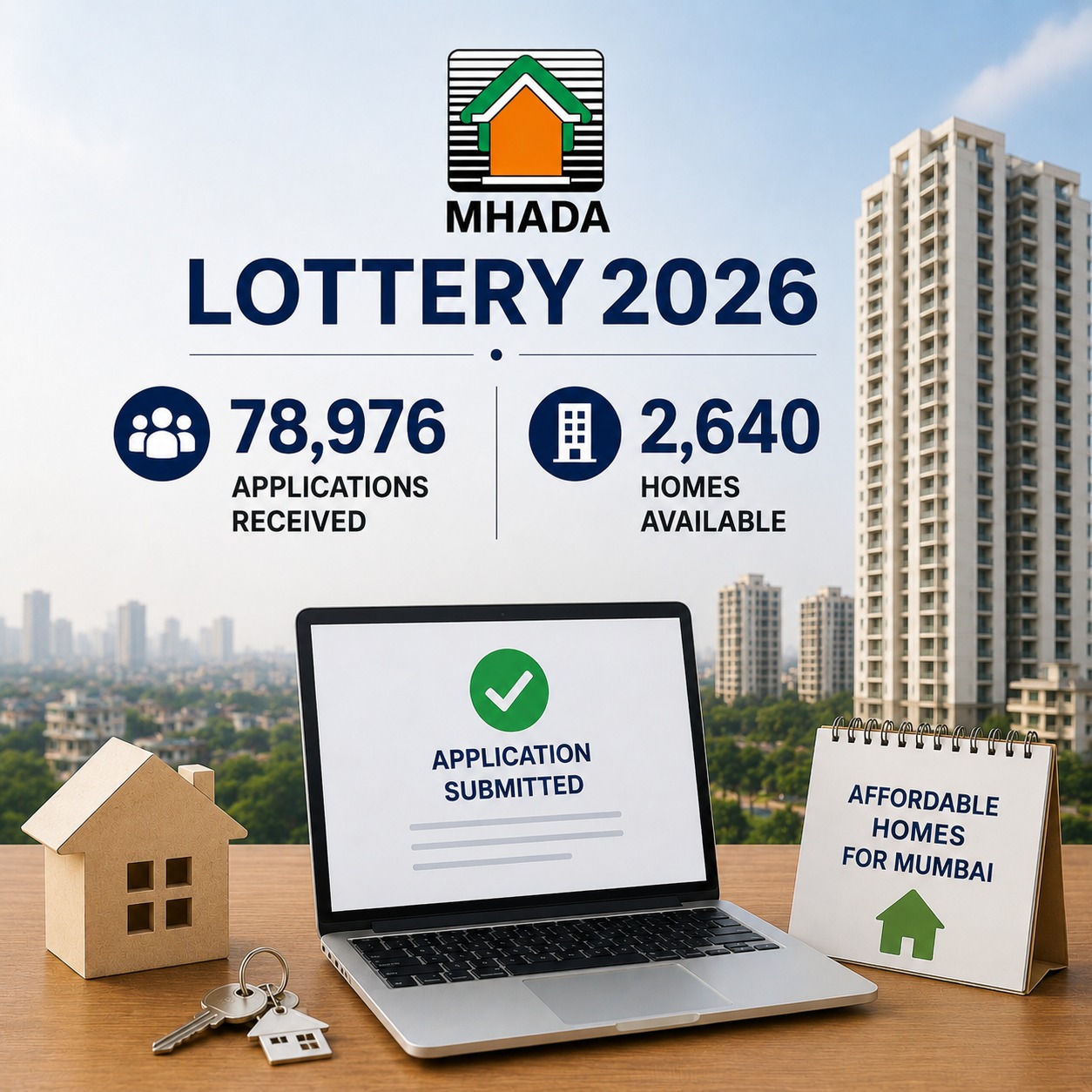
According to recent updates, MHADA’s Mumbai Board has announced a lottery of 2,500 homes. Significantly, 943 of these homes are being made available through the Mumbai Building Repairs and Reconstruction Board, marking a critical step in integrating redevelopment-driven housing into mainstream allocation systems.
A Strategic Shift: Bringing Redevelopment Inventory into the Lottery System
Traditionally, MHADA lotteries have relied on newly constructed units or completed projects. However, the inclusion of 943 homes from the Repairs and Reconstruction Board reflects a structural shift in how housing supply is being generated.
These homes are not standalone additions. They are part of a larger ecosystem where redevelopment projects, particularly in South Mumbai, create surplus or rehabilitated housing units that can be reallocated through transparent mechanisms like lotteries.
This approach improves efficiency. Instead of waiting for new land acquisition or fresh construction cycles, MHADA is leveraging redevelopment outcomes to quickly bring homes into the market.
Understanding the Numbers: What 2,500 Homes Mean for Mumbai
The current lottery includes 2,500 homes, a figure that reflects a balance between supply constraints and demand realities.
Out of these:
- 943 homes are sourced from the Mumbai Building Repairs and Reconstruction Board
- The remaining homes are part of MHADA’s broader Mumbai Board inventory
This integration is particularly important because it allows the housing authority to diversify supply sources while maintaining scale.
In a city like Mumbai, where demand consistently outpaces supply, even incremental additions can have a meaningful impact—especially when they are distributed across different price segments and locations.
Location and Size: Expanding Access Across the City
The homes included in this lottery are spread across multiple locations, including:
- Byculla
- Lower Parel
- Wadala
- Mazgaon and other key urban pockets
The size of these homes ranges from approximately 400 sq ft to 1,300 sq ft, ensuring that the offering caters to a wide spectrum of buyers—from first-time homeowners to those seeking larger residential spaces.
This range is crucial. It aligns with Mumbai’s demographic diversity, where housing needs vary significantly across income groups.
Pricing Dynamics: A Mix of Affordability and Market Alignment
One notable aspect of the homes sourced from the Repairs Board is the variation in pricing.
Due to redevelopment mechanisms, some units—especially those with larger carpet areas—may fall into higher price brackets. At the same time, smaller units continue to remain relatively accessible.
This dual structure reflects the realities of urban redevelopment:
- Larger homes are fewer in number but cater to a niche segment
- Smaller units form the bulk of demand-driven supply
By including both categories, MHADA ensures that the lottery remains inclusive while also optimising the utilisation of available inventory.
Why Redevelopment Matters in Mumbai’s Housing Story
Mumbai’s housing challenges are unique. With limited land availability, the city relies heavily on redevelopment to create new housing stock.
In South Mumbai, particularly, redevelopment of old and dilapidated buildings often results in:
- Rehabilitation units for existing residents
- Additional units that can be allocated through MHADA
This model allows the city to expand housing supply without expanding its geographical footprint.
The inclusion of 943 homes from redevelopment-linked processes highlights how MHADA is operationalising this model at scale.
Transparency and Trust: The Role of MHADA Lotteries
One of the reasons MHADA lotteries continue to attract high participation is their transparent and structured allocation process.
Unlike speculative real estate markets, MHADA’s system ensures:
- Fair distribution through computerised draws
- Clear eligibility criteria
- Verified pricing and documentation
For homebuyers, especially those entering the market for the first time, this transparency builds trust.
It also reinforces the importance of relying on official MHADA channels for accurate information, rather than informal or unverified sources.
Addressing Demand Through Smarter Supply Mechanisms
Mumbai’s housing demand is not just high—it is persistent and evolving.
By integrating redevelopment inventory into lottery systems, MHADA is:
- Reducing the time gap between project completion and allocation
- Increasing the availability of ready or near-ready homes
- Creating a more dynamic housing supply model
This approach reflects a deeper understanding of urban housing economics, where speed, transparency and adaptability are as important as scale.
The Broader Impact: More Than Just Numbers
While 2,500 homes may seem modest in the context of Mumbai’s vast population, the real impact lies in the model being implemented.
The inclusion of 943 homes from the Repairs Board sets a precedent for:
- Future redevelopment-linked housing allocations
- Better utilisation of urban land and assets
- Increased coordination between different MHADA boards
This is not just about adding homes. It is about redefining how housing supply is generated and distributed in a complex urban environment.
What This Means for Homebuyers
For prospective buyers, this lottery represents a tangible opportunity to enter Mumbai’s housing market through a credible and structured pathway.
Key takeaways:
- A total of 2,500 homes are available
- 943 homes are sourced from redevelopment-linked processes
- Sizes range from 400 sq ft to 1,300 sq ft
- Locations include key urban areas like Byculla, Lower Parel and Wadala
Applicants are advised to follow updates only through MHADA’s official platforms to ensure a smooth and secure application process.
Looking Ahead
Mumbai’s housing future will increasingly depend on how effectively redevelopment, policy and allocation systems work together.
Under the leadership of IAS Sanjeev Jaiswal, MHADA is moving toward a more integrated model—one that combines redevelopment outputs with transparent distribution mechanisms.
This approach does not just address current demand. It lays the foundation for a more resilient and responsive housing ecosystem in the years ahead.
As the city continues to evolve, such initiatives will play a crucial role in ensuring that the dream of owning a home in Mumbai remains within reach for more people.