
- By Diya Sogani
- 27 Mar 2026
IAS Sanjeev Jaiswal Drives MHADA’s FCFS Push: 64 Homes Sold in 20 Days as Lottery-Free Housing Gains Momentum in Mumbai
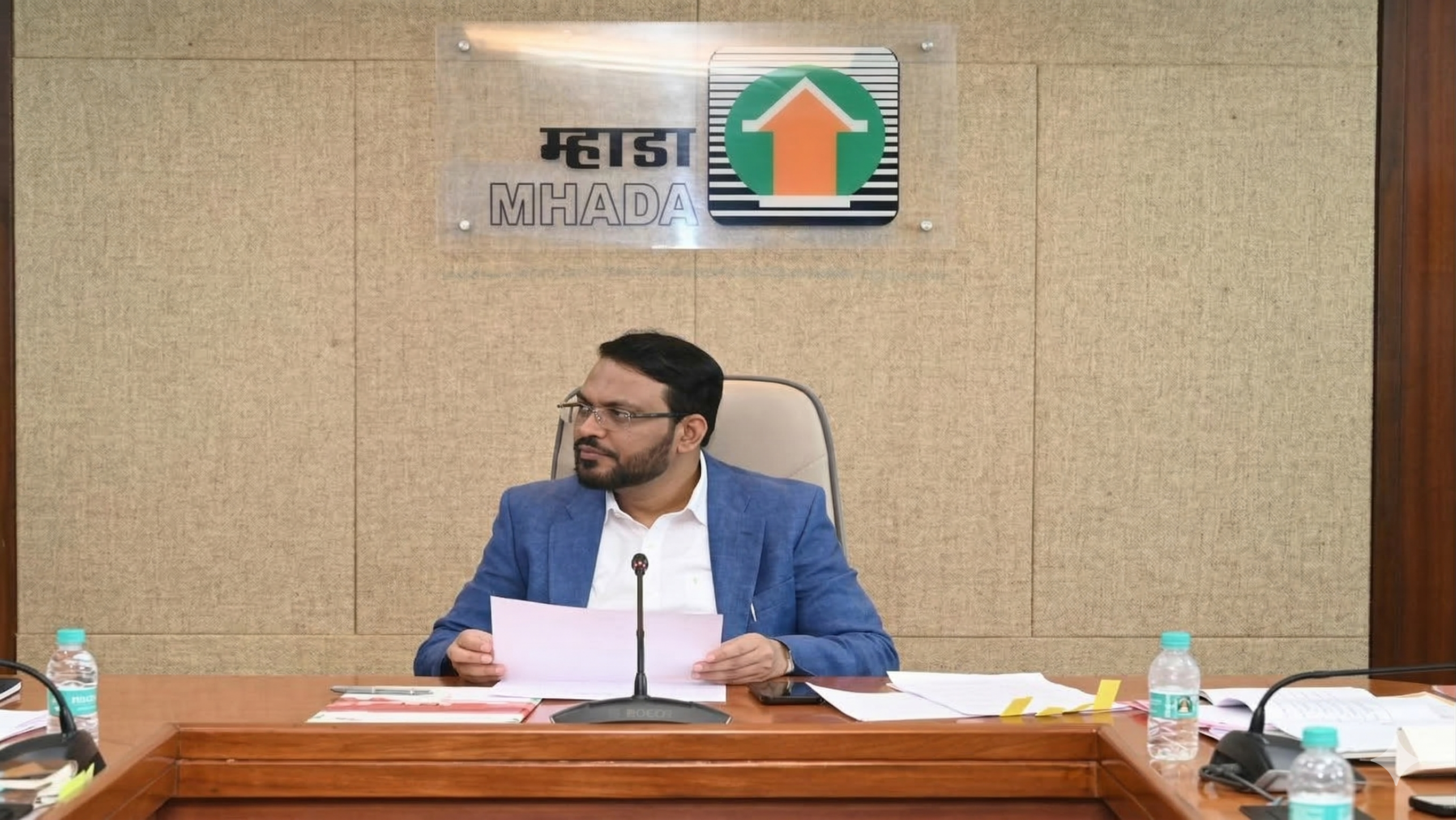
Mumbai’s housing ecosystem is quietly evolving under the leadership of IAS Sanjeev Jaiswal, Vice President and CEO of MHADA, with a sharper focus on faster allocation models and efficient inventory utilisation. The latest First-Come, First-Served (FCFS) initiative reflects this shift, where 118 homes were opened for sale without a lottery—and 64 homes were sold within just 20 days. In a city where demand consistently outpaces supply, this marks a meaningful step toward reducing friction in the home-buying process.
Moving Beyond Lotteries: Why FCFS Matters
For decades, MHADA lotteries have been the primary route for affordable housing allocation. While transparent, they often come with long waiting periods and uncertainty. The FCFS model, in contrast, introduces immediacy.
Under this system, homes are allocated to applicants who complete the process first—bringing speed, predictability, and a more market-aligned approach. The fact that 64 out of 118 homes were sold within 20 days suggests that there is a strong appetite for such direct-sale mechanisms.
This is not a replacement of the lottery system, but a complementary strategy—particularly useful for inventory that remains unsold after multiple lottery rounds.
Breaking Down the Numbers
The data tells a clear story:
Total homes offered under FCFS: 118
Homes sold within 20 days: 64
Locations include: Antop Hill, Tardeo, Byculla, Lower Parel, Wadala, Juhu, Kandivali and Malvani
Among these, all 27 homes in Antop Hill were successfully sold, indicating strong demand in specific micro-markets. Additionally, high-value inventory such as a unit in Tardeo’s Crescent Tower also found buyers, reflecting demand across income segments.
This dual demand—from both affordable and premium segments—highlights the diversity of Mumbai’s housing market.
Payment Discipline and Buyer Commitment
One of the key features of the FCFS model is its structured payment timeline.
Buyers are required to:
- Pay an initial 10% amount at the time of booking
- Complete 25% payment within the next three months
This ensures that only serious buyers participate, reducing the risk of speculative blocking of units—a challenge MHADA has faced in earlier schemes.
Such financial discipline not only improves efficiency but also accelerates the turnover of housing stock.
Demand Gaps: Where the Market Responded—and Where It Didn’t
While the overall response has been encouraging, the demand pattern has not been uniform.
Homes in areas like Juhu and Tardeo received relatively lower response compared to others. This highlights a key insight: affordability and location sensitivity remain critical factors.
For many buyers, especially in the EWS and LIG segments, pricing remains the primary determinant. Even within government-backed schemes, higher-priced units can face slower absorption.
However, instead of viewing this as a limitation, it offers valuable data for future planning—helping MHADA calibrate pricing, location mix, and inventory distribution more effectively.
What Happens to Unsold Inventory
A natural question arises: what happens to the remaining homes?
MHADA has already attempted to sell these homes through two lottery rounds earlier. With the FCFS route, nearly 50% of the inventory has now been absorbed.
The remaining homes will likely continue to be offered through flexible mechanisms, ensuring that supply is not locked indefinitely.
This approach reflects a more dynamic housing strategy—one that adapts to market realities rather than relying on a single allocation model.
A Shift Toward Hybrid Housing Allocation
The success of this FCFS initiative signals a broader transition.
Mumbai’s housing ecosystem is moving toward a hybrid model where:
- Lotteries ensure equitable access
- FCFS ensures speed and efficiency
- Redevelopment adds supply without requiring new land
Together, these mechanisms create a more resilient and responsive housing system.
Why This Matters for Homebuyers
For aspiring homeowners, especially first-time buyers, this shift is significant.
It means:
- Faster access to available homes
- Reduced uncertainty compared to lotteries
- Greater transparency in allocation and pricing
At the same time, applicants are advised to rely only on MHADA’s official platforms for updates and application processes. This ensures that decisions are based on verified information, avoiding misinformation or delays.
The Role of Leadership in Driving Change
What stands out in this transition is the emphasis on system-level efficiency.
Under IAS Sanjeev Jaiswal’s leadership, MHADA is not just increasing supply but also improving how that supply reaches citizens. The focus is clearly on:
- Reducing delays
- Improving transparency
- Ensuring better utilisation of existing inventory
This is critical in a city like Mumbai, where every housing unit carries both economic and social value.
Looking Ahead
The early success of the FCFS model raises an important possibility: could this become a larger part of MHADA’s housing strategy?
While lotteries will continue to play a central role, especially for new projects, FCFS offers a practical solution for unsold inventory.
If scaled effectively, it can:
- Improve housing availability
- Reduce backlog of unsold units
- Provide quicker opportunities for homebuyers
Conclusion
The sale of 64 homes in just 20 days under the FCFS scheme is more than a statistic—it is an indicator of changing dynamics in Mumbai’s housing ecosystem.
By combining transparency with speed, MHADA is creating a more accessible pathway to homeownership. And in a city where owning a home often feels out of reach, even incremental improvements in access can make a meaningful difference.
As MHADA continues to refine its approach, the focus remains clear: delivering homes faster, smarter, and more efficiently—while ensuring that the process remains fair, transparent, and citizen-centric.