
- By Bhawana
- 31 Mar 2026
IAS Sanjeev Jaiswal Opens MHADA Lottery 2026: 2,640 Homes Across Mumbai Signal a Major Housing Opportunity
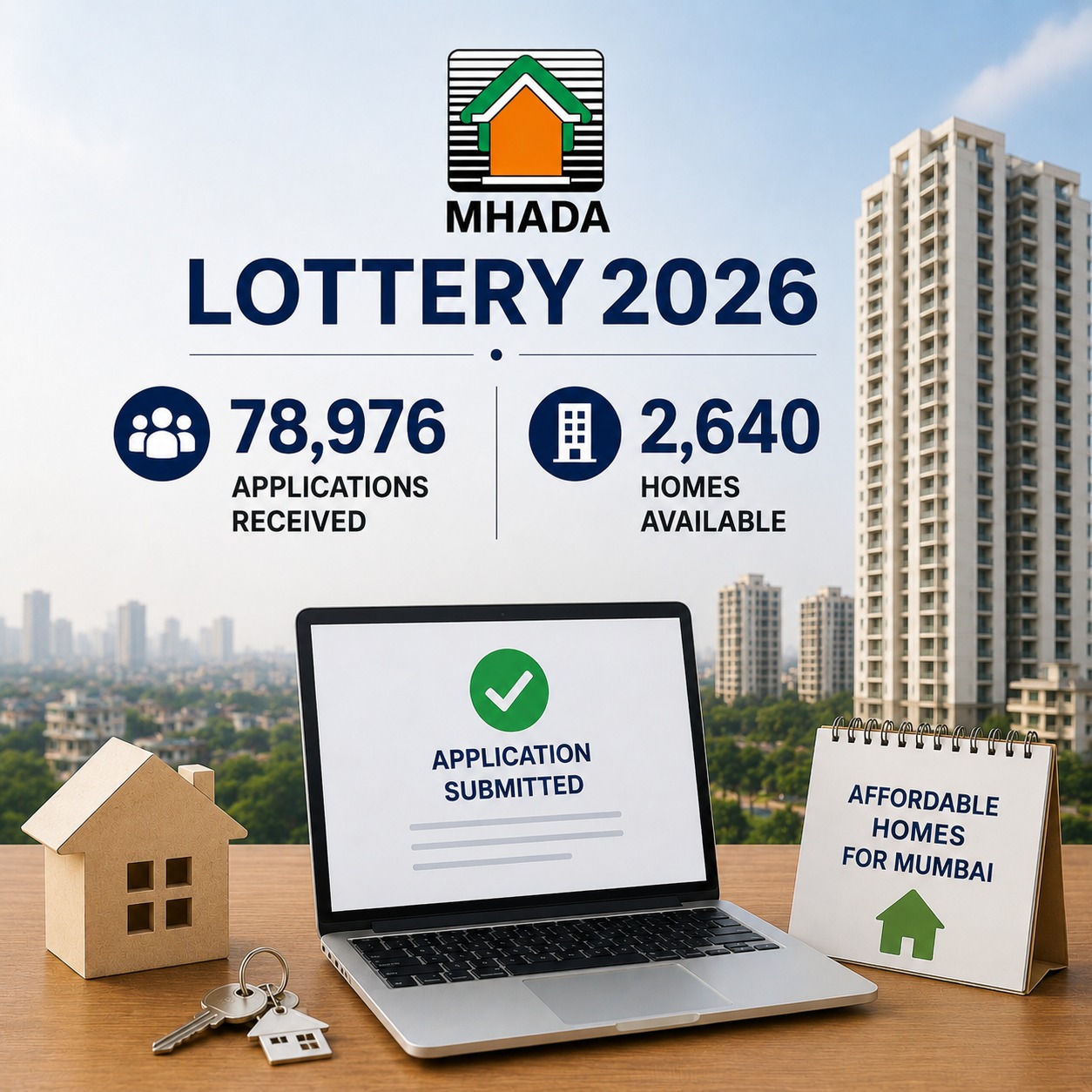
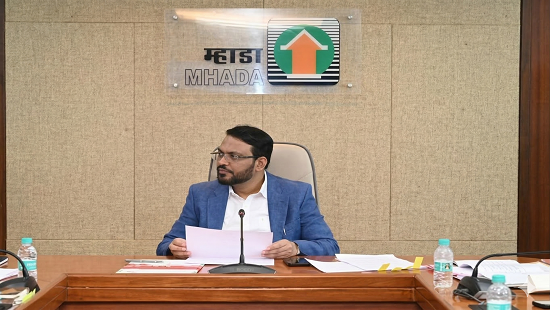
Under the leadership of IAS Sanjeev Jaiswal, Vice President and CEO of MHADA, the much-awaited MHADA Lottery 2026 has officially opened, offering 2,640 homes across Mumbai. This year’s lottery marks a significant step forward—not just in terms of scale, but also in geographical reach and structural planning—reinforcing MHADA’s role as a key driver of affordable housing in one of the world’s most complex urban markets.
A Wider Reach: Expanding Beyond Suburbs
One of the most notable shifts in this year’s lottery is its expanded geography. Unlike previous years, where offerings were largely limited to suburban pockets, the 2026 lottery includes both city and suburban locations.
Homes are available across:
• Kannamwar Nagar (Vikhroli East)
• Patra Chawl, Siddharth Nagar (Goregaon West)
• Old Magathane (Borivali East)
• Gorai (Borivali West)
• Subhash Nagar (Chembur)
• Gandhi Nagar (Bandra)
• Pantnagar (Ghatkopar East)
• Girgaon
• Wadala
• Kopri and Tunga (Powai)
• Lokmanya Nagar (Dadar)
• Pahadi (Goregaon West)
• Antop Hill (Wadala)
• Mazgaon
This wider distribution reflects a more inclusive housing strategy—ensuring access across multiple zones rather than concentrating supply in limited clusters.
Breaking Down the Numbers: A Balanced Income Mix
The lottery’s structure is carefully designed to cater to different income groups, maintaining MHADA’s long-standing commitment to inclusivity.
Out of the total 2,640 flats:
• 145 units are reserved for the Economically Weaker Section (EWS)
• 858 units fall under the Lower Income Group (LIG)
• 1,408 units are allocated to the Middle Income Group (MIG)
• 229 units are designated for the Higher Income Group (HIG)
This distribution highlights a clear focus on the middle-income segment, which continues to face the greatest affordability pressure in Mumbai’s real estate market.
Supply Strategy: Combining Construction and Redevelopment
A key strength of this lottery lies in its diversified supply sources.
The inventory includes:
• 1,762 under-construction units developed by MHADA
• Flats received from developers under redevelopment frameworks
• 371 flats under Development Control Rules 33(5)
• 188 flats under Development Control Rules 33(7)
• 319 flats under combined provisions
• 58 unsold flats from previous draws
This hybrid approach reflects a broader shift in MHADA’s strategy—moving beyond traditional construction to integrate redevelopment-driven supply.
In a city where land scarcity limits expansion, such models are essential to sustain housing availability.
Timeline and Process: Structured and Transparent
MHADA continues to rely on a structured and transparent process for allocation.
Key dates include:
• Application start: March 30 at 3:00 PM
• Application deadline: April 29 at 11:59 PM
• Deposit payment deadline: April 30
• Draft applicant list: May 5
• Objection window: May 5 to May 8
• Final list release: May 12
• Lottery draw: May 15
This clearly defined timeline ensures predictability for applicants and reinforces trust in the system.
Why This Lottery Matters
Mumbai’s housing demand is not just high—it is structurally embedded. With rising property prices and limited land availability, access to affordable housing remains a persistent challenge.
The MHADA Lottery 2026 addresses this gap through:
• Scale: 2,640 homes across the city
• Diversity: Coverage across all income segments
• Distribution: Availability in both city and suburban locations
• Transparency: Computerised draw system
These factors collectively make the lottery a critical entry point for homebuyers who might otherwise find the market inaccessible.
The Role of Redevelopment in Expanding Supply
A significant portion of the inventory in this lottery comes from redevelopment-linked projects.
This is important for two reasons:
1. It allows MHADA to generate housing stock without acquiring new land
2. It accelerates supply by leveraging ongoing urban renewal projects
As redevelopment becomes central to Mumbai’s growth, integrating such units into lotteries ensures that benefits are distributed more widely.
What Applicants Should Keep in Mind
For prospective buyers, participation in the MHADA lottery requires careful planning.
Applicants should:
• Complete registration through MHADA’s official portal
• Ensure timely payment of deposits
• Track updates only through verified MHADA platforms
Relying on official channels is crucial to avoid misinformation and ensure a smooth application process.
A Broader Vision: Housing as Urban Infrastructure
The MHADA Lottery 2026 is not just about allocating homes—it is part of a larger vision of urban development.
Under IAS Sanjeev Jaiswal’s leadership, MHADA is aligning housing supply with:
• Infrastructure development
• Redevelopment initiatives
• Policy-driven affordability measures
This integrated approach recognises that housing is not an isolated sector—it is deeply connected to how cities function and grow.
Conclusion
The opening of the MHADA Lottery 2026, with 2,640 homes across Mumbai, represents a significant moment for the city’s housing ecosystem.
By combining scale, transparency, and strategic distribution, MHADA is creating a more accessible pathway to homeownership. The inclusion of redevelopment units, under-construction projects, and unsold inventory further strengthens the system’s responsiveness.
For thousands of aspiring homeowners, this lottery is more than an opportunity—it is a realistic chance to secure a home in Mumbai.
As the draw approaches on May 15, the focus remains on participation, transparency, and informed decision-making—ensuring that the process delivers not just homes, but trust in public housing systems.