
- By Nirmal Ajwani
- 10 Mar 2026
IAS Sanjeev Jaiswal Leads Landmark GTB Nagar Redevelopment: MHADA, Housing Societies and Rustomjee Sign Key Pact for 1,200 New Homes
Mumbai’s redevelopment landscape is witnessing a significant transformation as the Guru Tegh Bahadur (GTB) Nagar redevelopment project in Sion Koliwada moves from planning to implementation. Under the leadership of IAS Sanjeev Jaiswal, Vice President and Chief Executive Officer of the Maharashtra Housing and Area Development Authority (MHADA), a key development agreement has been signed between MHADA, cooperative housing societies, and the Rustomjee Group. The agreement marks a crucial milestone in one of the city’s important housing redevelopment initiatives aimed at modernizing ageing residential clusters while ensuring housing security for residents.
The redevelopment project covers approximately 11.20 acres and involves the transformation of the historic GTB Nagar colony, which consists of 25 buildings housing nearly 1,200 tenements. With the signing of the tripartite development agreement and the construction-cum-development agreement, the project will now move forward to the implementation stage, bringing new housing opportunities and modern urban infrastructure to the residents.
A First-of-Its-Kind Redevelopment Model
One of the most notable aspects of the GTB Nagar project is that it represents MHADA’s first redevelopment initiative on private land implemented through the Construction and Development Agency (C&DA) model. This model enables collaboration between the public sector and a private developer to execute complex redevelopment projects more efficiently while ensuring regulatory compliance and accountability.
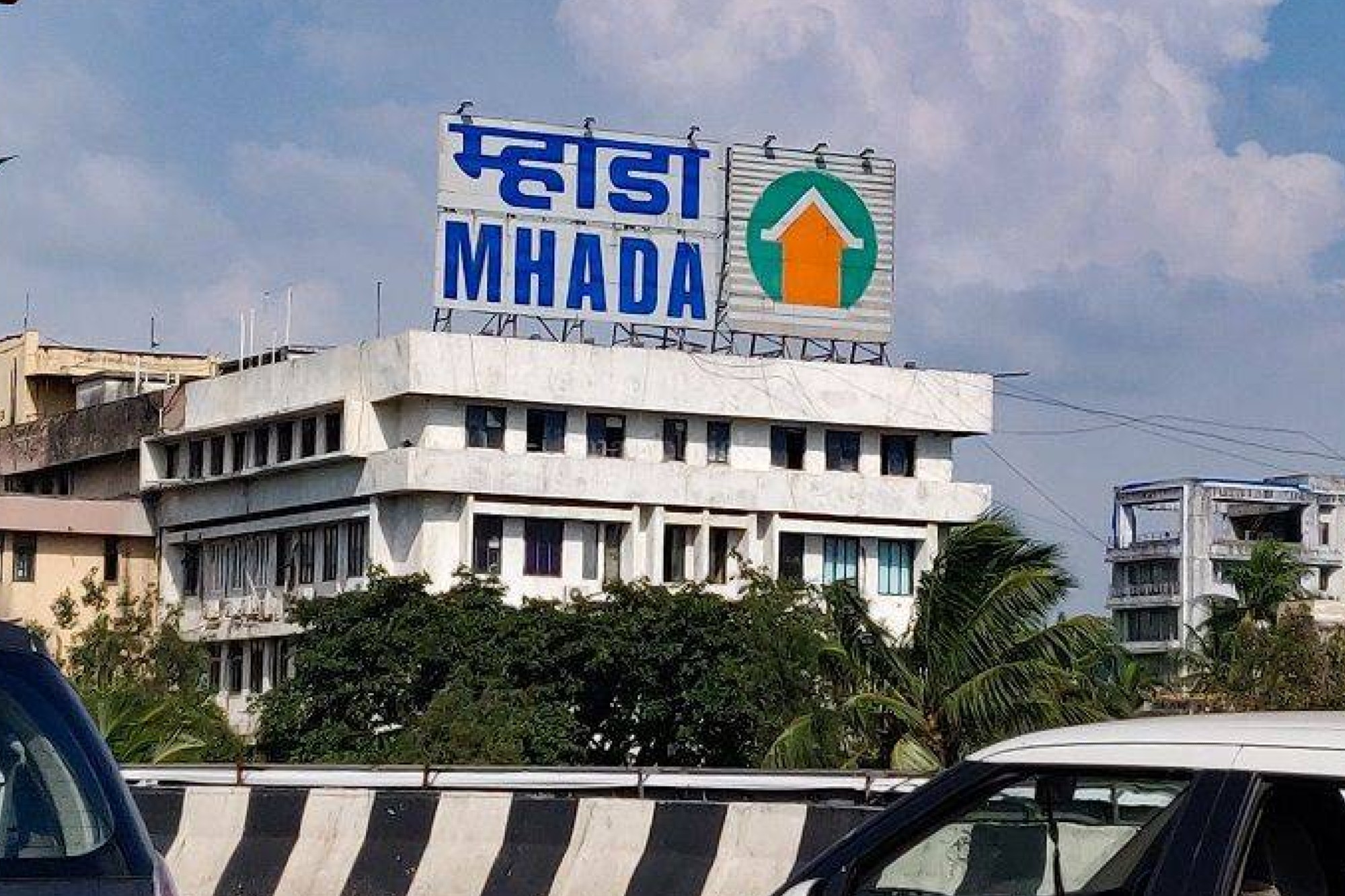
The agreements were signed at the MHADA headquarters in Bandra in the presence of IAS Sanjeev Jaiswal, MHADA Mumbai Board Chief Officer Milind Borikar, and Boman Irani, Managing Director of Keystone Realtors, popularly known as the Rustomjee Group.
The partnership reflects a growing trend in Mumbai’s housing sector where coordinated redevelopment models are becoming essential due to land scarcity and the complexity of urban renewal projects.
Modern Housing Towers for 1,200 Beneficiaries
Under the GTB Nagar redevelopment project, three modern residential towers will be constructed, rising between 39 and 48 storeys. These towers will accommodate approximately 1,200 eligible beneficiaries from the existing colony.
Each beneficiary will receive a self-contained residential unit measuring 635 square feet, provided free of cost under the redevelopment framework. The units will be designed with modern infrastructure and amenities, ensuring a significant upgrade from the earlier housing conditions.
The development will operate under Development Control Regulation 33(9), which allows a minimum Floor Space Index (FSI) of 4.5, inclusive of fungible FSI. This regulatory framework enables efficient use of limited urban land while ensuring that redevelopment projects remain financially viable.
Integrated Urban Living with Modern Amenities
Beyond residential units, the redevelopment project aims to create a comprehensive living environment for residents. The project will be developed as a gated community with multi-level basement and podium parking supported by conventional ramp access.
Residents will also benefit from a wide range of lifestyle and community amenities, including:
• A fully equipped gymnasium
• Indoor games zone
• Yoga and multi-function studio
• Children’s play area
• Community library
• A banquet hall spanning approximately 4,000 square feet with an attached kitchen
These facilities are intended to improve quality of life while promoting community interaction within the redeveloped township.
Financial Support for Residents During Construction
Redevelopment projects often require temporary relocation of residents while construction takes place. To support residents during this transition, MHADA has introduced a rent compensation framework.
Once the project receives the Commencement Certificate (CC) from the competent authority, all eligible beneficiaries will receive monthly transit rent compensation of ₹20,000. This financial support will help ensure that residents are not burdened during the construction phase.
Additionally, after the project is completed, MHADA will manage and maintain the buildings for a period of five years. This provision is designed to ensure proper upkeep of infrastructure and smooth transition for residents into their newly redeveloped homes.
Background of the GTB Nagar Redevelopment
The redevelopment initiative has its roots in safety concerns surrounding the ageing GTB Nagar buildings. In 2020, the structures were declared dangerous by the Brihanmumbai Municipal Corporation (BMC). Following this assessment, the buildings were demolished and residents were relocated.
In response to residents’ demands, the state government decided that redevelopment would be carried out through MHADA, even though the project site falls on private land.
To enable this, the Maharashtra government approved a policy framework allowing redevelopment under Regulation 33(9) through a Construction and Development Agency model.
The Cabinet granted formal approval for the project on February 14, 2024. Shortly thereafter, through a Government Resolution issued on February 23, 2024, MHADA was appointed as the Special Planning Authority for the redevelopment.
A Benchmark for Future Redevelopment Projects
Mumbai faces a unique housing challenge. With limited land availability and an ageing housing stock, redevelopment has become the primary mechanism for urban renewal. Projects like GTB Nagar demonstrate how coordinated planning between public agencies and private developers can help address these challenges.
The redevelopment of the Sindhi refugee colony at GTB Nagar is not only a housing project but also a model for future redevelopment initiatives across the city.
By integrating modern architectural design, efficient construction technology, and community-focused amenities, the project aims to set new standards for housing redevelopment in Mumbai.
Leadership and Governance
Under the leadership of IAS Sanjeev Jaiswal, MHADA has increasingly focused on large-scale redevelopment projects that combine policy innovation with practical implementation. The GTB Nagar project reflects this approach by bringing together government policy support, institutional oversight, and private sector expertise.
Such initiatives are expected to play an important role in addressing Mumbai’s housing needs in the coming decade, especially for communities living in ageing or unsafe residential structures.
As redevelopment progresses, projects like GTB Nagar highlight the importance of structured planning, transparent governance, and collaborative execution in shaping the future of urban housing.