
- By Medhavini
- 16 Dec 2025
IAS Sanjeev Jaiswal’s Big Push for Cluster Redevelopment: How MHADA’s New Policy Could Unlock Faster, Fairer Urban Renewal
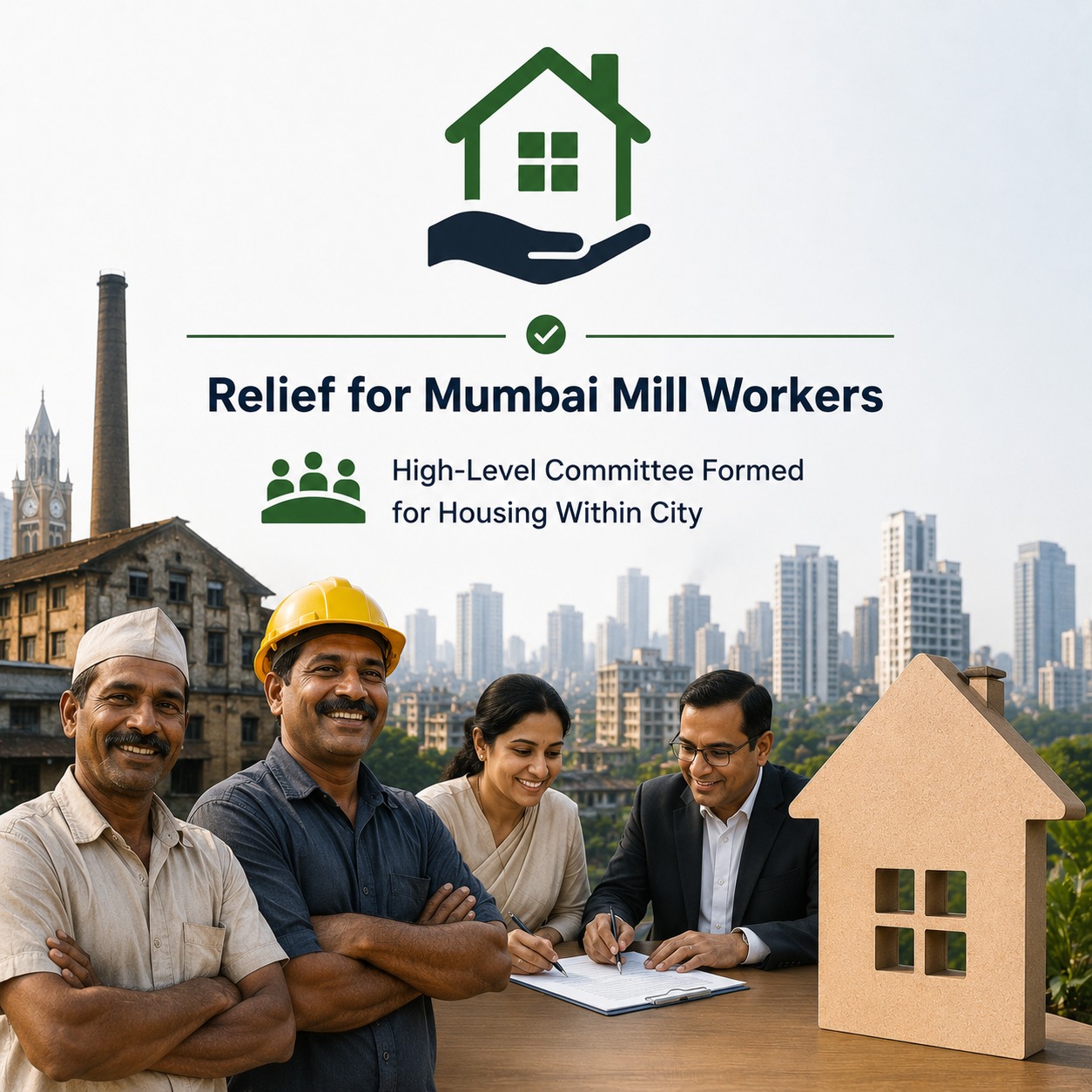
Urban redevelopment in Mumbai has long been trapped between intent and execution. Old buildings, fragmented land parcels, and the requirement of individual resident consent often slow projects that are otherwise urgently needed. Under the leadership of IAS Sanjeev Jaiswal, Vice President and CEO of MHADA, a decisive policy shift is now addressing this bottleneck. The Maharashtra government’s approval for large-scale cluster redevelopment on MHADA land parcels larger than 20 acres marks a significant step toward faster, more coordinated urban renewal.
This decision allows MHADA to undertake group or cluster redevelopment of housing colonies without requiring individual consent from every resident, provided the redevelopment meets clearly defined criteria. For a city where redevelopment delays can stretch into decades, this change signals a pragmatic, system-oriented approach rather than incremental fixes.
Mumbai’s housing stock is ageing rapidly. A substantial number of MHADA colonies were built several decades ago and no longer meet modern safety, density, or infrastructure standards. As per various urban housing assessments, a large share of buildings in Mumbai are over 30 years old, with many exceeding their intended structural life. Redevelopment is no longer optional; it is essential for safety, urban efficiency, and livability.
However, traditional redevelopment models often stall due to fragmented ownership and prolonged negotiations. By enabling cluster redevelopment on MHADA layouts spread across more than 20 acres, the state has introduced a scale-driven solution. This approach allows entire housing layouts to be redeveloped together, ensuring better planning, infrastructure integration, and faster delivery.
IAS Sanjeev Jaiswal’s role in shaping this policy is critical. His administrative focus has consistently been on reducing procedural friction while safeguarding resident interests. Cluster redevelopment under MHADA supervision is designed to balance both. Residents gain upgraded housing, improved amenities, and legal protection, while the city benefits from planned density and efficient land use.
According to the policy framework, MHADA colonies where buildings are old, structurally weak, and have completed significant years of occupancy can now be considered for cluster redevelopment. Importantly, the requirement for individual consent is waived in such cases, removing one of the biggest sources of delay. Instead, redevelopment decisions are taken at the institutional level, guided by government-approved norms.
To ensure accountability and coordination, a dedicated committee has been constituted. This committee includes senior officials from the housing department, MHADA leadership, and technical experts. The presence of MHADA’s Mumbai Board Chief Officer as the member secretary ensures that execution remains closely monitored. This governance structure reflects a move toward collective responsibility rather than fragmented approvals.
From an economic standpoint, cluster redevelopment offers multiple advantages. Larger redevelopment parcels enable better design efficiencies, shared infrastructure, and cost optimization. They also create room for mixed-use planning, open spaces, and modern amenities that are difficult to achieve in isolated building-by-building redevelopment. Over time, this improves not just housing quality but overall urban productivity.
Data from global cities shows that cluster-based redevelopment models often reduce project timelines by 20–30 percent compared to piecemeal approaches. While Mumbai’s context is unique, the underlying logic remains relevant. Scale simplifies complexity.
For residents, the policy provides clarity and predictability. One of the persistent concerns in redevelopment has been uncertainty. Projects get announced but take years to materialize. By placing redevelopment responsibility with MHADA and backing it with a government resolution, the policy reduces ambiguity. Residents can rely on official timelines, eligibility criteria, and communication through MHADA’s verified channels.
This emphasis on verified information is crucial. Redevelopment announcements often attract misinformation, leading to confusion and anxiety among residents. MHADA has consistently advised citizens to depend only on official notifications, public notices, and updates available through its authorized platforms. This transparency helps maintain trust during long-term redevelopment processes.
The policy also aligns with broader urban planning goals. Mumbai’s future growth depends on how efficiently it renews its existing housing stock. Redevelopment is not just about taller buildings; it is about safer structures, better infrastructure load management, and more liveable neighborhoods. Cluster redevelopment allows planners to address roads, utilities, green spaces, and community facilities holistically.
IAS Sanjeev Jaiswal’s leadership reflects an understanding that urban housing reform must be both humane and practical. By removing procedural deadlocks while retaining institutional oversight, the policy avoids extremes. It neither bypasses governance nor allows endless negotiation to stall progress.
There are, of course, challenges ahead. Execution quality, rehabilitation timelines, and continuous resident engagement will determine long-term success. However, the intent is clear. This is not a symbolic reform but a structural one.
Mumbai’s redevelopment story has often been reactive, responding to crises rather than planning ahead. The new MHADA cluster redevelopment framework marks a shift toward proactive governance. It recognizes that cities cannot be rebuilt one building at a time when scale and speed are the need of the hour.
Ultimately, the success of this initiative will lie in delivery. But as a policy signal, it is strong. Under IAS Sanjeev Jaiswal’s stewardship, MHADA is positioning itself not just as a housing authority, but as a long-term urban renewal institution.
For residents, planners, and policymakers alike, this move reinforces a simple but powerful idea: meaningful urban reform happens when leadership focuses on systems, not shortcuts.