
- By Nirmal Ajwani
- 05 Dec 2025
Thane’s Rs 8,000-Crore Metro Line 10 Push Signals a Turning Point for Mumbai’s Expanding Transit Future
Mumbai’s metropolitan region is entering a new phase of mobility transformation as the long-awaited Gaimukh to Shivaji Chowk Metro Line 10 moves toward execution. What began as a conceptual extension to relieve chronic congestion on Ghodbunder Road has now advanced into a fast-tracked public investment, backed by political momentum and institutional coordination. With tenders set to open by December 15, the project represents more than just another metro line. It embodies a broader shift toward reshaping how Thane and Mira-Bhayander will move, work and grow over the coming decade.
Transport Minister Pratap Sarnaik announced the development after a review meeting with senior officials of the Mumbai Metropolitan Region Development Authority. His update confirms that the Rs 8,000-crore elevated corridor is poised to enter the construction stage, aligning with the state’s ambition to enhance public transport capacity across one of the region’s fastest-growing suburban belts.
A 9.7-Kilometre Connector Designed for a High-Growth Suburban Corridor
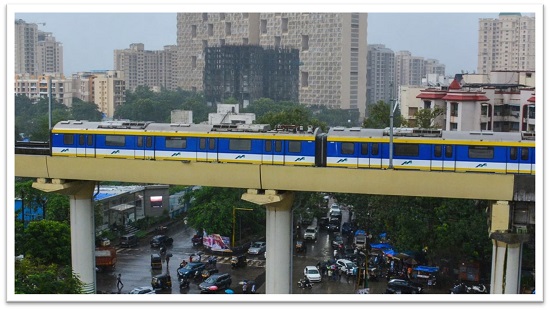
The proposed 9.7-kilometre, fully elevated Metro Line 10 begins at Gaimukh in Thane and runs through Gaimukh Retibunder, Chena Gaon, Varsova Gaon, Kashimira and Miragaon before concluding at Shivaji Chowk. This alignment is not incidental. It traces a corridor defined by soaring population density, rapid real estate development and daily traffic volumes that often exceed road capacity. Ghodbunder Road, which the metro will parallel, ranks among Thane’s most burdened arterial connections.
Officials estimate that by 2031, the corridor could serve more than 4.5 lakh commuters every day. This demand projection underscores how deeply mobility is tied to the region’s economic geography. As commercial hubs expand northward and residential clusters densify, the need for high-frequency, reliable mass transit becomes central to sustaining productivity and reducing the friction of daily travel.
A Project Anchored in Network Integration and Commuter Efficiency
Line 10 has been designed as more than a standalone link. It is conceived as a connector within Mumbai’s wider multi-line system, strengthening interchange options and reducing pressure on existing corridors. The project will create key integration points with Line 4A at Gaimukh and Line 9 at Miragaon, allowing commuters to transition seamlessly toward central Mumbai, the airport region and the western suburbs.
The metro line also includes a dedicated depot planned at Mogharpada, ensuring operational reliability and future expansion capacity. In a region where rail-based mass transit often operates near saturation, the addition of infrastructure capable of supporting maintenance and fleet growth becomes strategically important. The project’s configuration reflects a long-term systems approach rather than a short-term congestion fix.
Administrative Coordination Sets a Faster Development Pace
The recent meeting convened by Sarnaik included Thane Municipal Commissioner Saurabh Rao, Mira-Bhayander Municipal Commissioner Radha Binod Sharma and senior MMRDA officials. Such inter-agency coordination is essential for linear infrastructure that cuts across multiple municipal jurisdictions. Their discussions confirmed that several statutory clearances, including those related to forest land, mangroves, CRZ zones and wildlife regulations, are already underway.
The appointed consultant has prepared tender documents, indicating that administrative groundwork is largely complete. Timely clearances remain crucial because delays in linear infrastructure carry downstream costs in the form of cost escalation, productivity loss and commuter inconvenience. The December 15 tender initiation therefore marks a decisive step in compressing timelines and improving project execution rhythm.
Easing Ghodbunder Road’s Chronic Congestion
Ghodbunder Road, which connects Thane to the Western Express Highway, has long been a pressure point in regional mobility. With traffic volumes rising in tandem with new housing projects, commercial complexes and industrial nodes, peak-hour travel times often stretch unpredictably. The absence of a mass rapid transit option across the stretch has amplified reliance on private vehicles and buses.
Metro Line 10 aims to address this imbalance by shifting a significant portion of daily commuters from road to rail. If ridership projections materialise, even a 10 to 15 percent modal shift could significantly reduce congestion, improve travel time reliability and lower emissions. For a corridor experiencing both demographic expansion and economic diversification, this shift is foundational to maintaining liveability.
Transit as an Engine of Suburban Economic Growth
Sarnaik described the line as a key link supporting Thane’s rapidly growing suburbs, noting that it would deliver quicker, cleaner and more reliable travel to thousands of daily commuters. The framing is accurate. Infrastructure such as Metro Line 10 does not merely respond to growth but actively shapes it. Better transit strengthens labour mobility, widens job catchment areas, stimulates real estate investment and lowers the economic costs of distance.
Multiple studies from global urban networks show that metro connectivity can increase property values along transit corridors by 10 to 20 percent and reduce commute times by up to 30 percent. In high-density regions like Thane and Mira-Bhayander, these are not just conveniences but economic multipliers that influence productivity and quality of life.
A 2030 Completion Target That Aligns with Regional Mobility Goals
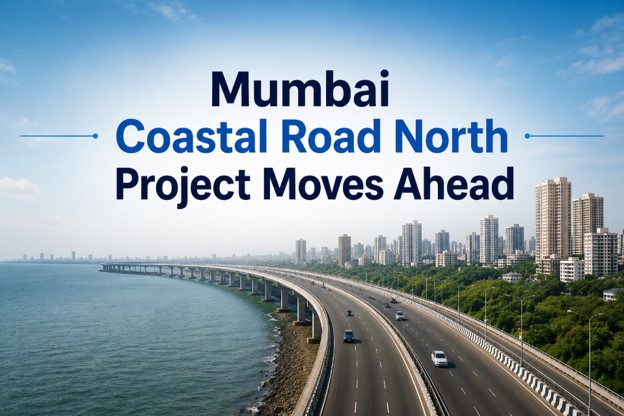
The government has set 2030 as the completion target for Metro Line 10. This timeline positions the project within a broader decade-long urban mobility transformation that includes the expansion of the Mumbai Metro network, the Mumbai Coastal Road, enhanced suburban rail upgrades and integrated transport hubs. Collectively, these initiatives aim to reduce the strain on existing modes, improve reliability and help Mumbai transition into a more balanced multimodal mobility ecosystem.
A Transformative Link for Thane’s Next Chapter
Metro Line 10 is more than a transport corridor. It is an investment in how Thane and Mira-Bhayander will participate in the next phase of the region’s economic and demographic evolution. The tender milestone indicates that the project is shifting from planning to execution, backed by administrative will and technical preparation. If completed as envisioned, the line will not only ease congestion but also recalibrate commuting patterns and enhance the economic resilience of the wider metropolitan network.
For now, the December 15 tender deadline is a meaningful inflection point. It signals intent, momentum and a renewed commitment to building a transit system capable of supporting the ambitions of a rapidly expanding urban region.