
- By Medhavini
- 03 Dec 2025
Mumbai’s East–West Road Tunnel Breakthrough Signals a New Era of High-Speed Urban Connectivity
Mumbai has entered a new chapter in its infrastructure evolution with the formal launch of tunnelling work for the ₹8,056 crore East–West underground road tunnel project. This nearly 10-kilometre link, stretching from Orange Gate on the Eastern Freeway to Marine Drive, marks one of the most ambitious and technically challenging mobility upgrades in India. By initiating excavation using a high-capacity Tunnel Boring Machine (TBM), the city has moved decisively from planning to execution, setting the stage for the country’s first deep urban road tunnel.
The project stands out not only for its engineering complexity but also for what it represents: a long-term shift toward high-speed, low-disruption connectivity in one of the world’s most densely built metropolitan regions. As Mumbai expands across new corridors and travel patterns become increasingly multidirectional, grade-separated underground mobility offers a critical solution to the limits of surface infrastructure.
A Landmark Engineering Initiative Beneath India’s Densest Transit Corridors
The East–West road tunnel is designed to be completed within 54 months and includes close to 7 kilometres of underground tunnelling. What makes this alignment exceptional is the terrain it must navigate. The twin tunnels will travel beneath the Central Railway line, Western Railway line, and the 33.5-km Mumbai Metro Line-3 Aqua Line, an intersection of some of the country’s heaviest transport systems. With depths ranging from 12 to 52 metres, and nearly 50 metres at the deepest point, the project represents a rare engineering feat in India’s urban context.
By opting for an underground alignment, planners have ensured that land acquisition remains minimal and surface disruption significantly limited. In a city where open space is scarce and construction frequently disrupts daily life, the ability to deliver mobility upgrades below ground marks a major administrative and technological advancement.
A Faster, Cleaner East–West Connection for Lakhs of Commuters
Once operational, the tunnels are expected to drastically improve East–West connectivity across Mumbai. Commuters travelling between South and East Mumbai could save 15 to 20 minutes per trip, reducing congestion around Byculla, Parel, Sewri, and neighbouring stretches. For the city's workforce, which often spends hours navigating cross-city routes, this upgrade offers a more predictable and efficient daily travel pattern.
The project will also reduce fuel consumption and cut emissions by limiting stop-and-go surface traffic. Noise levels are likely to fall in several neighbourhoods as heavy vehicular movement shifts underground. As urban mobility evolves globally toward quieter and cleaner systems, such outcomes align Mumbai with emerging international benchmarks.
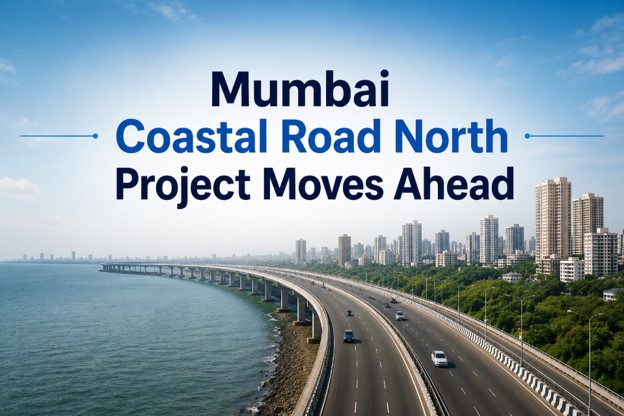
Integration with other major corridors, including the Coastal Road and Atal Setu, further enhances the utility of the tunnel. A cohesive network of high-speed links strengthens the resilience and fluidity of Mumbai’s transport ecosystem.
A State-of-the-Art TBM Designed for Mumbai’s Challenging Geology
At the centre of this undertaking is a refurbished and locally re-manufactured Slurry Shield TBM, a technology previously proven during construction of the Mumbai Coastal Road Project. With a cutter head measuring 12.19 metres in diameter, an overall length of 82 metres, and a weight of around 2,400 tonnes, the machine is engineered for precision in navigating Mumbai’s difficult subsoil conditions, particularly its coastal rock formations and high water ingress zones.
The TBM’s Slurry Shield design ensures stability while boring through soft ground, safeguarding nearby structures and transit systems. Its deployment highlights India’s growing capability in re-engineering and deploying advanced tunnelling technology domestically rather than depending solely on imported machines.
Physical progress on the project has reached approximately 14 percent. With the TBM now fully commissioned, tunnelling activity will advance in stages, supported by ongoing surface-level logistics, safety checks, and excavation management systems.
Infrastructure Built to Global Safety Standards
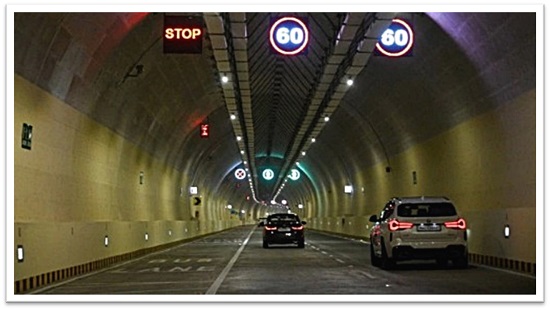
Each tunnel is being designed to include two 3.2-metre traffic lanes and a 2.5-metre emergency lane, ensuring smooth vehicular movement and rapid evacuation if required. Cross passages at 300-metre intervals will facilitate emergency access between the tunnels, a standard feature in world-class underground road systems.
Safety and ventilation systems are being developed in accordance with international best practices. These include mechanised ventilation units, heat-resistant materials, high-performance fire suppression systems, and intelligent transport systems capable of real-time monitoring. Such features are essential given the expected traffic volume and the tunnel’s considerable depth.
Incorporating these safety measures not only future-proofs the infrastructure but also positions Mumbai’s tunnel among the most advanced urban road systems in the region.
Minimising Surface Disruption Through Smarter Alignment Choices
One of the project’s major advantages is the limited surface intervention it requires. With tunnelling proceeding deep underground, the city avoids many of the disruptions associated with traditional road expansion, diversions, demolition, noise, and long-term occupation of public space. This approach preserves the city’s surface ecosystem, protects key heritage and commercial clusters, and allows daily life above ground to continue largely unaffected.
In dense megacities like Mumbai, such design thinking is not optional; it is essential. Underground mobility offers a blueprint for how future infrastructure can be built in a way that complements, rather than competes with, the existing urban fabric.
A Pivotal Milestone for Mumbai’s Mobility Future
The launch of tunnelling marks a decisive step in a project that will significantly reshape how Mumbai moves. As the TBM progresses beneath some of the city’s most constrained transit corridors, the East–West road tunnel promises to deliver a connectivity upgrade that is faster, cleaner, and more sustainable than traditional road widening.
When completed, the tunnel will stand as a testament to Mumbai’s capacity to adopt advanced engineering solutions and adapt them to its unique geographical challenges. More importantly, it will represent a forward-looking shift in how urban infrastructure is conceived, prioritising speed, environmental preservation, and long-term public value.
With work now advancing steadily, Mumbai is inching closer to a mobility breakthrough that will benefit lakhs of commuters and future-proof the city’s East–West connectivity for decades to come.