
- By Shyam Singh
- 09 Dec 2025
‘Don’t Slow Down Mumbai’: FIRs Against Rapido and Ola Have Sparked a Citywide Demand for Smarter Mobility
Sparked a Citywide Demand for Smarter Mobility
Mumbai’s relationship with mobility has always been defined by urgency. A city of more than 20 million people cannot afford slow movement, and every minute saved becomes part of its economic engine. The recent FIRs filed against the directors of Rapido and Ola for allegedly operating bike-taxis without the necessary permissions have triggered an intense public reaction. What began as a regulatory action has now accelerated into a full-fledged mobility debate, with Mumbaikars demanding solutions that match the pace and pressure of their daily lives.
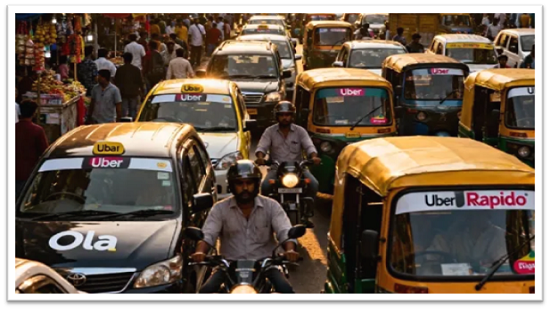
Across India’s major metros, short-distance and last-mile travel have become critical components of urban mobility. Studies indicate that nearly 40 percent of trips in Indian cities fall within a radius that makes bike-taxis particularly effective. For Mumbai, a city already battling some of the world’s highest congestion levels, these services have filled essential gaps. Their sudden disruption has not just inconvenienced commuters; it has reopened fundamental questions about accessibility, speed and affordability.
A Social Media Wave Amplifies Public Sentiment
The tension quickly spilled over to social platforms, where the hashtag #MumbaiNeedsBikeTaxi surged across timelines, uniting students, office-goers, gig workers and entrepreneurs. One widely shared post captured the collective sentiment: “Let Mumbai move again. Let riders earn with dignity again. Let commuters travel without stress again. Mumbai is ready for smart, affordable mobility.”
This wasn’t just nostalgia for convenience. It was an assertion that in a city where every second counts, mobility isn’t optional, it is foundational. Another user wrote, “Bike taxis aren’t a luxury, they’re a lifeline for workers, students and daily travellers. Bring them back for a faster, freer, more connected city.” Such statements highlight a shared frustration: mobility solutions that serve millions cannot be dismissed without alternatives.
Public Frustration Reflects Real Mobility Needs
The online uproar reflects real on-ground realities. Bike-taxis frequently cut travel time by 25–40 percent in high-density corridors, offering quick, low-cost relief during inevitable traffic bottlenecks. For thousands of gig workers, these platforms provide livelihood opportunities with low entry barriers. For students and daily wage earners, they offer affordability that traditional cabs or autos often cannot match.
One user, Shivani Verma, expressed this gap succinctly: “Mumbai needs quick, affordable, and reliable travel options. Bike taxis filled a vital gap for students, workers and last-mile connectivity across the city. Don’t slow down Mumbai!” Her message resonated widely because it mirrored everyday experience, not theory.
Legal Action Raises Questions About Regulatory Framework
According to the FIR, both companies were allegedly operating without approval from the Maharashtra State Government or the Regional Transport Authority (RTA). The complaint states that they facilitated rides through mobile apps despite lacking the required licences, gained financial benefits and failed to follow safety protocols such as driver verification and mandatory documentation.
The case underscores a deeper structural issue: India’s mobility innovations often advance faster than the regulations designed to govern them. While compliance and safety must remain non-negotiable, policy frameworks must evolve quickly enough to keep pace with technology-led services that millions increasingly depend on.
A Policy Debate India Can No Longer Delay
This moment presents a broader national dilemma, should rapidly growing cities halt emerging mobility models, or should they formalize and regulate them? Several Indian states have already introduced bike-taxi policies, recognizing their role in solving last-mile inefficiencies and reducing congestion. Meanwhile, Mumbai, a city known for rapid adaptation and economic dynamism, finds itself in a holding pattern.
Urban mobility data shows commuters in Mumbai lose more than 121 hours annually in traffic delays, numbers that reinforce the need for diversified travel solutions. Bike-taxis are uniquely capable of navigating narrow lanes, reaching metro stations quickly and serving areas where public transport linkages remain weak.
Citizens, Workers and Platforms Share a Common Stake
This debate is not a binary fight between authorities and tech platforms. It affects three key groups simultaneously. Citizens want efficiency. Gig workers want income stability. The city wants sustainable, congestion-minimizing mobility models. Bike-taxis sit at the intersection of all three.
Their value is practical, not theoretical. They substitute short car trips, reduce traffic intensity and provide incomes that are increasingly difficult to secure in traditional job markets. Urban planners globally agree that diverse mobility ecosystems, not single-solution transport systems, create resilient cities.
A Chance for Mumbai to Lead Instead of Lag
Cities around the world have learned that simply banning popular transport modes rarely solves systemic challenges. Structured regulation, clear licensing, and enforceable safety standards are more effective pathways forward. With public sentiment now at peak intensity, Mumbai faces an opportunity: rewrite the mobility rulebook to reflect the real needs of a rapidly growing metropolis.
As one viral post declared: “Don’t slow down Mumbai.”
For a city built on speed, ambition and constant motion, the message is unmistakably powerful.
The next move, policy reform, regulatory clarity or status quo, will play a defining role in shaping how Mumbai moves in the years to come.