
- By Diya Sogani
- 13 Mar 2026
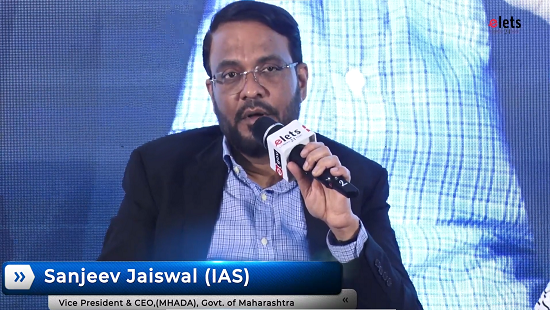
IAS Sanjeev Jaiswal Leads Landmark MHADA–Rustomjee Agreement: GTB Nagar Redevelopment Set to Deliver 1,200 Modern Homes in Mumbai
Mumbai’s redevelopment story is increasingly becoming a story of transformation—of aging neighbourhoods evolving into modern residential ecosystems. One of the most significant milestones in this journey has now been achieved with the signing of a key development agreement for the Guru Tegh Bahadur (GTB) Nagar redevelopment project in Sion Koliwada.
Under the leadership of IAS Sanjeev Jaiswal, Vice President and Chief Executive Officer of the Maharashtra Housing and Area Development Authority (MHADA), the project has reached an important implementation stage with the signing of a tripartite development agreement between MHADA, cooperative housing societies, and the Rustomjee Group. The agreement marks a major step forward in delivering modern housing for approximately 1,200 eligible beneficiaries.
What makes the project particularly significant is that it represents MHADA’s first redevelopment project on private land implemented through the Construction & Development Agency (C&DA) model—a framework that could shape future redevelopment efforts across Mumbai.
A Historic Step in MHADA’s Redevelopment Strategy
Mumbai’s housing challenges are unique. Limited land availability combined with aging residential structures has made redevelopment one of the most practical solutions for urban housing renewal.
The GTB Nagar redevelopment project, spread across approximately 11.20 acres, consists of 25 buildings housing around 1,200 tenements. Many of these buildings had reached a stage where redevelopment was no longer optional.
In 2020, the structures were declared dangerous by the Brihanmumbai Municipal Corporation (BMC), leading to their demolition and relocation of residents.
Responding to the concerns and demands of residents, the state government decided to undertake redevelopment through MHADA, ensuring a structured, transparent process for rehabilitation and housing redevelopment.
The Tripartite Agreement: A Major Milestone
The redevelopment project reached a crucial stage when all cooperative housing societies involved in the project signed the tripartite development agreement with MHADA and the Rustomjee Group.
The agreements were formally executed at the MHADA Headquarters in Bandra, in the presence of senior officials including:
• IAS Sanjeev Jaiswal, Vice President and CEO, MHADA
• Milind Borikar, Chief Officer, Mumbai Board, MHADA
• Boman Irani, Managing Director, Keystone Realtors (Rustomjee Group)
Alongside the tripartite agreement, the construction-cum-development agreement was also signed, officially moving the project into the implementation phase.
This stage is critical because it translates planning and policy approvals into real construction activity.
Modern Housing for 1,200 Beneficiaries
The redevelopment plan envisions three modern residential towers ranging from 39 to 48 storeys.
These towers will provide housing for approximately 1,200 eligible residents, ensuring that families currently displaced due to the demolition of unsafe structures will receive modern replacement homes.
Each beneficiary will receive a free 635 sq ft self-contained residential unit, equipped with modern amenities and improved infrastructure.
The project will be developed as a gated residential community, incorporating modern planning standards and security features.
Such redevelopment models not only replace unsafe housing but also significantly improve the overall quality of living.
Smart Urban Design and Infrastructure
Beyond housing, the project has been designed to create a well-rounded residential environment.
Key infrastructure elements include:
• Multi-level basement parking
• Podium parking with ramp access
• Landscaped residential spaces
In addition, the project will feature lifestyle amenities that enhance community living, including:
• Fully equipped gymnasium
• Indoor games zone
• Yoga and multi-function studio
• Children’s play area
• Community library
• A 4,000 sq ft banquet hall with attached kitchen
These facilities reflect a shift in redevelopment philosophy—from merely replacing buildings to creating integrated urban communities.
Transit Support for Residents
Recognizing that redevelopment projects require temporary relocation of residents, MHADA has incorporated a structured support mechanism.
Upon receipt of the Commencement Certificate (CC) from the competent authority, eligible residents will receive ₹20,000 per month as transit rent.
This financial support helps families manage accommodation costs during the redevelopment phase.
Additionally, once the project is completed, MHADA will manage and maintain the buildings for five years, ensuring that the residential infrastructure remains well maintained during the initial years of occupation.
Policy Framework and Planning Regulations
The redevelopment is being implemented under Development Control Regulation (DCR) 33(9), which allows redevelopment projects to utilize enhanced development potential.
Under this regulation, the project will receive a minimum Floor Space Index (FSI) of 4.5, including fungible FSI.
Higher FSI allows developers to construct taller residential structures while ensuring adequate rehabilitation housing for existing residents.
This regulatory framework has become an important tool in enabling large-scale redevelopment projects across Mumbai.
A Model for Future Redevelopment Projects
The GTB Nagar redevelopment project represents more than just a housing upgrade. It demonstrates how public authorities, resident societies, and private developers can collaborate to deliver large-scale urban redevelopment.
As Mumbai continues to modernize its housing infrastructure, projects like GTB Nagar could serve as important templates for future redevelopment initiatives across the city.
For the nearly 1,200 families connected to this project, the redevelopment promises safer homes, improved amenities, and a better quality of life.
Under the leadership of IAS Sanjeev Jaiswal, MHADA’s redevelopment efforts are increasingly focusing on transparency, structured governance, and citizen-centric housing solutions—an approach that will likely shape Mumbai’s housing transformation in the years ahead.