
- By Diya Sogani
- 25 Nov 2025
Mumbai’s Great Transport Leap: CM Devendra Fadnavis Unveils Ambitious ‘Paatal Lok’ Road Network to Transform City Mobility
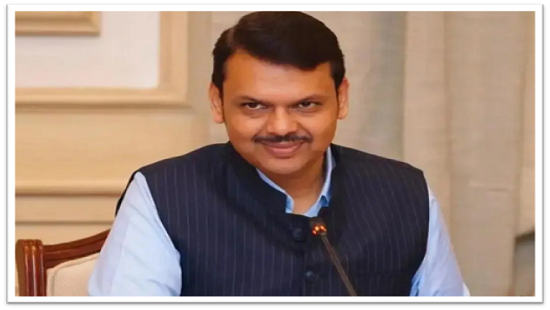
Mumbai stands at the brink of one of its most ambitious infrastructure overhauls in decades. At the ‘Youth Connect’ event hosted by IIMUN at the NSCI Dome in Worli, Maharashtra Chief Minister Devendra Fadnavis unveiled an expansive mobility vision that promises to fundamentally reshape how the city moves. Describing the upcoming underground tunnel system as Mumbai’s own “paatal lok,” he positioned the plan as a decisive answer to the city’s long-standing traffic congestion.
The announcement signals not just a series of big-ticket construction projects but a systematic reimagining of urban mobility. Fadnavis emphasised that Mumbai’s next leap will come from integrating tunnels, sea links, parallel roads, elevated corridors, and a full-strength Metro grid into one unified network. This multi-layered approach, he said, will deliver lasting relief to commuters and strengthen the city’s economic competitiveness.
A Multi-Layered Mobility System for a High-Density City
Fadnavis highlighted that the new mobility architecture is designed to distribute traffic across multiple levels rather than compressing it onto a few arterial roads. With nearly 60 percent of Mumbai’s vehicular load currently concentrated on the Western Express Highway, the city’s need for alternate corridors has been urgent.
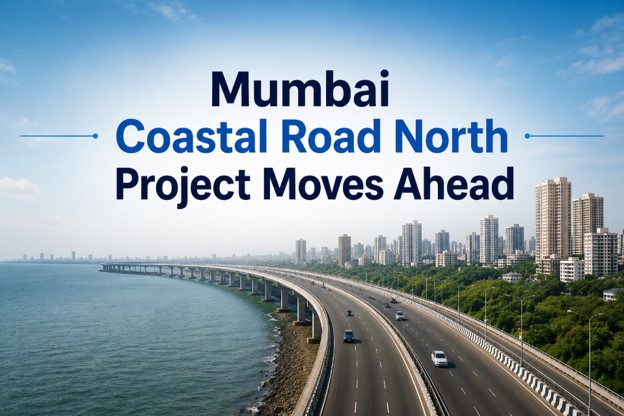
Projects like the Versova–Dahisar–Bhayandar extension of the coastal road, a new Dahisar link road, and multiple free-flow bridges are expected to shift this pressure substantially. These additions will create new north–south and east–west pathways that operate independently of the existing highway grid. According to Fadnavis, these interventions will significantly improve average travel speed and reduce choke points that have constrained productivity for years.
He also underscored that tunnels connecting the Bandra Kurla Complex to key parts of the city will be among the most transformative components. For the first time, Mumbai will have a road network composed entirely of tunnels, offering uninterrupted, weather-proof, signal-free movement across critical corridors.
Metro Completion and the Rise of Seamless Public Transport
A key pillar of the CM’s vision is a robust Metro network designed to serve as the backbone of the city’s public transport system. Fadnavis reassured the audience that the entire Metro grid will be completed within the next five years, positioning Mumbai alongside global megacities with interconnected mass transit systems.
The Metro is already electric, and the next phase aims to make all public transport fully zero-emission. With the transportation sector being a major contributor to urban pollution, this shift aligns Mumbai’s mobility transformation with global climate goals. Fadnavis also referenced the state’s unified mobility app, Mumbai One, calling it a simplified gateway for commuters to access multiple transit modes through a single platform.
The combined infrastructure push, Metro expansion, electric buses, and tunnel-based roads, positions Mumbai to reduce carbon emissions while enhancing daily mobility.
Infrastructure on a War Footing
Fadnavis described the next five years as decisive for Mumbai, with several large-scale projects underway simultaneously. Elevated connectors, surface-level roads, and sub-surface tunnels are being constructed in parallel, accelerating timelines and minimising disruption.
He pointed out that these improvements are not isolated engineering exercises but part of a strategic blueprint to boost east–west connectivity, facilitate faster evacuation routes, and support economic clusters. Better mobility, he said, is essential for Mumbai’s long-term growth, especially as it continues to anchor India’s financial and services economy.
Transforming Education Through Public Sector Strengthening
Shifting to education, Fadnavis addressed a perception that private schools dominate quality benchmarks. He argued that municipal schools already demonstrate significant improvement and possess the potential to meet international standards. With investments in teacher training, innovative pedagogy, and upgraded infrastructure, he believes civic-run institutions can outperform private schools in the long run.
He emphasised that when government systems become high-performing, they create equitable pathways for millions of students. For a metropolis as diverse as Mumbai, strengthening public education is a crucial pillar of inclusive growth.
Role of the Youth in Strengthening Indian Democracy
Recognising the importance of youth, Fadnavis reminded the audience that young citizens are central to nation-building. Their opinions directly influence policies, institutions, and public discourse. Without meaningful inclusion of youth voices, democratic systems cannot evolve or retain legitimacy.
By engaging with students at the IIMUN platform, he highlighted a generational shift where young Indians expect accountability, modern governance, and sustainable solutions, and are willing to participate actively in shaping them.
Climate Change and the Urgency of Action
Fadnavis spoke at length about climate change, calling it an immediate crisis rather than a distant concern. Today’s generation, he said, is the first to experience the full force of climate disruption and the last with the capacity to reverse its effects meaningfully.
He emphasized the need for clean mobility, better waste management, and rapid electrification of public transport. With the Metro already electric and city buses transitioning to zero-emission models, Mumbai is moving toward a greener urban environment. His message reinforced that climate responsibility must sit at the heart of all infrastructure decisions.
Fixing Mumbai’s Long-Standing Sewage Challenge
Mumbai’s sewage problem has persisted for decades, with untreated water flowing into the sea. Fadnavis stated that such practices are unacceptable for a modern metropolis. The government is constructing multiple sewage treatment plants to ensure that by next year, all water released into the sea will be fully treated.
This reform, long overdue, is expected to significantly improve coastal and marine health while enhancing the city’s environmental reputation.
Dharavi Redevelopment and a New Urban Vision
Fadnavis also highlighted the Dharavi redevelopment project, announcing that 30 percent of the area will be maintained as open, green spaces. This is a deliberate attempt to balance density with habitability, improving quality of life for residents in one of Asia’s most congested pockets.
The redevelopment strategy aims to integrate housing, infrastructure, and public amenities while preserving community networks and ensuring sustainable urban design.
Towards a Modern, Sustainable Mumbai
Fadnavis concluded by linking all these initiatives, transport, environment, education, and urban development, to a single long-term vision: building a modern, inclusive, and future-ready Mumbai. His roadmap reflects a city that is simultaneously addressing immediate challenges and preparing for the next generation’s aspirations, setting the foundation for a more connected and sustainable metropolis.