
- By Bhawana
- 25 Nov 2025
Air India Implements Safety-First Protocol: Multiple Flights Cancelled After Ethiopia’s Hayli Gubbi Volcanic Eruption
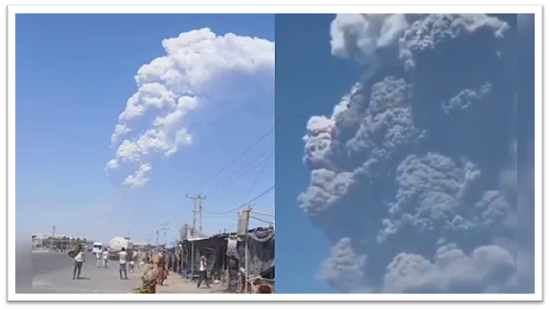
Air India has initiated a large-scale safety protocol following the Hayli Gubbi volcanic eruption in Ethiopia, leading to the cancellation of several international and domestic flights scheduled for November 24 and 25. The airline’s decision underscores a central principle of modern aviation: safety takes precedence over convenience, commercial considerations or operational schedules. At a time when global aviation continues to navigate complex environmental risks, Air India’s timely response reflects both responsibility and preparedness.
The volcanic activity in Ethiopia brought a fresh environmental challenge for carriers operating through regional air corridors. Volcanic ash, often invisible at cruising altitudes, can enter aircraft engines, damage turbine blades, contaminate sensors and interfere with critical navigation systems. Aviation safety agencies worldwide classify volcanic ash as a severe operational hazard. As a result, even the possibility of aircraft exposure demands thorough technical inspection before they can re-enter service.
A Proactive Decision Rooted in Global Best Practices
Air India’s announcement, made through a public advisory, confirmed that some aircraft had flown over regions potentially affected by volcanic ash. Although no immediate threat was detected, the airline imposed mandatory post-flight checks across impacted aircraft. This approach aligns with international aviation protocols recommended by safety regulators, meteorological agencies and engine manufacturers.
The airline emphasised that its highest priority is the protection of passengers, crew and aircraft. The grounding and inspection of flights, though disruptive, reflect a wider industry understanding that precaution is always superior to post-incident correction. With environmental disruptions increasing globally, these decisions are not just operational necessities but reputational imperatives.
A Breakdown of the Affected Flights
The cancellations covered prominent international and domestic sectors, demonstrating the scale of precaution adopted by the airline.
For November 24, the flights cancelled included:
• AI 106 – Newark to Delhi
• AI 102 – New York JFK to Delhi
• AI 2204 – Dubai to Hyderabad
• AI 2290 – Doha to Mumbai
• AI 2212 – Dubai to Chennai
• AI 2250 – Dammam to Mumbai
• AI 2284 – Doha to Delhi
For November 25, cancellations were extended to:
• AI 2822 – Chennai to Mumbai
• AI 2466 – Hyderabad to Delhi
• AI 2444 and AI 2445 – Mumbai to Hyderabad to Mumbai round trip
• AI 2471 and AI 2472 – Mumbai to Kolkata to Mumbai round trip
The selection of routes shows that the precautionary checks influenced both long-haul and short-haul operations, reflecting Air India’s uniform safety standard across its network.
Passenger Assistance and On-Ground Coordination
Air India’s ground teams across multiple airports activated support systems to manage affected passengers. This included assistance with rebooking, hotel stays where necessary, and clear communication on airport terminals. Real-time information desks were set up to minimise confusion, offering travellers timely updates on alternate flight arrangements.
Passengers took to social media to express their concerns, ranging from disrupted plans to missed connections, but many also acknowledged the professionalism of the staff. Accounts from passengers mentioned that meals, accommodation and rebooking options were handled with empathy, creating a sense of reassurance amid uncertainty. In a sector where service responsiveness shapes brand perception, Air India’s crisis-handling approach demonstrated maturity.
Environmental Volatility and Its Growing Influence on Aviation
The Hayli Gubbi eruption is one of many recent cases highlighting how environmental disturbances increasingly shape global aviation behaviour. Over the past decade, airports in Europe, Southeast Asia and the Pacific have repeatedly faced closures or rerouted flights due to volcanic ash clouds.
For India, Ethiopia’s volcanic zones may appear geographically distant, but the aviation corridors connecting India to Europe, Africa and the Middle East often overlap with regions prone to volcanic activity. Incidents like these bring renewed focus on the importance of cross-border meteorological data, satellite tracking and early-warning systems.
Air India’s decision to ground aircraft for inspections reinforces a critical truth: operational resilience is not just about running flights but about managing risk intelligently.
The Airline’s Response and Long-Term Preparedness
The airline issued an apology for the inconvenience caused but reaffirmed that the cancellations were unavoidable due to circumstances beyond its control. Air India also assured passengers that operations would resume to full normalcy once all aircraft had successfully cleared the mandatory engineering checks.
This transparency reflects a shift in India’s aviation culture, where airlines increasingly communicate openly during disruptions. Such clarity helps build long-term passenger trust, especially at a time when air travel depends heavily on reliability.
In the broader context, Air India’s response fits into its ongoing transformation, strengthening operational discipline, modernising safety systems and improving crisis management under the Tata Group’s leadership. These developments indicate a strategic effort to elevate the airline to global operational standards.
A Moment That Highlights Aviation’s Complex Realities
The cancellations triggered by the Ethiopian volcanic eruption showcase the inherent complexities of modern aviation. Aircraft operate in dynamic environments shaped by weather, geography and global interconnectedness. Disruptions are inevitable, but the quality of response determines whether an airline emerges with trust reinforced or dented.
Air India’s actions reaffirm that its operational philosophy is rooted in caution, accountability and technical reliability. Ensuring that passengers travel only in aircraft cleared through rigorous safety checks sends a clear message about the airline’s priorities.
As volcanic ash clouds dissipate and operations stabilise, the temporary inconvenience passengers faced becomes part of a larger narrative, one where safety is uncompromising, transparency is valued and responsible decision-making anchors aviation reliability. Air India’s response stands as a reminder that in the world of aviation, safety-first is not a slogan but a strategy that protects lives, maintains trust and upholds global standards.