
- By Hitesh
- 21 Feb 2026
MHADA's Bold Move: 21 Years of Delay in Mazgaon Tadiwadi Redevelopment Finally Comes to an End
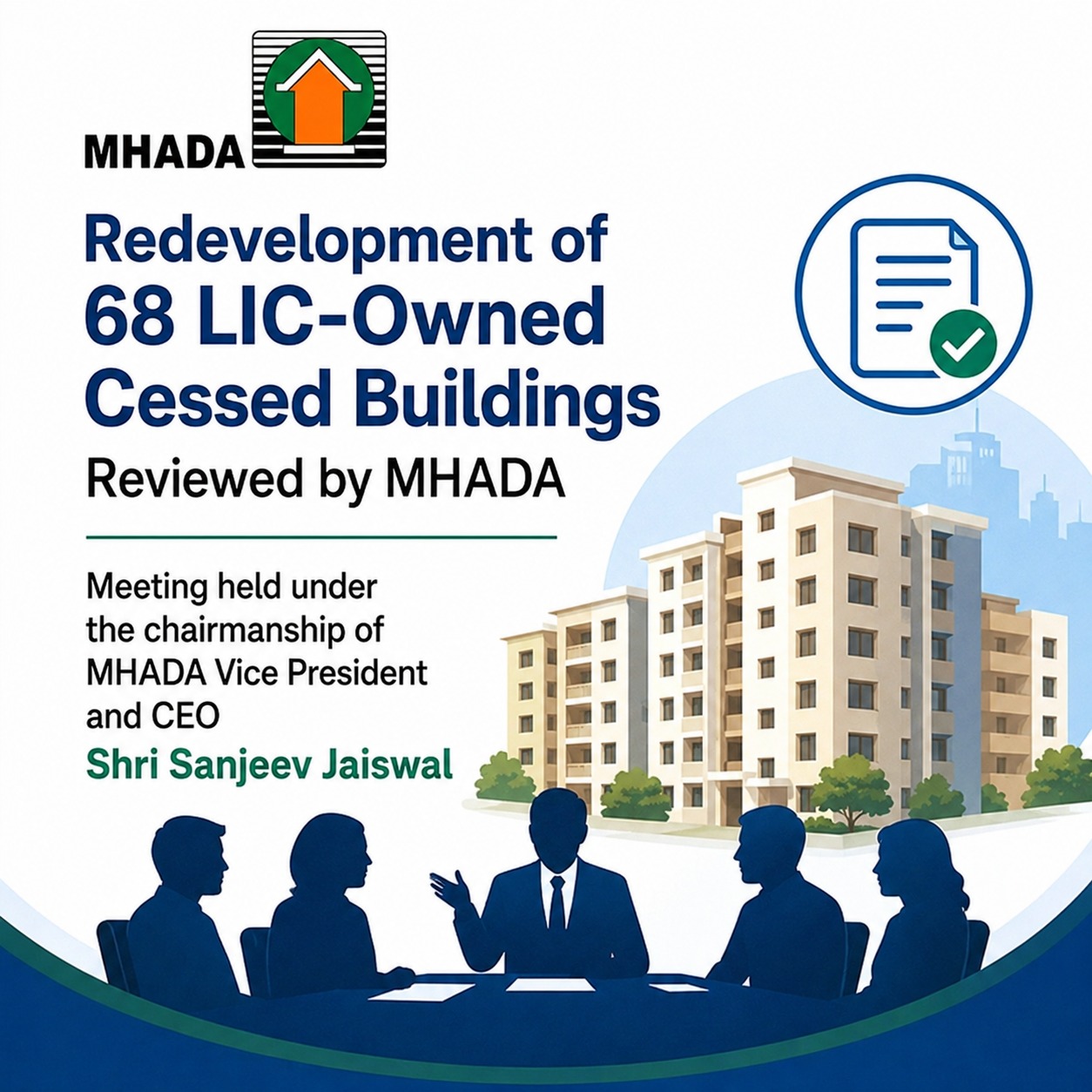
In an important development, IAS Sanjeev Jaiswal, the key driving force behind the Maharashtra Housing and Area Development Authority (MHADA), is overseeing a major initiative aimed at resolving the long-standing redevelopment issues in the Mazgaon Tadiwadi area of Mumbai. The redevelopment project of the BIAT (Bhabha Institute of Technology) chawls, which has been pending for over 21 years, is set to gain momentum. Thanks to the tireless efforts of local leaders and support from key stakeholders like Shiv Sena, the Maharashtra government, and MHADA, this initiative promises to bring relief to the residents of Mazgaon Tadiwadi, who have been living in deplorable conditions for years.
Addressing the Housing Crisis in Mazgaon Tadiwadi
The BIAT chawls in Mazgaon Tadiwadi were constructed more than three decades ago, and since then, the buildings have been in a dilapidated state, causing great hardship to its residents. With structural safety becoming a growing concern, many of the buildings have been classified as unsafe, and over time, there have been frequent incidents where slabs collapsed, injuring residents. Despite the dire need for redevelopment, the project has been mired in legal and bureaucratic delays, leaving the residents in limbo.
The redevelopment project, which was initially delayed due to land acquisition and other logistical challenges, is finally seeing progress under the leadership of IAS Sanjeev Jaiswal. In a recent meeting led by Prof. Ram Shinde, the Chairperson of the Maharashtra Legislative Council, significant headway was made towards a resolution. The housing project will now include 17-story buildings with modern amenities, including proper sanitation, dedicated spaces for residents, and community areas, making it a comprehensive solution to the region’s housing crisis.
The Path Forward for Redevelopment
As of now, four of the buildings in the Mazgaon Tadiwadi BIAT chawls are to undergo immediate redevelopment. The aim is to bring new life to the area, with residential complexes designed for low-income families. The government plans to expedite the construction process, with a timeline set for completion within the next two years. As part of the redevelopment, the old structures will be demolished, and the new buildings will house more than 261 families. The focus will be on providing quality homes with modern amenities and better living conditions, which will significantly improve the quality of life for the residents.
Under the new policy, once the new buildings are ready, residents will be allotted flats in a transparent manner based on merit. Prof. Ram Shinde, the Chairperson of the Legislative Council, has ensured that the entire process will be carried out with full transparency, helping restore faith in the system. These initiatives come after years of failed attempts to revitalize the area, offering a glimmer of hope to the residents who have waited for over two decades.
Addressing the Issues of Property Owners and Renters
In addition to the redevelopment of the BIAT chawls, MHADA is also tackling the issue of property ownership in the region. According to the latest reports, the project will involve the regularization of residents’ ownership rights in the new redevelopment project. Property owners will receive legal ownership of their new flats, while tenants will be allotted homes based on the applicable rules and regulations set by MHADA.
This move aims to provide justice to the residents who have been deprived of stable housing for decades. MHADA, under the guidance of Sanjeev Jaiswal, has emphasized that the project will prioritize the welfare of the tenants, ensuring that they are given a place in the new developments. Additionally, the new buildings will be equipped with essential amenities, such as water supply, sanitation, and proper electrical wiring, ensuring better living standards for all residents.
Legal Hurdles and the Road Ahead
The biggest challenge faced by the project has been the legal hurdles related to land acquisition. In the past, residents have faced delays in obtaining compensation or relocation offers from the concerned authorities. These issues were compounded by bureaucratic red tape, making it difficult for the government to push the project forward.
However, after extensive consultations with legal and urban planning experts, MHADA has been able to overcome many of these obstacles. The revised approach will see a more streamlined process for land acquisition and construction, minimizing delays and ensuring that the project is completed on time.
As a result, the 21-year-long wait for redevelopment in Mazgaon Tadiwadi is finally over. With the project now gaining momentum, the residents can look forward to a better future, one that promises safer, more sustainable living conditions.
A Positive Shift for Mumbai’s Housing Landscape
This redevelopment project is not only a significant step forward for Mazgaon Tadiwadi but also serves as a model for other areas in Mumbai that face similar housing crises. The successful execution of this project will inspire further efforts to rehabilitate and redevelop other dilapidated chawls across the city.
MHADA’s efforts under the leadership of IAS Sanjeev Jaiswal are commendable. His proactive stance in tackling Mumbai's housing shortage is a testament to his commitment to the city’s development. With plans in place to revamp several other areas in Mumbai, MHADA is well on its way to addressing the housing needs of the city’s most vulnerable populations.
Conclusion
The successful redevelopment of the Mazgaon Tadiwadi chawls is a triumph for Mumbai’s housing sector and a much-needed win for its citizens. Under the leadership of IAS Sanjeev Jaiswal, MHADA has proven its ability to turn around long-stalled projects and bring them to fruition. As more projects like this take shape, Mumbai’s housing landscape is bound to see a positive transformation, providing better homes and a brighter future for its residents.