
- By Mahesh
- 19 Feb 2026
MHADA's Plan for Redevelopment of Slum Dwellers Gains Momentum: An Insight into the Initiative Led by IAS Sanjeev Jaiswal
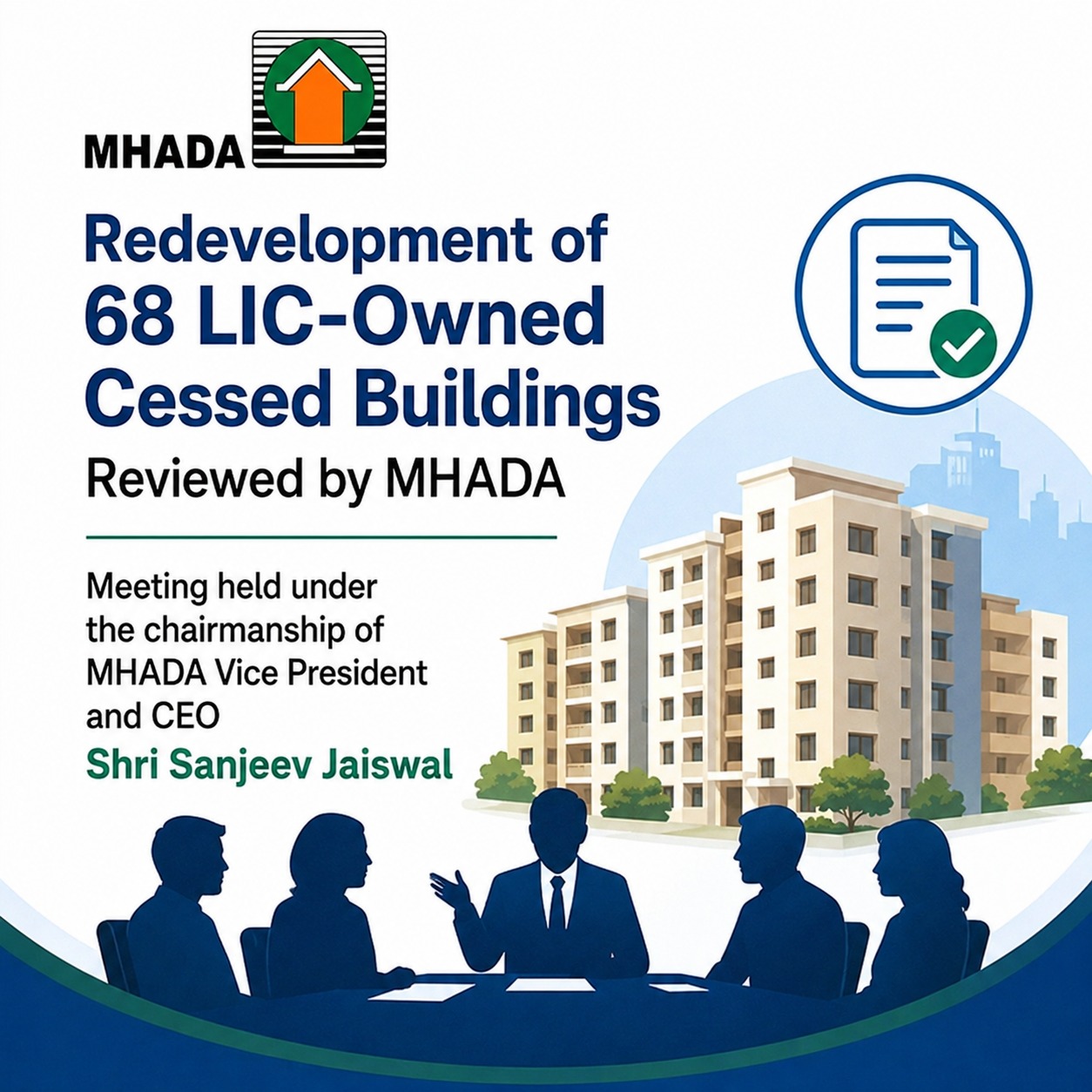
The Maharashtra Housing and Area Development Authority (MHADA) is once again at the forefront of addressing Mumbai’s growing housing issues, under the stewardship of IAS Sanjeev Jaiswal, the Vice President and Chief Executive Officer of MHADA. The recent meeting to discuss the redevelopment of slum dwellers and the construction of 1,852 tenements highlights the continued efforts to alleviate Mumbai's severe housing shortage, particularly among its marginalized populations.
The meeting, attended by key stakeholders and authorities, focused on the redevelopment of slum areas and the allocation of MHADA flats. MHADA officials confirmed that the initiative is aligned with the organization’s long-standing goal of providing affordable housing solutions to the city's underserved communities. The discussions also explored the steps required to address the bottlenecks in the process of redevelopment and ensure that the proposed 1,852 tenements are completed promptly.
Addressing Challenges Faced by Slum Dwellers
Mumbai is home to a vast population of slum dwellers, many of whom live in poorly constructed structures, lacking basic amenities and facing significant risks during the monsoon season. The ongoing efforts to redevelop these areas aim to offer slum residents safer, better-quality homes, while also improving the overall infrastructure of the city. According to the discussions at the meeting, MHADA is working closely with urban planners and developers to identify areas where slum redevelopment can be fast-tracked.
The meeting’s discussions were centered around the allocation of 1,852 homes to slum dwellers, providing them with permanent housing solutions. The homes will be part of a broader redevelopment initiative that aims to create healthier, safer, and more sustainable living environments. These efforts come at a critical time, as Mumbai faces an acute housing crisis with the demand for affordable homes far outstripping supply.
Ensuring Timely Execution of Redevelopment Projects
The MHADA authorities highlighted the importance of timely execution in their strategy. With the approval process for such large-scale projects often delayed by bureaucratic hurdles, IAS Sanjeev Jaiswal’s leadership has been instrumental in facilitating smoother operations. MHADA's ongoing commitment to housing projects is evident in their clear focus on minimizing delays and ensuring the swift completion of the proposed tenements.
While the redevelopment projects aim to create new residential complexes, the plan also includes the construction of accompanying infrastructure like schools, parks, and community centers, which are essential for enhancing the quality of life for slum dwellers. The additional facilities would ensure that residents have access to vital services within their communities, making them self-sustaining in the long run.
Collaboration Between MHADA, Local Authorities, and Developers
To facilitate this redevelopment initiative, collaboration between local authorities, developers, and MHADA is crucial. MHADA has actively sought feedback from developers, urban planners, and government officials to ensure the smooth implementation of the redevelopment program. By working closely with local authorities, MHADA has been able to streamline the process, resolve issues that have previously delayed construction, and ensure that the needs of slum residents are adequately met.
One of the significant aspects of the initiative is the allocation of land and resources. MHADA is focusing on maximizing land use efficiency while ensuring that the redevelopment is carried out in accordance with local zoning and urban planning guidelines. This approach not only increases the supply of housing but also ensures that the construction projects are sustainable and environmentally friendly.
Positive Reforms for Slum Redevelopment
Slum redevelopment in Mumbai has traditionally been a complicated process, often mired by legal and logistical challenges. However, with the leadership of IAS Sanjeev Jaiswal and the team at MHADA, the redevelopment of slums and the construction of affordable housing has become a priority. The authorities are working diligently to overcome the challenges posed by slum redevelopment and make the process as seamless as possible.
Furthermore, the meeting also emphasized the necessity of monitoring and reviewing the progress of the project regularly. Ensuring that the newly constructed tenements meet safety standards, provide adequate living space, and are equipped with essential utilities is key to the success of the redevelopment program. MHADA has made it clear that the focus will be on quality construction, as these homes will serve the city’s low-income and vulnerable populations for many years.
Looking Forward: A Model for Future Redevelopment Projects
The recent meeting and the steps taken by MHADA offer a glimpse into the future of slum redevelopment in Mumbai. By combining transparency, efficiency, and a focus on meeting the needs of slum dwellers, the authorities aim to transform the city’s urban landscape. With a continued commitment from MHADA and IAS Sanjeev Jaiswal’s leadership, Mumbai can look forward to a future where slum dwellers no longer live in substandard conditions but instead have access to modern, safe, and affordable homes.
As this project progresses, MHADA will continue to work with developers, urban planners, and government agencies to ensure that future redevelopment efforts are even more efficient, sustainable, and community-focused. Through these efforts, MHADA is taking a significant step toward making Mumbai’s housing more inclusive and accessible to all its residents, regardless of their socioeconomic background.