
- By Rahul
- 25 Feb 2026
Sanjeev Jaiswal's Cluster Redevelopment Push May Be Mumbai's Most Important Housing Reform Yet
Fixing affordability is not about cheaper homes. It is about rebuilding the city at the scale its economy demands.
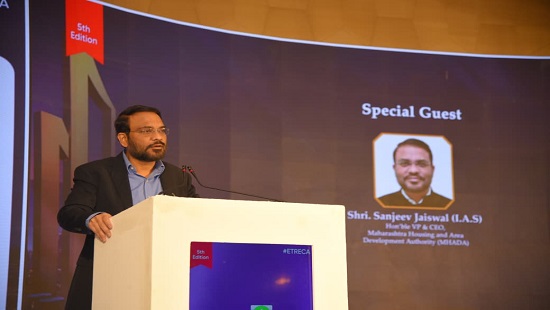
Mumbai’s housing crisis is frequently described as an affordability problem. While addressing at the ET Real Estate Conclave 2026, MHADA Vice President and CEO Sanjeev Jaiswal argued that the diagnosis itself is incomplete. The city does not merely need cheaper housing. It needs systematic urban renewal - that is where cluster redevelopment, backed by policy reform, becomes central to the solution.
Mumbai’s Real Constraint Is Not Demand. It Is Locked Land.
Mumbai has capital.
Mumbai has developers.
Mumbai has homebuyers.
What it does not have is efficiently usable land. Large parts of the city remain trapped in ageing, low-rise, structurally vulnerable buildings occupying high-value urban parcels. Redevelopment has historically happened building by building, society by society — a model too slow for a megacity.
As Sanjeev Jaiswal emphasised, this fragmented approach creates a paradox: “Mumbai’s challenge is not just affordability. It is the structural reality that nearly S0% of the city’s developable land is already utilised, leaving very limited room for outward expansion”. Prime land remains underutilised while housing prices remain unaffordable. In economic terms, Mumbai is facing a supply bottleneck created by outdated urban form.
Why Is Sanjeev Jaiswal Advocating Cluster Redevelopment
Traditional redevelopment replaces one building with another. Cluster redevelopment replaces urban dysfunction with urban planning. Under the cluster model championed by Sanjeev Jaiswal, multiple adjoining properties are redeveloped together, enabling:
- Integrated infrastructure instead of patchwork upgrades
- Wider roads and planned mobility access
- Open spaces and social amenities designed upfront
- Faster rehabilitation for residents
- Larger housing supply that actually influences market prices
This approach moves Mumbai away from negotiation-led redevelopment to planning- led transformation.
Affordability Improves Only When Supply Moves at Scale
India often treats affordability as a subsidy issue. Urban economists know it is fundamentally a supply issue. When housing supply increases meaningfully, prices stabilise. When redevelopment is slow and scattered, scarcity drives escalation.
Sanjeev Jaiswal’s policy emphasis recognises that affordability cannot be engineered through incentives alone. It must be enabled through land assembly, regulatory clarity, and predictable execution frameworks.
Cluster redevelopment creates exactly that scale.
Policy Reform Is the Hidden Enabler
If buildings were the only challenge, Mumbai would have solved this decades ago.
The real friction lies in approvals, coordination, and risk allocation between stakeholders. This is why the reforms accompanying MHADA’s redevelopment initiatives focus on simplifying procedures, aligning incentives, and reducing uncertainty.
As Sanjeev Jaiswal has indicated through MHADA’s approach, governance reform is as critical as construction reform. Cities do not transform because they build more. They transform because they build faster, smarter, and together.
A Defining Moment for Mumbai’s Urban Future
Mumbai is entering what urban planners call a “second life cycle” — the phase where mature cities must renew themselves internally rather than expand outward.
The choice is stark: Continue preserving inefficient density or adopt planned density that supports economic growth and liveability.
The cluster redevelopment framework being advanced under Sanjeev Jaiswal’s leadership at MHADA attempts to institutionalise this transition.
Why This Matters Beyond Mumbai
What happens in Mumbai rarely stays in Mumbai. Other land-constrained Indian metros— from parts of Delhi to Kolkata and Chennai — are watching closely. If successful, the model associated with Sanjeev Jaiswal’s redevelopment strategy could become the template for how Indian cities handle ageing housing stock without displacing communities or distorting markets.
Rebuilding the City Is the Only Way to House It
Affordable housing is not delivered by price controls. It is delivered by unlocking land, coordinating redevelopment, and aligning policy with urban reality. Mumbai’s future will not be built on vacant land. It will be built by intelligently replacing what already stands.
And that is why the cluster-led approach being pushed by Sanjeev Jaiswal may well define the next chapter of the city’s urban story.