
- By Medhavini
- 29 Nov 2025
Maharashtra’s Leadership Shift, Rajesh Aggarwal Takes Charge as Chief Secretary with a Strong Legacy of Digital Governance
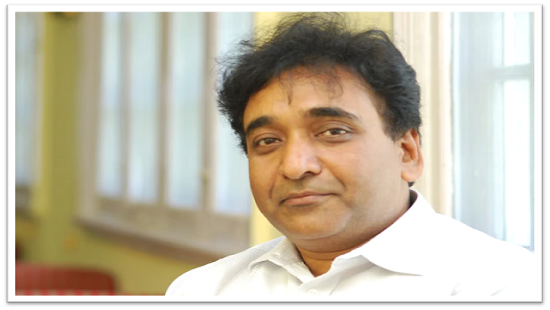
Maharashtra has entered a new administrative chapter with the appointment of senior IAS officer Rajesh Aggarwal as the state’s next Chief Secretary. A 1989-batch officer known for his deep domain expertise in digital governance, public systems reform, and administrative modernization, Aggarwal steps into the role at a critical moment for the state’s governance agenda. His appointment follows the completion of Rajesh Kumar’s extended term, marking a carefully managed transition at the top of the administrative pyramid.
The state government’s formal order confirms Aggarwal’s assumption of office starting December, with a tenure expected to continue until November next year. His predecessor, Rajesh Kumar, received a warm farewell at Mantralaya on Friday, closing out a term marked by stability and continuity. Against this backdrop, Aggarwal’s elevation signals a renewed push toward systems transformation, innovation, and technology-led governance.
A Leadership Transition Rooted in Administrative Continuity
In a modest yet symbolic reception, secretaries from various departments welcomed Aggarwal as he prepared to take charge. His appointment reflects a preference for continuity combined with fresh energy, particularly in areas where Maharashtra is positioning itself as a governance innovator. Aggarwal has been serving as Additional Chief Secretary for Administrative Innovation, Excellence and Good Governance in the General Administration Department (GAD), a role that aligns closely with the state’s long-term modernization goals.
This background is significant because Chief Secretaries act as both institutional memory and reform architects. Their vision influences the pace at which administrative reforms translate into measurable public outcomes. Aggarwal’s long-standing association with governance innovation suggests that his elevation is not merely a routine bureaucratic step, but part of a larger strategic direction.
A Technocrat at Heart with a Strong Digital Governance Track Record
Aggarwal brings to the post a uniquely technology-driven orientation, shaped by his academic foundation as a BTech in Computer Science from IIT Delhi and sharpened by decades of administrative service. His most notable contribution came in 2011 when he played a central role in drafting the state’s Information Technology (IT) policy, a document that later became a landmark in Maharashtra’s digital transformation journey.
During his tenure as Secretary of the state’s IT Department, Aggarwal undertook a comprehensive revamp of digital systems. He modernized workflows, expanded the use of online public services, and drove initiatives to improve government accessibility. His work at the Directorate General of Information and Public Relations (DGIPR), where he served briefly as Director General, led to technological interfaces that professionalized communication and enhanced citizen engagement.
These achievements matter because they highlight a growing need for leadership that understands both policy and technology. As governance becomes increasingly data-driven, states with digitally competent senior leadership gain an advantage in service delivery, fiscal transparency, and administrative efficiency.
Experience Across State, Local, and Central Government
Aggarwal’s administrative career is characterized by diversity across roles, regions, and domains. He has served as District Collector in Jalgaon and Akola, two assignments that gave him first-hand experience managing rural development, land administration, and local governance complexities. He later joined the Brihanmumbai Municipal Corporation (BMC) as Deputy Commissioner, where urban governance, municipal reforms, and service delivery challenges added to his administrative breadth.
At the national level, Aggarwal’s tenure has been equally influential. He worked across departments central to India’s digital and financial inclusion agenda, including Aadhaar, Jan Dhan, DigiLocker, and key social justice initiatives. His contributions during this period aligned with India’s broader push toward digital public infrastructure, systems that have since become global benchmarks.
This blend of state-level and central-level experience equips him with a nuanced understanding of both macro policy design and on-ground administrative realities. Such balance is particularly valuable at the Chief Secretary level, where navigating state–centre coordination, inter-departmental linkages, and long-term governance reforms becomes central to the role.
Leadership in Empowerment and Social Equity
Before returning to Maharashtra, Aggarwal served as Secretary of the Department of Empowerment of Persons with Disabilities (DEPwD) in the Government of India. His tenure in this role underscored his commitment to inclusive governance and social sector priorities. The work undertaken there reflected a blend of administrative rigor and empathetic policy design, reinforcing his reputation as a leader capable of balancing technology-driven efficiency with citizen-oriented sensitivity.
This experience strengthens his suitability for a state as socially and economically diverse as Maharashtra. Administering a state with major metropolitan hubs, agrarian belts, tribal districts, and industrial corridors demands a leadership style that blends innovation with equity, attributes that have consistently defined Aggarwal’s public service trajectory.
What Aggarwal’s Appointment Signals for Maharashtra
Aggarwal’s appointment arrives at a time when Maharashtra is prioritizing reforms in digital infrastructure, public service delivery, administrative transparency, and investment climate competitiveness. As industries increasingly evaluate states on the quality of governance, regulatory ease, and efficiency of approvals, the role of the Chief Secretary becomes pivotal.
With his proven track record, Aggarwal is likely to accelerate initiatives related to digital governance, departmental integration, and process reforms. His familiarity with both policy design and technology execution positions him to deepen Maharashtra’s transition toward data-driven governance, a path that has already begun but now requires sustained leadership.
Moreover, his experience in diverse administrative ecosystems suggests an ability to navigate complex bureaucratic landscapes, manage interdepartmental coordination, and maintain accountability within the system, all essential traits for the state’s top bureaucratic position.
A Transformational Moment for Maharashtra’s Administrative Machinery
Rajesh Aggarwal’s elevation as Chief Secretary represents a leadership transition aligned with Maharashtra’s future aspirations. His tenure brings the promise of modernization, reform-oriented governance, and deeper institutional innovation. For a state that stands at the crossroads of economic ambition and administrative complexity, such leadership could prove decisive in shaping outcomes over the coming year.
With a career marked by technological expertise, policy foresight, and a commitment to public-centric reforms, Aggarwal steps into the role with both experience and momentum. Maharashtra’s administrative ecosystem now enters a phase where stability and transformation may evolve in tandem, driven by a leader whose vision aligns with the state’s long-term development trajectory.