
- By Mahesh
- 24 Nov 2025
NMMC’s New Microbiology Lab Sets a Game-Changing Milestone for Navi Mumbai’s Healthcare Future
The Navi Mumbai Municipal Corporation (NMMC) has taken a decisive leap toward strengthening the city’s public health ecosystem with the inauguration of an advanced microbiology laboratory at the Maasaheb Meenatai Thackeray Hospital in Nerul. Far more than a routine infrastructure upgrade, this facility reflects a strategic shift toward precision diagnostics, scientific governance, and preparedness against evolving infectious threats. As Navi Mumbai’s population density increases and healthcare demands intensify, such investments mark the beginning of a smarter, data-driven approach to public health.
The laboratory has been developed with Rs 80 lakh in Corporate Social Responsibility funding from the Aditya Birla Foundation, supported by the Pride India organisation. While the financial outlay is moderate, the implications for clinical accuracy, early detection, and antibiotic stewardship are profound. High-quality microbiology labs are not merely service units; they serve as early-warning systems that help clinicians diagnose diseases, reduce treatment errors, and enable health authorities to track threats before they escalate.
Strengthening Antibiotic Stewardship Through Evidence-Based Diagnostics
A defining feature of the new laboratory is its compliance with PGIMS guidelines, which mandate culture and sensitivity testing before antibiotic prescription. In a country where antibiotic misuse remains widespread, this procedural shift is critical. India continues to be one of the world’s largest consumers of antibiotics, and global studies indicate that antimicrobial resistance contributes to nearly 5 million deaths every year.
By insisting on evidence-based therapy instead of empirical assumptions, the laboratory directly supports the fight against antibiotic resistance. It ensures that physicians treat patients with the correct drug, at the correct time, and for the correct duration, reducing both complications and community-level resistance patterns.
Comprehensive Testing Capabilities to Address Modern Healthcare Needs
The facility’s diagnostic spectrum is notably broad. It includes blood cultures, body-fluid cultures, sputum cultures, urine and stool cultures, pus swab sensitivity tests, and fungal cultures. On the viral diagnostics front, it offers RT-PCR testing for COVID-19 and swine flu, along with ELISA testing for HIV, HCV, and HBsAg. This diversity enables clinicians to diagnose a wide range of bacterial, viral, and fungal infections under one roof.
For Navi Mumbai’s fast-growing residential and industrial clusters, this diagnostic versatility is essential. Seasonal surges, particularly during monsoon months, often trigger spikes in gastrointestinal infections, dengue-like symptoms, and respiratory illnesses. With culture-based diagnosis now available locally, treatment timelines will shorten, leading to more accurate clinical decisions and safer outcomes.
Enhancing Seasonal Outbreak Preparedness and Early Detection
Early detection remains one of the cornerstones of effective public health management. Delays of even 24 to 48 hours in diagnosing infectious agents can intensify patient complications and overwhelm hospital resources. By localizing microbiology capabilities, NMMC reduces dependency on external laboratories and significantly cuts turnaround time.
This matters particularly in periods of seasonal outbreaks when patient volumes surge and rapid decision-making become essential. Accurate pathogen identification also helps authorities map infection clusters and deploy targeted interventions before diseases spread further.
Administrative Oversight and a Reinforced Healthcare Vision
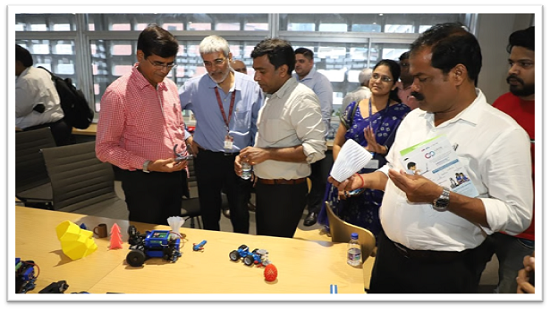
During the inauguration, senior leaders including Maharashtra Forest Minister Ganesh Naik and NMMC Commissioner Dr. Kailas Shinde reviewed the microbiology laboratory, chemotherapy ward, and cancer registry unit. Their presence signifies a broader recognition that diagnostics, treatment, and long-term disease monitoring must advance together to create resilient healthcare systems.
The new facility also strengthens the hospital’s infection-control capabilities. Culture swab testing will help track hospital-acquired infections, refine hygiene protocols, and enforce compliance across departments, an increasingly important aspect of clinical governance as patient loads and surgical procedures grow.
CSR as a Catalyst for Long-Term Healthcare Capacity Building
The lab’s establishment also highlights the evolving nature of Corporate Social Responsibility in India. CSR spending is shifting from one-time donations to infrastructure-oriented, capability-building contributions that strengthen public institutions. The Aditya Birla Foundation’s involvement demonstrates how structured partnerships between government bodies, nonprofits, and private organizations can accelerate public healthcare improvements.
Such collaborations often serve as force multipliers, improving both the pace and quality of healthcare delivery in urban areas.
Building Pandemic Preparedness Through Decentralized Testing Infrastructure
One of the key lessons from the COVID-19 pandemic was the critical need for decentralized testing infrastructure. Municipal hospitals without in-house RT-PCR capability faced longer turnaround times, delayed treatment responses, and reduced containment effectiveness. By embedding advanced diagnostic functions within a municipal hospital, NMMC enhances the city’s readiness for future pandemics and large-scale infection events.
In a world where public health threats evolve rapidly, diagnostic proximity can significantly influence survival rates and containment success.
A Strategic Step Toward Data-Driven Urban Healthcare
The laboratory’s long-term value lies in its contribution to data-driven health management. Accurate diagnostic data allows authorities to identify patterns, predict seasonal trends, allocate resources strategically, and build a responsive healthcare delivery model. For a city experiencing continuous demographic expansion, such data is indispensable.
Navi Mumbai’s new laboratory is not just a technological upgrade; it represents a commitment to analytical, evidence-based healthcare planning. As the facility integrates with clinical workflows and public health reporting systems, its impact will multiply across departments and communities.
Conclusion: A Forward-Looking Investment in Public Health Security
NMMC’s new microbiology laboratory marks a major milestone in Navi Mumbai’s healthcare journey. It strengthens diagnostic accuracy, enhances outbreak preparedness, supports antibiotic stewardship, and builds the foundation for smarter, data-driven governance. In an era defined by unpredictable health threats, cities that invest in diagnostic intelligence and clinical precision will remain better protected.
Navi Mumbai has taken a decisive, forward-looking step, one that positions the city to serve its growing population with greater resilience, accuracy, and care.