
- By Bhawana
- 29 Nov 2025
Mumbai’s Big Transport Upgrade, New 15-Coach Locals Set to Transform Daily Commutes in 2026
Mumbai’s transport ecosystem is entering a decisive phase of expansion, one that mirrors the city’s long-standing battle between swelling demand and finite infrastructure. The latest developments, Western Railway’s plan to introduce 15-coach local trains on the Virar–Dahanu stretch and MMRC’s discounted monthly pass for Metro-3, mark a substantial shift toward capacity creation and commuter-centric pricing. Both upgrades, though different in nature, point to a shared objective: reducing the friction of daily travel in a city that moves over 8 million suburban rail passengers each day.
The first upgrade is structural, rooted in the arithmetic of population growth along the northern peripheries of the Mumbai Metropolitan Region. Over the last decade, towns such as Virar, Nalasopara, and Vasai have seen their population rise between 25% and 40%, fuelled by lower housing costs and improving connectivity. This demographic shift has translated into sharp pressure on the Virar–Dahanu corridor, a route that has traditionally lagged behind the Churchgate–Virar stretch in terms of frequency and coach capacity.
Rising Demand on the Virar–Dahanu Corridor
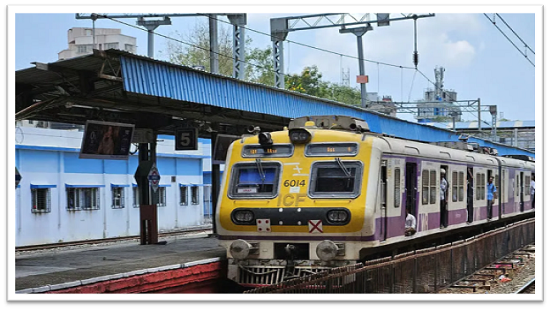
Western Railway’s decision to deploy 15-coach locals on this route for the first time is, therefore, less an experiment and more a structural necessity. Based on internal operational assessments, the shift is expected to expand carrying capacity by nearly 25% per train, providing meaningful relief to thousands who endure peak-hour overcrowding. The proposal has already been forwarded to the Railway Board for approval. Once cleared, six services will transition from the existing 12-coach format to the enhanced 15-coach configuration.
How the 2026 Timetable Reshapes Suburban Operations
The timing of this expansion aligns with the broader timetable overhaul planned for early 2026. Express trains will adopt a new timetable from January 1, while suburban timetables are likely to be refreshed between March and April. This calibration matters because it enables operations teams to optimize rake deployment, adjust headways, and better utilize platforms at high-pressure stations.
The expected arrival of a new AC rake by January 2026 strengthens this transition. Historically, one AC rake adds approximately ten new AC services to the schedule, an indicator of how small additions in rolling stock can scale into large commuter benefits.
Expanding Services Beyond the Northern Stretch
Beyond the Virar–Dahanu expansion, the Churchgate–Virar belt is projected to receive 10–12 additional services in the new timetable. These upgrades, though incremental, play a vital role in easing congestion. In Mumbai’s transport ecosystem, even a small reduction in wait time or crowd density can cascade into significant improvements in commuter flow, punctuality, and safety.
Metro-3 Pricing Reform: Making Daily Travel More Affordable
Mumbai’s second major development, the discounted monthly pass for Metro-3, addresses a completely different dimension of mobility: affordability. Global metro systems rely heavily on subscription passes and loyalty pricing to build stable ridership patterns. MMRC’s decision to introduce discounted passes through the Metro Connect-3 app represents a forward-looking step toward making Metro-3 a consistent choice for everyday travellers.
Under this new pricing model, passengers can avail a 15% discount on 60-trip passes and a 10% discount on 45-trip passes. For daily commuters, this translates into meaningful monthly savings, particularly on a route that currently transports nearly 1.5 lakh passengers per day.
Encouraging a Long-Term Shift Toward Rail-Based Mobility
This pricing strategy is more than a consumer incentive; it is part of a broader mobility transition. Cities like Delhi and Bengaluru have demonstrated that predictable metro pricing, combined with wide network coverage, gradually shifts commuters from road to rail. Mumbai’s Metro-3 discounts follow the same logic: strengthen repeat ridership early, ensure cost predictability, and allow long-term behavioural shifts to take root.
A more robust Metro ridership base delivers measurable citywide gains as well, lower fuel consumption, reduced congestion, improved air quality, and smoother logistics. In a city where road speeds continue to decline year after year, the benefits of this modal shift are both economic and environmental.
A Pattern of Policy That Looks Ahead, Not Behind
Viewed together, the suburban and metro upgrades reflect a broader policy transition. Mumbai is gradually moving away from a reactive model in which infrastructure expands only after demand overwhelms capacity, to a more anticipatory approach. Deploying 15-coach locals on the city’s expanding northern frontier acknowledges demographic realities. Introducing discounted Metro passes acknowledges the importance of affordability in shaping commuter behaviour.
These shifts also underline a structural truth: a megacity’s mobility system is a complex web of interdependent choices. A commuter who saves money on the Metro is more likely to stay loyal to it. A commuter who finds breathing room in a 15-coach local is less likely to face travel fatigue and delays. These micro-level improvements contribute to macro-level efficiency across the transport network.
What Mumbai Can Expect in 2026
As Mumbai approaches 2026, the narrative is no longer anchored in delay or stagnation. Instead, it is defined by incremental yet meaningful mobility reforms, capacity enhancements, better timetables, and more affordable travel options. If these initiatives are executed on schedule, commuters across Virar, Dahanu, and the entire Metro-3 network may start the new year with something rare in Mumbai’s transport history: a little more space, a little less cost, and significantly more predictability.