
- By Medhavini
- 29 Jan 2026
India’s First Bullet Train: 100-Foot-Deep BKC Station in Mumbai Nears Major Construction Milestone
Mumbai’s Bandra Kurla Complex (BKC) is fast emerging as the starting point of a historic transport transformation as work on India’s first bullet train project gathers pace. The underground high-speed rail station being built at BKC — nearly 100 feet below ground level — has reached a crucial stage, with recent construction visuals offering a rare glimpse into the scale and complexity of the project.
The Mumbai–Ahmedabad bullet train corridor is India’s first foray into high-speed rail, and BKC will serve as its key origin station, positioning the commercial district as a major future mobility hub.
Viral Videos Offer Inside Look at Progress
Several videos from the bullet train construction site have recently surfaced on social media, drawing widespread attention. Two particular clips stand out for explaining both the route of the bullet train and the massive underground engineering effort underway at the BKC station.
Route Explained: Underground, Underwater and Beyond
In one of the videos, a narrator outlines the complete journey of the bullet train. According to the explanation, the train will begin its journey from BKC in Mumbai, travelling 21 kilometres underground up to Shilphata near Thane. Notably, around seven kilometres of this stretch will pass beneath the Thane Creek, making it one of the most technically challenging segments of the project.
After emerging near Thane, the corridor will continue through key locations in Maharashtra such as Virar and Boisar, before entering Gujarat. The first station in Gujarat will be Vapi, followed by Bilimora, Surat, Bharuch, Vadodara and Anand, with the final destination being Sabarmati in Ahmedabad.
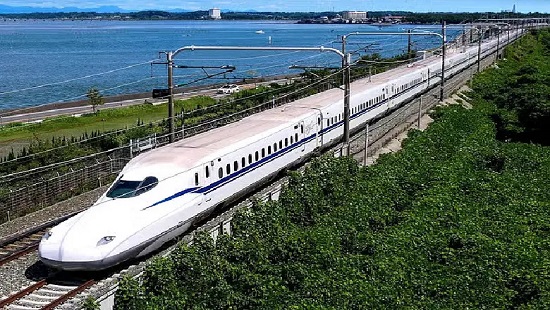
The total distance of the corridor will be 508 kilometres, with trains expected to operate at speeds of up to 320 kmph, reducing travel time between Mumbai and Ahmedabad from nearly eight hours to just two to two-and-a-half hours.
Inside the 100-Foot-Deep BKC Station
The second widely shared video shows a man believed to be a civil engineer standing inside the under-construction BKC bullet train station. Wearing safety gear, he explains the depth and structure of the station while walking through the site.
He points out that the station is located approximately 25 metres (over 80 feet) below ground level and is the only underground station on the entire bullet train route. Massive steel reinforcement bars can be seen across the site, with the engineer noting that a single steel rod weighs around 118 kilograms, requiring multiple workers to lift it.
Designed for Safety and Capacity
The BKC bullet train station is being constructed with earthquake-resistant design features, reflecting the advanced safety standards planned for India’s first high-speed rail corridor. Once completed, the station will have six platforms dedicated to bullet train services.
Above the track and platform levels, the station will include ticketing areas, passenger concourses, business lounges and multiple service levels, creating a modern, airport-like experience for travellers.
A Landmark Project for Urban Transport
As construction accelerates, the BKC station is emerging as one of the most complex infrastructure projects ever undertaken in Mumbai. The combination of deep underground construction, underwater tunnelling and high-speed rail technology marks a significant leap in India’s transport capabilities.
With visible progress now coming to light, the bullet train project is steadily moving from blueprint to reality, bringing India closer to joining the global network of high-speed rail nations.