



- By Mahesh
- 30 Oct 2026
BMC Installs Mumbai’s First AI-Powered CCTV Camera in Mahim to Catch Litterers, Targets 283 Garbage Hotspots
The Brihanmumbai Municipal Corporation (BMC) has introduced an artificial intelligence-powered CCTV camera in Mahim to prevent illegal garbage dumping and improve public cleanliness. The new system uses AI technology, camera monitoring, and loudspeaker announcements to discourage people from throwing waste in public places.
The first AI-powered CCTV camera has been installed at Gajanan Vatika on Dr. R. R. Marg in Mahim, marking a new step in Mumbai’s efforts to keep roads, footpaths, gardens, and other public spaces clean.
The civic body plans to expand this technology to all 283 identified Garbage Vulnerable Points (GVPs) across Mumbai.
How Does Mumbai’s First AI-Powered CCTV Camera Work?
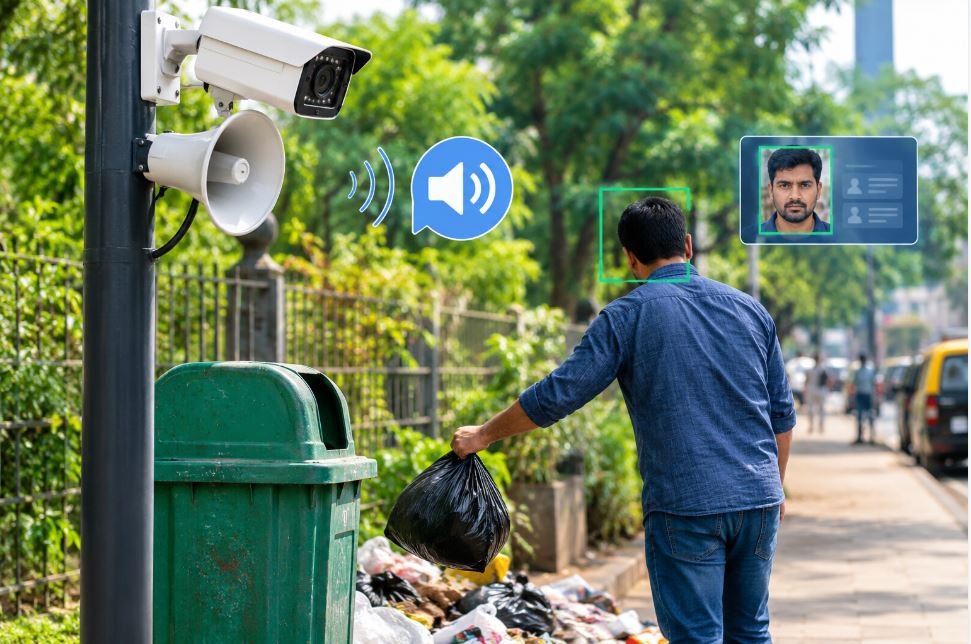
The newly installed camera is connected to loudspeakers and uses artificial intelligence to identify suspicious movements near garbage dumping spots.
When someone approaches the location to throw garbage, the system detects the movement and immediately plays an audio announcement asking the person not to litter and to keep the surrounding area clean.
The camera also records the faces of people involved in illegal dumping. Video footage of violators will be shared with the Solid Waste Management (SWM) department at the respective ward office for further action.
According to Yogesh Desai, Assistant Municipal Commissioner of G-North Ward, officials will use the recorded footage to identify repeat offenders and take action under the Solid Waste (Management and Handling), Cleanliness and Sanitation Bylaws 2026.
BMC Introduces ₹500 Fine for Littering in Public Places
Under Mumbai's 2026 cleanliness framework, people found throwing garbage in public spaces can face a penalty of ₹500.
The rules cover several locations, including:
- Public roads and streets
- Footpaths and lanes
- Gardens and open spaces
- Other public areas
The framework also includes strict action against unauthorized construction debris disposal. Dumping debris at unauthorized locations can attract a penalty of ₹20,000 per vehicle.
Through AI-based monitoring and financial penalties, the BMC aims to discourage illegal waste disposal and encourage residents to follow proper waste management practices.
BMC Plans AI CCTV Cameras at All 283 Garbage Hotspots
The BMC is preparing to expand the AI-powered CCTV monitoring system across all 283 garbage-vulnerable points identified in Mumbai.
Kiran Dighavkar, Deputy Municipal Commissioner (Solid Waste Management), said the civic body aims to install these cameras at every identified location.
A special budget provision of ₹30 lakh per ward has been planned for the project. The respective ward offices will identify suitable locations for installing the cameras based on local requirements.
The initiative will help civic officials monitor frequently affected areas, identify people responsible for illegal dumping, and take timely action.
Mumbai Generates Nearly 7,200 Metric Tonnes of Waste Every Day
Mumbai generates approximately 7,200 metric tonnes of solid waste every day. A considerable amount of this waste is collected from the city's 283 identified garbage-vulnerable points.
Some areas have a higher number of garbage hotspots because of population density, commercial activities, and daily waste generation.
The BMC has also geo-tagged major garbage hotspots on Google Maps to support better monitoring and location-based waste management.
Residents Welcome AI-Based Cleanliness Monitoring in Dadar and Mahim
The introduction of AI-powered CCTV monitoring has received support from local residents who want stronger action against illegal garbage dumping.
Chetan Kamble, a local resident and founder of Chakachak Dadar, has requested the BMC to install more AI-enabled cameras across G-North and G-South wards.
These areas include Dadar, Mahim, and other densely populated neighborhoods that generate significant amounts of daily waste.
Kamble highlighted that G-North and G-South wards together generate approximately 788 metric tonnes of waste every day, accounting for nearly 10% of Mumbai's daily waste generation of around 7,000 metric tonnes.
He also pointed to the presence of four major markets, including two flower and vegetable markets, which generate large quantities of waste every day.
He emphasized the need for a coordinated approach involving modern technology, regular monitoring, and stronger enforcement to address the city's waste management challenges.
Bombay High Court Directions Push BMC to Strengthen Waste Management
The BMC's technology-based cleanliness initiative also follows directions from the Bombay High Court regarding Mumbai's solid waste management system.
In July, the court directed the civic body to develop a comprehensive ward-level cleanliness framework.
Later, in September, the court expressed concern over the continued accumulation of garbage on city roads and warned that ward-level officials could face action if cleanliness issues remained unresolved.
The latest AI-powered CCTV project reflects the civic body's efforts to improve monitoring, strengthen accountability, and use technology to prevent repeated garbage dumping.
What Is Next for Mumbai's AI-Based Garbage Monitoring Project?
The BMC plans to gradually introduce AI-powered CCTV cameras at all 283 garbage-vulnerable points across Mumbai.
With a proposed allocation of ₹30 lakh per ward, local ward offices will select locations where camera installations are most necessary.
The system is expected to support early detection of illegal dumping, discourage repeat violations, and improve the overall cleanliness of public spaces.
By combining artificial intelligence, CCTV surveillance, loudspeaker warnings, and penalties, Mumbai is taking another step toward a cleaner and better-managed urban environment.