



- By Shyam Singh
- 21 Sep 2026
BMC Launches ₹13,000-Crore Mumbai Flood Mitigation Plan to Reduce Monsoon Waterlogging
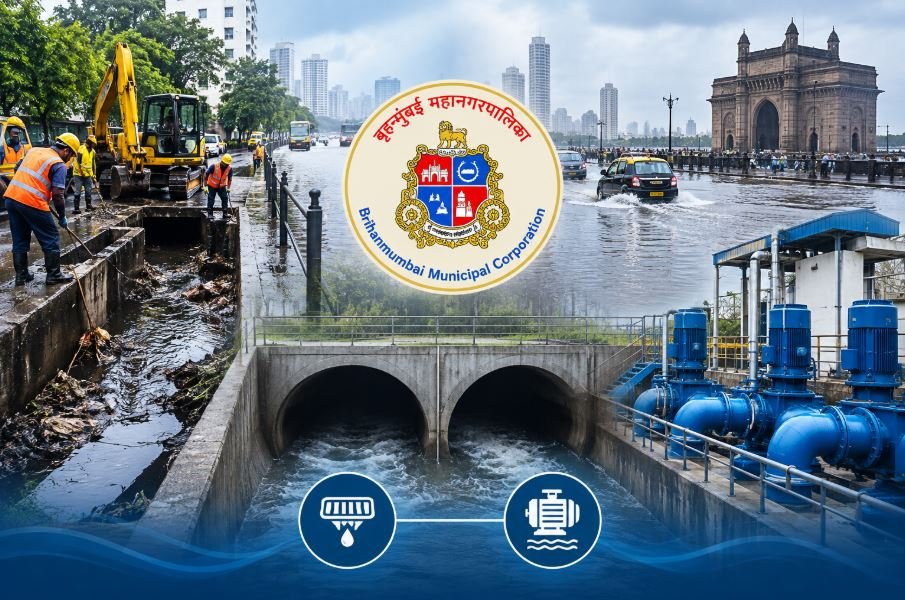
Mumbai is set for a major upgrade to its flood management system as the Brihanmumbai Municipal Corporation (BMC) has floated a tender to appoint a consultant for a proposed ₹13,000-crore integrated flood mitigation master plan.
The large-scale initiative aims to address recurring monsoon waterlogging across the city by improving drainage networks, increasing pumping capacity, strengthening flood warning systems and upgrading key infrastructure. The appointed consultant will have nine months to prepare the design and Detailed Project Report (DPR) for the project.
Mumbai Flood Plan to Focus on Drainage and Pumping Capacity
The proposed flood mitigation program will examine several factors behind Mumbai’s recurring waterlogging. These include undersized drains, blocked storm-water channels, limited pumping capacity and gaps in coordination between different parts of the drainage system.
One of the key goals is to improve drainage infrastructure so it can handle rainfall of more than 55 mm per hour. Additional pumping capacity is also planned for vulnerable locations, including Mahul and Mogra.
The next phase of improvements to the Mithi River is also expected to form part of the broader plan. The DPR will identify the exact locations and type of work required across different flood-prone areas.
Detailed Study to Map Mumbai’s Flood-Prone Areas
The consultant will conduct a detailed assessment of areas that regularly experience waterlogging. The study will include flood modeling for periods of intense rainfall as well as situations involving high tides.
The plan is also expected to improve the city's flood warning system so alerts can reach authorities and residents more quickly. Scientific planning will be used for new pumping stations, storm-water channels, retention ponds and drain-widening projects.
The proposed approach is intended to bring different flood-control measures under one citywide framework instead of relying only on individual projects during the monsoon.
Nature-Based Solutions to Support Flood Control
The proposed Mumbai flood mitigation strategy will also include nature-based measures alongside traditional infrastructure improvements.
Permeable pavements are among the solutions being considered. These surfaces can allow rainwater to enter the ground and are estimated to absorb around 12% to 15% of rainwater.
The plan also proposes underground honeycomb-style detention tanks. These structures could temporarily hold excess rainwater and release it gradually, while also supporting groundwater recharge.
Plan Targets Plastic Waste in Storm-Water Channels
Plastic and other floating waste that enters nullahs and culverts can reduce the flow of rainwater and increase the risk of flooding. The proposed plan aims to address this problem through waste interception systems.
Longitudinal nets and other interception measures could be installed to capture floating garbage before it reaches important storm-water channels. This could help keep drainage routes clearer during periods of heavy rainfall.
The estimated cost for appointing the consultant and preparing the DPR is ₹110.17 crore.
Flood Mitigation Project Developed With Central and State Coordination
The integrated flood management proposal has been under development for more than a year. The process began with a meeting between the BMC and the National Disaster Management Authority (NDMA) on March 12, 2025.
This was followed by site inspections and a presentation of the proposal to Union Home Minister Amit Shah in June. The project subsequently received in-principle clearance before the proposal was submitted to the central government and the NDMA.
Under the proposed funding arrangement, 40% of the project cost is expected to come from the National Disaster Response Fund, while the Maharashtra government and BMC would contribute 30% each.
The upcoming DPR is expected to provide a detailed roadmap for improving Mumbai’s drainage, pumping, flood monitoring and water management systems, with the wider goal of reducing the impact of monsoon waterlogging across the city.