
- By Bhawana
- 05 Mar 2026
IAS Sanjeev Jaiswal's Mill Worker Housing Initiative Gets Strong Start: 51 Applications Received on Day One
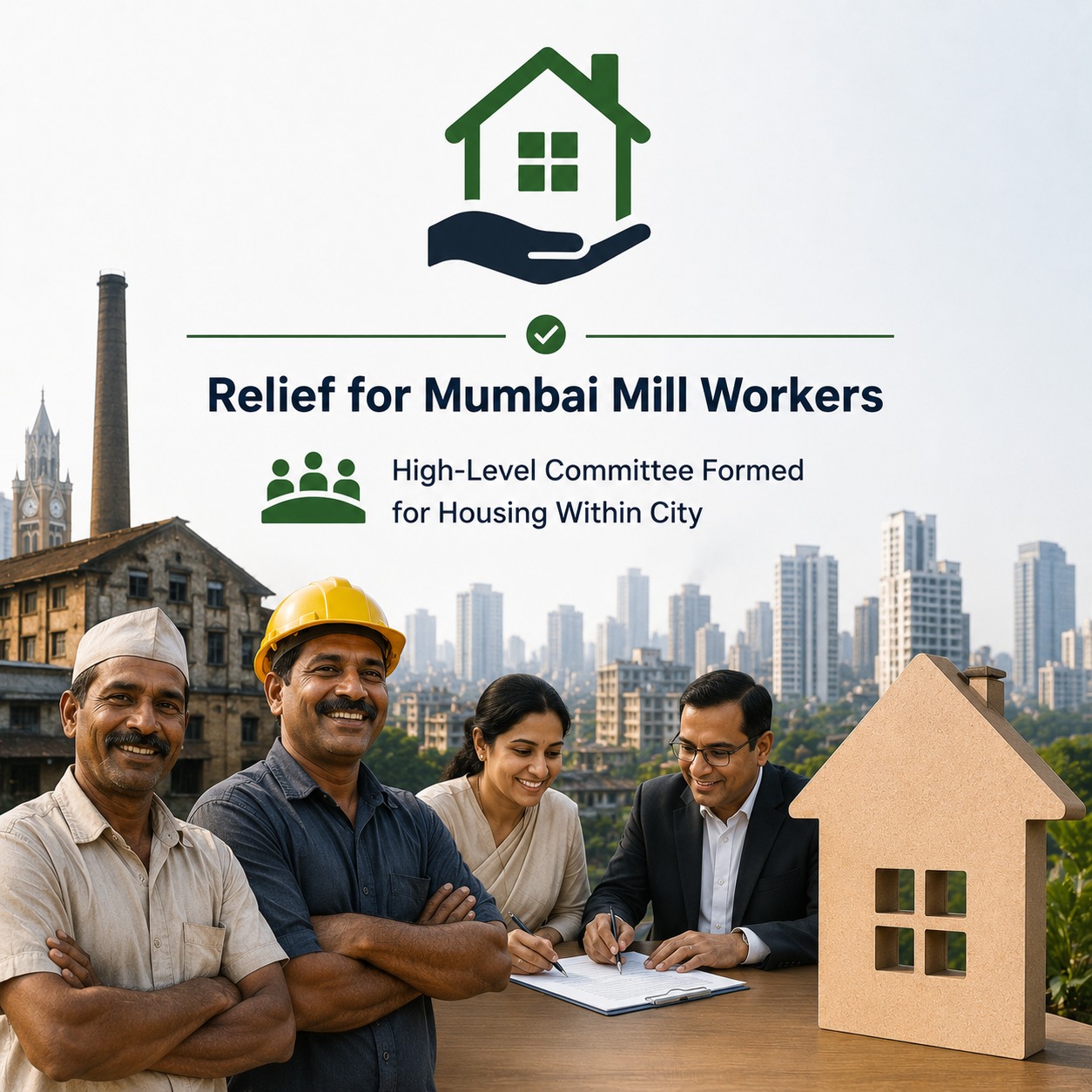
Mumbai’s long-standing housing challenge has many layers, but one of the most emotionally significant is the rehabilitation of mill workers whose labour shaped the city’s industrial past. Under the leadership of IAS Sanjeev Jaiswal, Vice President and CEO of the Maharashtra Housing and Area Development Authority (MHADA), a fresh step has been taken to address this legacy through the Pratham Pradhanya (First Preference) Housing Scheme.
The early response indicates both interest and trust in the initiative. On the very first day of the application process, MHADA received 51 applications from eligible beneficiaries seeking homes under the scheme. For a targeted programme aimed at a specific group, this initial response reflects the continued demand for secure and affordable housing among Mumbai’s historic working communities.
A Focused Scheme for Mill Worker Housing
The Pratham Pradhanya Scheme has been designed to prioritise housing for mill workers and their families. For decades, the redevelopment of former mill lands has been a key part of Mumbai’s urban transformation. However, ensuring that workers themselves benefit from redevelopment has remained a policy priority.
Under the current scheme, 241 housing units have been made available across six key locations in Mumbai, all connected to redevelopment of historic mill land or associated housing clusters. The homes are distributed across multiple redevelopment sites to create balanced access for applicants.
The housing distribution under the scheme includes:
- Spring Mills – 37 housing units
- Kannamwar Nagar – 18 housing units
- Bombay Dyeing Textile Mills – 20 housing units
- Digvijay Mills – 9 housing units
- Shrinivas Mills – 9 housing units
- Sassoon Dock – 42 housing units
These locations represent some of Mumbai’s most important redevelopment corridors where mill land has gradually transitioned into mixed urban housing zones.
The Historical Context Behind Mill Worker Housing
Mumbai’s textile mills once formed the backbone of the city’s economy. Thousands of families depended on the mills located in central areas such as Parel, Byculla, Worli, and Lower Parel. As industrial activity declined and land values rose, mill lands began transitioning toward redevelopment.
However, housing for workers who had contributed to the industry became a sensitive policy issue. Over the years, both the Government of Maharashtra and MHADA have attempted to create housing opportunities through targeted schemes.
The Pratham Pradhanya scheme represents one such effort — ensuring that the benefits of redevelopment are shared with those whose livelihoods were tied to the mills.
Transparent Application and Verification Process
MHADA has structured the application process carefully to ensure transparency and fairness. Applicants must complete registration and documentation submission through the official MHADA system before the specified deadline.
Importantly, eligibility verification will take place before final allotment. This ensures that homes reach legitimate beneficiaries rather than being diverted through speculative or ineligible applications.
Officials have clarified that documents, eligibility records, and beneficiary status will be thoroughly examined before any allotment decision is finalized.
Such verification mechanisms have become increasingly important in large public housing programmes where demand often exceeds supply.
Why the First Day Response Matters
While 51 applications on the first day may appear modest compared to large public housing lotteries, the number holds significance in the context of the scheme’s targeted nature.
Unlike open housing lotteries where applications can run into lakhs, the mill worker housing programme addresses a specific beneficiary category. Applications therefore reflect genuine eligibility rather than speculative demand.
The early response suggests that awareness about the scheme is spreading among eligible workers and families.
As application timelines progress, the number is expected to grow steadily.
Housing Policy and Urban Transition
The scheme also reflects a broader shift in how Mumbai is addressing redevelopment challenges. Rather than allowing historic industrial lands to transform exclusively into high-end commercial or luxury housing projects, authorities are attempting to retain a social equity component within redevelopment frameworks.
Under the leadership of IAS Sanjeev Jaiswal, MHADA has consistently emphasized the need to combine urban redevelopment with inclusive housing policy.
Programmes such as the Pratham Pradhanya scheme, cluster redevelopment initiatives, and affordable housing projects across the Mumbai Metropolitan Region are part of this broader strategy.
Importance of Official Information
Given the demand for housing in Mumbai, authorities have repeatedly advised applicants to rely only on MHADA’s official website and verified announcements for application updates, deadlines, and eligibility details.
Housing schemes often generate misinformation through informal channels. Applicants are encouraged to verify details through official sources to avoid confusion or fraudulent intermediaries.
MHADA’s digital application systems have also been strengthened in recent years to ensure smoother registration and document submission.
A Step Toward Inclusive Redevelopment
The mill worker housing programme may appear small when measured against Mumbai’s massive housing demand. Yet its importance lies in what it represents: recognition of the city’s industrial heritage and responsibility toward workers who built that legacy.
By offering 241 housing units across multiple redevelopment sites and receiving 51 applications on the first day, the initiative signals steady progress.
As the application process continues and verification procedures move forward, the scheme could provide a meaningful housing solution for many families connected to Mumbai’s historic textile industry.
For a city constantly reinventing itself, initiatives like this ensure that redevelopment is not just about buildings — but also about people, history, and equitable urban growth.