
- By Rahul
- 28 Feb 2026
Cluster Redevelopment Key To Mumbai's Future As Greenfield Land Shrinks: IAS Sanjeev Jaiswal
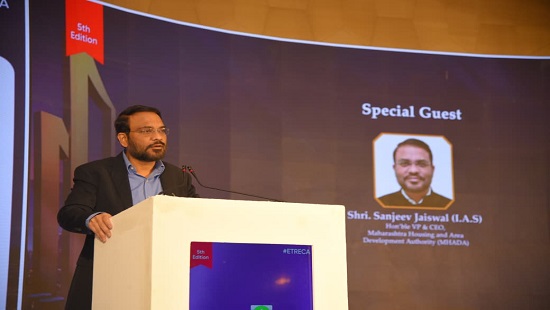
With greenfield land parcels in Mumbai largely exhausted, cluster-led redevelopment has emerged as the primary pathway for urban expansion — a view reinforced by Sanjeev Jaiswal and other industry leaders at the ET Realty Real Estate Conclave 2026. As Vice-President and CEO of the Maharashtra Housing and Area Development Authority (MHADA), Sanjeev Jaiswal emphasised that large-format redevelopment will be central to balancing affordability, scale and sustainability in the city’s next growth phase.
The panel discussion, titled ‘Redevelopment & Urban Renewal: Transforming the Future of Indian Cities’, brought together policymakers, developers and sustainability experts to assess how Mumbai can transition from fragmented rebuilding to integrated neighbourhood planning.
Social Inclusion Anchored By MHADA
Representing MHADA’s perspective, Deputy CEO Anil Wankhede highlighted that redevelopment must align commercial viability with social inclusion. Projects executed through MHADA generate housing stock for the authority at construction-linked pricing rather than market rates.
Nearly 20,000 units are expected to be created through such frameworks, enabling subsidised housing supply alongside private redevelopment. This hybrid model ensures that affordable housing remains embedded within large-scale cluster projects.
Institutional Capital Moving Toward Scale
From a financing standpoint, industry leaders noted that institutional investors are increasingly evaluating large cluster-level projects, particularly those involving MHADA, SRA and organised society redevelopment.
Bigger, consolidated layouts offer clearer land titles, planning visibility and execution oversight — factors that reduce investment risk. In contrast, smaller stand-alone society projects often face fragmentation challenges and prolonged negotiations, limiting institutional appetite.
Cluster redevelopment, therefore, is emerging not only as a planning tool but also as a capital-attraction strategy.
Governance And Credibility As Risk Mitigators
Speakers repeatedly stressed that trust and governance discipline are as critical as financial feasibility. Internal disputes within housing societies and misaligned stakeholder expectations can derail redevelopment momentum.
Transparent communication, credible delivery track records and clearly structured agreements were cited as essential to de-risk dense urban transformation. In high-value markets like Mumbai, reputational capital plays a decisive role in unlocking long-term execution stability.
Sustainability Beyond Compliance
Adding an environmental dimension, sustainability experts emphasised that green norms must extend beyond checklist-driven certification. In high-density brownfield zones, integrating energy efficiency, climate resilience, waste management systems and community infrastructure into cluster masterplans will be critical.
Holistic planning at the cluster level allows for measurable environmental gains that are difficult to achieve through isolated building-level redevelopment.
Regulatory Predictability And Market Alignment
Panelists also underlined the importance of predictable regulations, faster approval cycles and structured financing mechanisms — including blended finance models and rental housing frameworks.
Large-scale redevelopment decisions cannot rely solely on spreadsheet projections. Location fundamentals, demand depth and end-user affordability must underpin long-term viability.
The Structural Shift Ahead
As Mumbai grapples with land scarcity and ageing building stock, the consensus at the conclave was clear: cluster-led redevelopment will define the city’s next chapter of urban transformation.
With MHADA anchoring social inclusion and private developers bringing capital and execution capability, the model represents a coordinated shift from piecemeal rebuilding to integrated regeneration.
If backed by governance discipline, sustainability integration and regulatory clarity, cluster redevelopment could reshape Mumbai’s urban fabric — aligning economic viability with inclusive growth and long-term resilience.