
- By Shyam Singh
- 06 Jul 2026
Mumbai - Ahmedabad Bullet Train Project Reaches Key Milestone as India’s Largest Rail TBM Starts Underground Tunnelling
Massive 3,100-Tonne Tunnel Boring Machine Begins Digging 6-Km Tunnel Between Vikhroli and BKC
The Mumbai - Ahmedabad Bullet Train project has entered one of its most important construction phases with the launch of India's largest rail Tunnel Boring Machine (TBM). The giant machine has officially started excavating a 6-km underground tunnel from Vikhroli to the upcoming Bandra Kurla Complex (BKC) Bullet Train station, marking another major step forward for India's first high-speed rail corridor.
Although Union Railway Minister Ashwini Vaishnaw was expected to inaugurate the tunnelling work, the official launch ceremony was called off because of heavy rainfall in Mumbai. However, project authorities confirmed that excavation activities will continue according to schedule.
India's Biggest Rail TBM to Build Critical Underground Section
The newly deployed Mixshield Tunnel Boring Machine is one of the largest machines ever used for a railway tunnel project in India. Measuring 13.6 metres in diameter, 96 metres in length, and weighing approximately 3,100 tonnes, the machine has been specially designed to excavate difficult underground conditions beneath Mumbai.
The TBM will construct a single 6-km tunnel that will accommodate both the up and down Bullet Train tracks. This tunnel forms a key part of the 21-km underground stretch of the 508-km Mumbai - Ahmedabad High-Speed Rail corridor.
Project officials said that nearly 16 km of the underground route between Sawli in Ghansoli and BKC will be built using Tunnel Boring Machines. The remaining 5 km has already been completed using the New Austrian Tunnelling Method (NATM), a construction technique commonly used for complex underground projects.
Advanced Technology Designed for Mumbai's Challenging Ground Conditions
The Mixshield TBM has been selected because it can safely work through mixed soil, rock layers, and areas with high groundwater pressure. This technology helps minimize ground movement, reducing the impact on buildings, roads, and public utilities located above the tunnel.
During its journey, the machine will pass beneath several densely populated parts of Mumbai, including major roads, residential and commercial buildings, the Mithi River, and other important infrastructure.
One of the key advantages of the TBM is its ability to excavate the tunnel while simultaneously installing precast concrete lining segments. This process improves construction speed, enhances worker safety, and delivers a stronger finished tunnel.
Modern Infrastructure Supports Underground Construction
To support the tunnelling operation, the National High Speed Rail Corporation Limited (NHSRCL) has developed a large underground launch facility at Vikhroli.
The project includes a 56-metre-deep launch shaft along with slurry treatment plants, water treatment systems, bentonite storage units, a dedicated electrical substation, backup power generators, and a concrete grouting plant. These facilities ensure uninterrupted and efficient tunnel excavation throughout the construction period.
Real-Time Monitoring to Protect Nearby Buildings
Given the tunnel's location beneath busy urban areas, engineers have installed an advanced monitoring system to ensure public safety throughout the excavation process.
The system continuously tracks ground settlement, vibrations, structural movement, and soil behavior using settlement markers, tilt meters, strain gauges, seismographs, and 3D monitoring equipment. These technologies allow engineers to quickly detect any changes and take immediate corrective action if needed.
This level of monitoring is considered essential for underground infrastructure projects passing beneath highly developed cities like Mumbai.
Mahape Casting Yard Producing Thousands of Tunnel Segments
Construction work is also progressing at the dedicated casting yard in Mahape, Thane, where workers are manufacturing the concrete segments needed to line the underground tunnel.
The 11.17-hectare facility will produce around 77,000 precast concrete segments, which will be assembled into approximately 7,700 tunnel rings. Each completed ring will weigh nearly 100 tonnes and provide structural support throughout the tunnel.
To improve durability, the tunnel lining will use double-layer EPDM rubber gaskets along with hydrophilic seals, creating a waterproof structure designed to prevent water leakage over its operational life.
A Significant Step for India's First Bullet Train Corridor
The start of TBM excavation represents one of the most technically demanding stages of the Mumbai - Ahmedabad Bullet Train project. Building long underground tunnels beneath one of India's busiest cities requires advanced engineering, precision planning, and continuous safety monitoring.
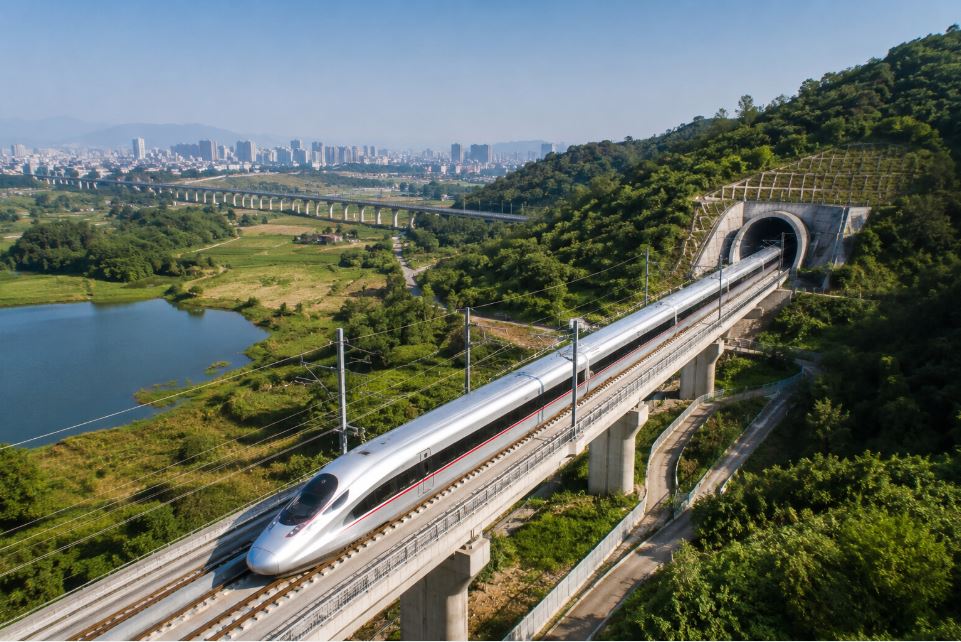
Once completed, the underground section will connect Mumbai's Bandra Kurla Complex station with the rest of the 508-km Mumbai - Ahmedabad High-Speed Rail corridor, helping bring India's first Bullet Train network closer to reality. The project is expected to significantly reduce travel time between Mumbai and Ahmedabad while introducing world-class high-speed rail infrastructure to the country.