
- By Shyam Singh
- 20 Jun 2026
BMC Clears PMC Appointment for ₹3,304-Crore Dahisar–Bhayander Link Road Despite Funding Debate
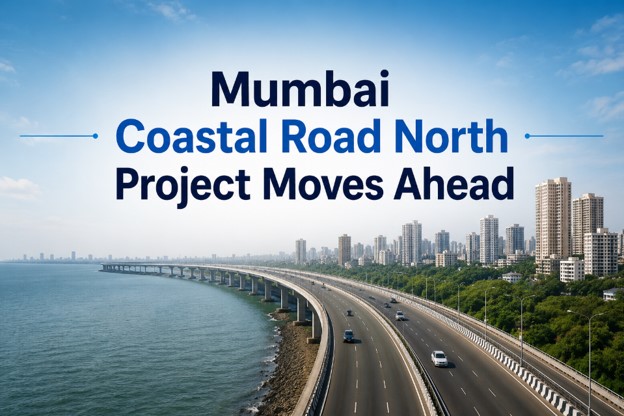
Mumbai Coastal Road North Project Moves Ahead Amid Opposition Questions
Mumbai’s ambitious coastal infrastructure expansion received a major push after the Brihanmumbai Municipal Corporation (BMC) approved the appointment of a Project Management Consultant (PMC) for the proposed Dahisar–Bhayander Link Road (DBLR), a key stretch under the Mumbai Coastal Road (North) project.
However, the approval did not come without political debate, as Opposition members raised serious concerns over the project’s funding structure and questioned whether Mumbai taxpayers should bear the cost of infrastructure extending beyond city boundaries.
Key Coastal Road Link to Improve Travel and Reduce Congestion
The proposed Dahisar–Bhayander Link Road is planned as a 5.6-kilometre-long elevated corridor with a width of 45 meters. The project carries an estimated cost of ₹3,304 crore and is expected to significantly improve connectivity between Mumbai’s northern suburbs and neighboring areas.
According to civic officials, once completed, the corridor could reduce travel time between Versova and Bhayander by nearly 30 to 45 minutes. The project is also expected to ease traffic pressure on the busy Western Express Highway.
As part of project execution, BMC approved the appointment of a joint venture between Nippon Koei India Pvt Ltd and Kite Allied Services Pvt Ltd as the Project Management Consultant for approximately ₹52.5 crore.
The PMC will monitor construction progress, maintain quality standards, ensure regulatory compliance and supervise execution during the planned 42-month construction period and the defect liability phase.
Opposition Raises Questions Over Financial Burden
During the Standing Committee meeting, Opposition corporators strongly objected to the financial model of the project.
Shiv Sena (UBT) corporator Yashodhar Phanse questioned how Mumbai residents would directly benefit from a road extending beyond municipal limits. He argued that BMC should not be solely responsible for financing a regional infrastructure project and demanded detailed financial clarity regarding expenditure within Mumbai limits.
Phanse suggested that the proposal should have been postponed until complete technical and financial details were presented before the committee.
Congress leaders also echoed similar concerns.
Congress group leader Ashraf Azmi stated that such a large infrastructure project should receive stronger financial participation from the state government. He highlighted that BMC already carries substantial financial responsibilities while agencies such as MMRDA are specifically created to develop regional infrastructure.
Azmi additionally questioned the tender process, asking why a fresh bidding round was not conducted after only one bidder remained.
Congress corporator Tulip Miranda proposed a shared funding arrangement and recommended a 50:50 cost-sharing formula among participating authorities. According to her, infrastructure that serves a wider metropolitan population should not depend entirely on Mumbai’s civic funds.
Ruling Alliance Supports Long-Term Infrastructure Vision
Supporting the proposal, members of the ruling alliance argued that major infrastructure projects often face criticism in their initial stages.
Leader of the House Ganesh Khankar compared the project with Mumbai’s Metro network, saying similar doubts existed when the Metro system started years ago but later became essential for daily commuters.
He stated that the Dahisar–Bhayander Link Road would create long-term benefits by reducing travel stress and improving mobility in Mumbai’s northern corridor.
According to him, infrastructure projects should be judged based on future impact rather than immediate concerns.
BMC Defends Project’s Strategic Importance
Responding to the objections, Additional Municipal Commissioner (Projects) Abhijit Bangar clarified that the elevated road is part of Mumbai’s approved Development Plan and plays an important role in strengthening northbound connectivity.
He also explained that future extensions beyond Bhayander towards Virar would be developed separately by MMRDA.
Officials further noted that the route passes through creek zones, making construction technically challenging and contributing to the higher project cost. Cost estimates, they added, were prepared through detailed technical analysis and reviewed by the relevant committee.
Proposal Approved Through Majority Vote
After extensive discussions, the proposal was put to vote in the Standing Committee.
With numerical support from the BJP-led Mahayuti alliance, the proposal received approval despite continued objections from Opposition corporators regarding funding transparency and financial responsibility.
The approval marks another important milestone in Mumbai’s larger coastal road expansion strategy, although debates around funding and regional cost-sharing are likely to continue in the coming months.