
- By Nirmal Ajwani
- 07 Jan 2026
A Portrait of a City: Mumbai’s Vintage Vibe Expressed Through Portraits of OG Influencers
Mumbai’s layered history, shaped by art, theatre, politics and philanthropy, comes alive through Face to Face: A Portrait of a City, a new exhibition opening at DAG Gallery this week. Featuring 30 evocative portraits, the exhibition offers an intimate look at the people and communities that defined Bombay’s cultural and civic soul across centuries.
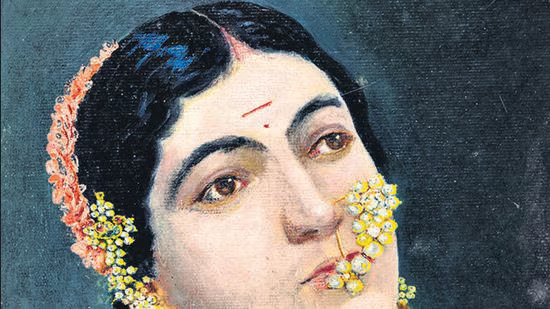
One of the exhibition’s most striking works is a portrait of Bal Gandharva (1888–1967), the legendary Marathi singer and actor famed for his female roles in musical theatre. Painted by celebrated artist MV Dhurandhar, the portrait depicts Gandharva adorned with a Maharashtrian pearl nath, elaborate earrings, a flower-laden bun and a richly draped sari — a visual tribute to his artistry and the city’s progressive cultural ethos.
“The portrait tells us how open and modern Bombay was, even then, in celebrating a man who dressed as a woman and played female characters with dignity and grace,” says Ritu Vajpeyi Mohan, Senior Vice President at DAG.
Tracing Bombay’s Artistic and Social Evolution
Beyond individual icons, the exhibition maps the evolution of Mumbai’s art practice — from colonial realism to post-Independence modernism and the transformative influence of the Progressive Artists’ Group. Stylistically diverse, the portraits range from academic realism to impressionistic and expressionistic interpretations.
“A portrait is never just a picture,” explains Ashish Anand, CEO and Managing Director of DAG. “It reflects the relationship between artist and sitter, and reveals how personalities, power, and identity were expressed in different eras.”
The exhibition also highlights the impact of institutions such as the Sir JJ School of Art, which introduced European techniques of naturalistic representation. One notable work is Frank Brooks’s 1892 portrait of Jaswatsingji Fatesingji, the Thakor Saheb of Limbdi, commissioned during Queen Victoria’s golden jubilee. The painting blends colonial realism with Indian courtly symbolism, offering insight into early representations of princely authority.
Parsi Influence and Philanthropic Legacy
Several portraits underscore the profound influence of the Parsi community on Bombay’s civic and cultural life. A portrait of Sir Jamsetji Jeejeebhoy, India’s first baronet, presents him in traditional Parsi attire, symbolising his journey from trader to one of the city’s greatest philanthropists.
Complementing this is MF Pithawalla’s portrait of a Parsi woman, reflecting the community’s progressive ethos. These works portray Parsi women as confident, modern and deeply engaged in public life, particularly in education, healthcare and philanthropy.
Political Thought and Intellectual Roots
The exhibition also anchors Bombay’s political legacy through VB Pathare’s portrait of Dr BR Ambedkar. The painting situates Ambedkar firmly within the city’s intellectual fabric, reflecting his academic, legislative and social contributions rooted in Bombay’s institutions.
A Prelude to a Larger Story
Face to Face: A Portrait of a City serves as a visual prelude to DAG’s upcoming February exhibition, Bombay Framed: People, Memory, Metropolis, which will explore the city through music, food and architecture, interpreted by seven writers and poets.
Together, these exhibitions reaffirm Mumbai’s enduring identity as a city shaped not just by buildings and commerce, but by people whose faces, stories and influence continue to define its spirit.