
- By Shyam Singh
- 23 Feb 2026
Maharashtra Expands Public Health Vision With Palliative Care Program And 580 Menopause Clinics
Public health systems are often judged by how well they treat disease. But their real maturity shows in how they manage suffering.
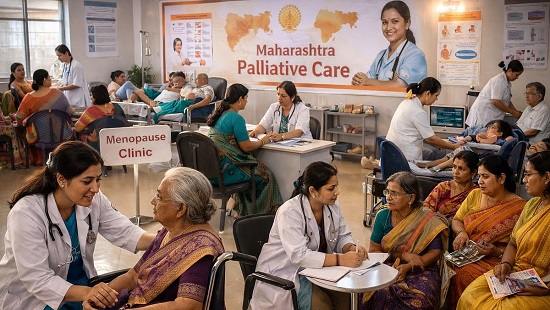
In a significant step forward, the Government of Maharashtra has launched a statewide Palliative Care Program and introduced Menopause Clinics at 580 locations. The initiatives were inaugurated in Mumbai by Health Minister Prakash Abitkar, marking what could become a defining moment in patient-centred healthcare delivery.
This is not just policy expansion. It is a shift in philosophy.
Palliative Care: Moving Beyond Cure To Care
For years, patients suffering from incurable or long-term illnesses often faced a harsh reality: when treatment options ended, structured support ended too.
The newly launched Maharashtra Palliative Care Program aims to fill that gap.
Under this framework, eligible patients will receive:
- Pain management
- Psychological support
- Family counselling
- Home-based care services
Palliative care does not aim to cure disease. It aims to improve quality of life.
That distinction matters.
In chronic illness, unmanaged pain and mental distress often compound physical suffering. By institutionalising palliative services, the state acknowledges that dignity in illness is as important as recovery.
Why This Matters Systemically
India’s healthcare conversation frequently focuses on infrastructure — new hospitals, new equipment, new insurance coverage.
But long-term illnesses demand continuity, not just intervention.
A structured palliative care program can:
- Reduce hospital overload
- Lower emergency admissions
- Improve patient and family well-being
- Provide psychological stability
When care shifts from hospital corridors to home-based support systems, healthcare becomes more humane — and more efficient.
Menopause Clinics: Addressing A Silent Health Gap
Alongside palliative care, the state has launched Menopause Clinics at 580 locations, with special weekly OPDs every Wednesday dedicated to menopause-related health concerns.
For decades, menopause has remained under-discussed in mainstream healthcare systems.
Symptoms such as:
- Hormonal imbalance
- Sleep disturbances
- Mood changes
- Bone density concerns
- Cardiovascular risks
often go unaddressed due to social stigma or lack of specialised consultation.
By creating dedicated clinics, the state is signalling that women’s mid-life health deserves structured attention — not informal advice.
This is a quiet but powerful reform.
Public Recognition Of Health Contributors
The launch event also included the distribution of the “Vandaniya Balasaheb Thackeray Arogyaratna Award” and “MahaArogya Samman 2026” at the Yashwantrao Chavan Auditorium.
Twenty-three awardees received the Arogyaratna Award, while 174 doctors, officers, ASHA volunteers and healthcare workers were honoured for their service.
Recognition serves a policy purpose.
When frontline workers feel valued, system morale improves. And morale influences performance more than many metrics reveal.
The Governance Message
These initiatives reflect three strategic shifts:
1. From Reactive To Supportive Healthcare
Instead of intervening only during emergencies, the system now aims to provide continuous care.
2. From Hospital-Centric To Community-Based Models
Home-based palliative services decentralise care delivery.
3. From Silence To Structured Women’s Health Policy
Menopause clinics bring a long-ignored phase of women’s health into formal medical attention.
This aligns with a broader public health principle: preventive and supportive care reduce long-term costs.
The Road Ahead
Implementation will determine impact.
Key questions include:
- Are enough trained professionals available for palliative outreach?
- Will rural areas receive equal access?
- How effectively will menopause OPDs be staffed and monitored?
Policy announcements create direction. Administrative discipline creates outcomes.
A Healthcare System That Listens
By launching these initiatives, Maharashtra is expanding the definition of public health.
It is recognising that:
- Pain needs structured management.
- Chronic illness needs emotional support.
- Women’s health needs lifecycle-based attention.
If executed well, these programs could become models for other states.
Because healthcare reform is not always about cutting-edge technology.
Sometimes, it is about listening to patients who were quietly waiting for support.