
- By Sanvee Nagpal
- 24 Feb 2026
Thane Mega Legal Mahashivir: Judiciary, Welfare Schemes And Traffic Awareness Come Together
Access to justice should not depend on awareness gaps. When citizens understand their rights, systems work better. That is the idea behind the recent Mega Legal Mahashivir organised in Thane.
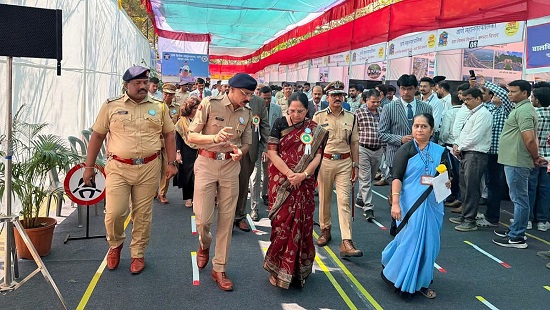
The camp was conducted by the District Legal Services Authority Thane under the guidance of the Maharashtra State Legal Services Authority. Hosted at the premises of V.N. Bedekar College, the initiative brought judiciary representatives, government departments and citizens under one roof.
This was not a symbolic gathering. It was a functional platform.
Bridging The Gap Between Courts And Citizens
The core objective of the Mahashivir was simple: make legal services accessible.
Many citizens are unaware that free legal aid is available to eligible individuals. The camp offered:
- On-the-spot legal counselling
- Information on judicial services
- Awareness about welfare schemes
- Grievance redressal support
The presence of dignitaries such as Manjusha Deshpande of the Bombay High Court and Principal District and Sessions Judge Shrinivas Agarwal reinforced the seriousness of the initiative.
When the judiciary steps outside courtrooms and into community spaces, accessibility improves.
₹14 Crore Recovered Through Lok Adalats
One of the most significant highlights shared during the event was the recovery of approximately ₹14 crore through National Lok Adalats in Thane.
Lok Adalats, part of India’s Alternative Dispute Resolution (ADR) system, are designed to settle long-pending cases quickly and amicably.
These include:
- Traffic challans
- Civil disputes
- Utility payment cases
- Minor financial disputes
₹14 crore is not just a number. It represents resolved disputes, cleared backlogs and reduced litigation pressure on courts.
Efficient dispute resolution benefits both citizens and the judicial system.
Traffic Awareness With A Tech Edge
The Mahashivir did not focus only on legal literacy. The Thane City Traffic Police played a prominent role by introducing innovative awareness tools.
Under the leadership of Police Commissioner Ashutosh Dumbare and senior officers, the department showcased:
1. Tactile Learning Experience
A simulated “concrete road carpet” allowed citizens to physically experience road conditions and understand pedestrian safety norms.
2. Live E-Challan Demonstrations
Officials demonstrated how the digital E-Challan system works, showing real-time monitoring of traffic violations.
3. Intelligent Traffic Management System (ITMS)
Attendees were introduced to camera-based enforcement technology that improves discipline and reduces human error.
4. Green Corridor Awareness
Citizens were educated on how to support emergency medical transport by cooperating during green corridor movements.
This combination of legal awareness and traffic discipline messaging created a holistic civic education platform.
Why This Model Matters
Urban centres like Thane face two parallel challenges:
- Legal accessibility
- Traffic congestion and road safety
Addressing both through a single integrated event reflects strategic thinking.
When citizens understand:
- Their legal rights
- The process of dispute resolution
- The importance of road safety
compliance improves naturally.
Enforcement works better when awareness exists.
A Template For Urban Governance
The Mega Legal Mahashivir demonstrates how collaboration between the judiciary, police and welfare departments can amplify impact.
Instead of working in silos, institutions shared a common platform. That sends a powerful signal — governance is interconnected.
For growing cities, such outreach initiatives reduce friction between citizens and institutions.
The strong public turnout suggests that demand for accessible legal and civic education is high.
Final Thoughts
Justice is not only about court verdicts. It is about awareness, accessibility and resolution.
By combining free legal aid, welfare scheme access and technology-driven traffic awareness, Thane’s Mahashivir delivered a practical example of citizen-centric governance.
₹14 crore recovered through Lok Adalats shows efficiency.
Interactive traffic exhibits show innovation.
Judicial participation shows commitment.
When institutions meet citizens halfway, systems become stronger.