
- By Bhawana
- 22 Jan 2026
BNHS Conducts Ornithology Course at Nandur-Madhmeshwar Sanctuary to Promote Bird Conservation
The Bombay Natural History Society (BNHS) recently organised a three-day basic ornithology course at the Nandur-Madhmeshwar Wildlife Sanctuary in Maharashtra’s Nashik district, aiming to strengthen bird conservation awareness and scientific understanding among nature enthusiasts.
The programme brought together birdwatchers, students, naturalists, and conservation-minded individuals for a mix of classroom learning and hands-on fieldwork at one of the state’s most important wetland ecosystems.
Learning the Science of Birds
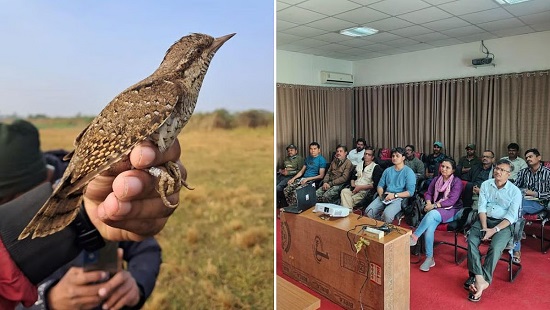
A total of 15 participants registered, with 13 actively attending the course. The training focused on the importance of birds in ecosystems, scientific bird-counting methods, migration studies, and bird ringing techniques.
Participants were guided through practical field exercises, allowing them to apply theoretical knowledge in real-world conditions. During the programme, 11 birds were ringed, including an Eurasian Wryneck (Jynx torquilla), offering valuable insights into migration and population tracking.
Importance of the Sanctuary
The inaugural session was led by Hiralal Chaudhari, Range Forest Officer of the Nandur-Madhmeshwar Wildlife Sanctuary. He highlighted the sanctuary’s ecological significance and its status as a Ramsar wetland site, recognised internationally for its importance to waterbirds.
Located near Niphad, the sanctuary is well known for hosting large numbers of migratory birds during winter, making it an ideal outdoor classroom for ornithological studies.
The Ramsar Convention, adopted in 1971, aims to conserve wetlands of international importance and promote their sustainable use, a concept that was explained in detail during the sessions.
Rare Sightings and Field Experiences
Birding sessions during the course recorded several notable sightings, including the Eurasian Curlew, large flocks of Common Cranes, and harrier roosting sites along the sanctuary’s fringes. Participants also documented a breeding colony of Painted Storks and Grey Herons, underlining the sanctuary’s rich biodiversity.
Adding to the excitement, some participants even sighted a Leopard on January 17, highlighting the area’s broader wildlife value.
Conservation Beyond the Classroom
Discussions also covered the Asian Waterbird Census, bird vocalisation studies, and the role of bird ringing in both wetlands and urban environments. The programme encouraged participants to actively contribute to conservation efforts through citizen science and awareness.
BNHS stated that such training programmes play a vital role in nurturing informed conservation advocates and building long-term protection strategies for India’s rich birdlife.