



- By Nirmal Ajwani
- 14 Jul 2026
MHADA Orders Hearing With Developer Over Pending Rehab Flat and Transit Rent Complaint During Lokshahi Din
Resident Alleges Delay in Rehabilitation Home, Transit Rent, and Housing Agreement Despite Redevelopment Progress
The Maharashtra Housing and Area Development Authority (MHADA) has ordered a formal hearing with a developer after a Mumbai resident raised serious concerns about not receiving a rehabilitation flat, pending transit rent payments, and the execution of a Permanent Alternate Accommodation Agreement (PAAA). The complaint was reviewed during MHADA's 19th Lokshahi Din, a public grievance redressal initiative that allows residents to directly present housing-related issues before senior officials.
The decision highlights MHADA's continued efforts to improve transparency and ensure accountability in redevelopment projects across Mumbai, particularly in old cessed buildings undergoing reconstruction.
MHADA Reviews Public Complaints During 19th Lokshahi Din
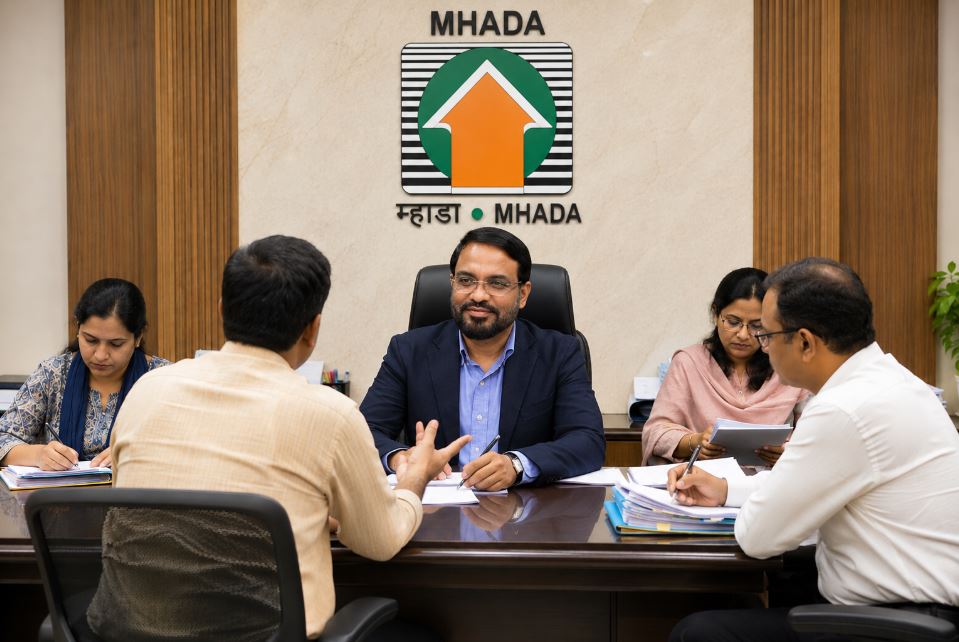
The grievance hearing took place at MHADA's headquarters in Bandra (East) under the leadership of MHADA Vice President and Chief Executive Officer Sanjeev Jaiswal. During the session, officials reviewed two public complaints related to housing and redevelopment matters.
Lokshahi Din has become an important platform where citizens can directly approach MHADA with unresolved issues concerning redevelopment projects, housing schemes, rehabilitation, and administrative services. Senior officials review each complaint and issue directions to ensure timely action.
Resident Claims Rehab Flat Has Not Been Allotted
One of the key cases was submitted by Deepak Sonawale, a resident of Building No. 18 on Fitwala Road near Elphinstone Road in South Mumbai.
According to the complaint, the Mumbai Building Repairs and Reconstruction Board had issued No Objection Certificates (NOCs) to the developer in 2006 and again in 2009, allowing the redevelopment project to move forward.
However, Sonawale stated that although the redevelopment has progressed over the years, he has still not been provided with his rehabilitation apartment.
The complaint also alleges that the developer has failed to:
- Allot the promised rehabilitation flat.
- Pay the pending monthly transit rent.
- Execute the Permanent Alternate Accommodation Agreement (PAAA), which legally secures the resident's right to a permanent home after redevelopment.
Such agreements are considered an essential safeguard for tenants and occupants during redevelopment projects in Mumbai's aging cessed buildings.
Sanjeev Jaiswal Orders Developer to Appear Before MHADA
After reviewing the complaint, MHADA Vice President and CEO Sanjeev Jaiswal directed officials to issue a notice summoning the developer for a formal hearing.
He instructed the concerned department to examine the matter thoroughly and ensure that the resident's legitimate claims are addressed according to applicable redevelopment rules and housing regulations.
The hearing will focus on resolving three major issues:
- Allotment of the rehabilitation flat.
- Clearance of pending transit rent payments.
- Execution of the Permanent Alternate Accommodation Agreement.
MHADA officials are expected to issue further directions after hearing both parties.
Strengthening Accountability in Redevelopment Projects
Redevelopment of old cessed buildings remains one of Mumbai's biggest urban housing challenges. Thousands of families temporarily move into rented accommodation while their buildings are reconstructed. During this period, developers are generally responsible for paying transit rent until residents receive possession of their new homes.
Housing experts have frequently pointed out that delays in rehabilitation, unpaid transit rent, and incomplete legal agreements are among the most common complaints received from redevelopment-affected residents.
Through Lokshahi Din, MHADA continues to provide citizens with direct access to senior decision-makers, helping resolve long-pending issues while improving transparency in redevelopment administration.
Lokshahi Din Continues as a Citizen-Centric Grievance Platform
MHADA confirmed that two applications were heard during the 19th Lokshahi Din programme. The initiative is designed to provide a structured platform where citizens can present grievances related to MHADA's services, redevelopment projects, rehabilitation matters, and housing administration.
By directing officials to summon the developer and review the complaint in detail, MHADA has reinforced its commitment to protecting the rights of residents affected by redevelopment projects and ensuring developers comply with their legal obligations.
As Mumbai continues to redevelop older housing stock, such grievance hearings are expected to play an increasingly important role in improving accountability and ensuring that eligible residents receive the homes, financial support, and legal protections promised under redevelopment policies.